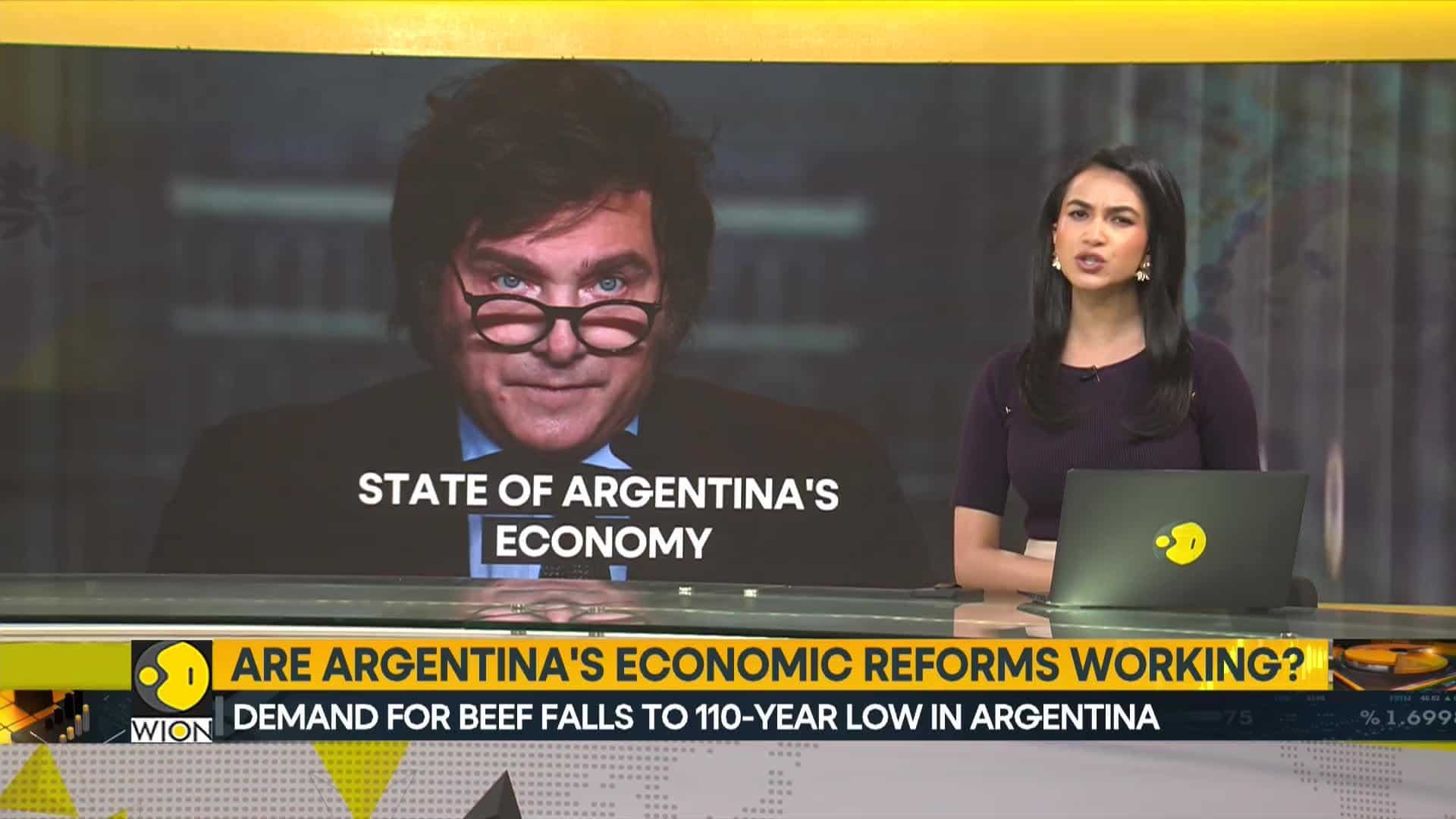
Javier Milei promised a chainsaw to the state and shock therapy for the economy. It’s been a wild ride. While his supporters celebrate the cooling of triple-digit inflation, the ground-level reality tells a messier story. Argentina’s economy just recorded its sharpest monthly contraction in February 2026, dropping 2.1 percent annually. This isn't just a number; it's a gut punch to households already struggling to keep their heads above water.
If you’re trying to make sense of what’s actually happening, you need to look past the political headlines. The macroeconomic victory—or at least the progress on price stability—has arrived with a staggering human cost. Unemployment is climbing, and poverty remains an exhausting, daily reality for millions. The question isn't just whether Milei can balance the books. It's whether the public will stick around long enough to see the payoff.
The Reality of the February Contraction
Why did the economy hit a wall in February? The numbers are clear. Manufacturing output tanked by 8.7 percent. Retail and wholesale trade fell by 7 percent. These aren't abstract trends. They reflect a collapse in domestic consumption that is hitting businesses and workers right where it hurts.
When people don't have money to spend, factories stop running. When factories cut shifts, families lose income. It’s a classic, brutal cycle. You can see how this plays out across different sectors:
- Textiles were decimated, dropping over 30 percent in some reports.
- Construction and machinery are struggling as investment capital dries up.
- Food and beverages, usually the last to feel a squeeze, are now showing clear signs of weakness.
Some sectors are actually thriving. Mining and agriculture are showing real gains, acting as the primary engines for the country's export-led recovery. But for the average person living in Buenos Aires or Córdoba, a surge in soybean exports doesn't make the grocery bill cheaper. It creates a massive, visible gap between the macro data and the household experience.
Why Inflation Still Haunts the Conversation
Let’s be honest about inflation. It’s significantly lower than it was when Milei took office in late 2023. That was the primary goal, and he delivered on it. But lately, it’s proving stubbornly sticky. March 2026 saw inflation tick up to 3.4 percent, a worrying trend after months of hopes that it would trend toward zero.
Expectations for the year have been revised upward. The government originally aimed for a very modest annual rate, but now they're staring down a more realistic, albeit painful, number. When you remove price controls and hike utility bills, you’re basically betting that short-term pain will eventually yield long-term efficiency. It’s a high-stakes gamble.
You have to wonder: when does the "stabilization" actually feel like growth for the person on the street? So far, real wages have struggled to keep pace. When your paycheck buys 6 percent less than it did a few months ago, "macroeconomic success" starts to sound like a distant, elitist concept.
The Export Bet
Milei’s administration is pinning a massive part of its hope on a "dollar deluge." The theory is simple. If the country can bring in billions from agricultural and energy exports, the Central Bank can finally build the foreign exchange reserves it desperately needs. This, in turn, is supposed to stabilize the peso and provide the foundation for real, sustainable growth.
It’s not just theory, either. We’re already seeing that flood start. Analysts project roughly 30 billion dollars could enter the economy over the next six months. If Santiago Bausili, the Central Bank head, manages this influx correctly, it could be the turning point. But there’s a catch. Milei himself has joked—partly—that they shouldn't refill reserves too fast, fearing a sudden rush of pesos could reignite the very inflation he just spent two years fighting.
Navigating the Political Tightrope
The mid-term election in 2025 showed that voters were willing to give Milei a chance. He grabbed 40 percent of the vote, signaling that for many, the alternative was simply worse. But patience has an expiration date.
The government is now trying to push structural reforms throughout 2026. They want to deregulate everything from labor laws to tax codes. The goal is to make Argentina a magnet for global investment. It sounds great in a slide deck. However, when you combine structural reform with a recessionary period, you’re creating an environment ripe for social unrest.
The opposition is weak, but not gone. As the economic squeeze tightens, the government's ability to maintain public support will depend on whether they can show, not just tell, that things are getting better. They need to move past the "everything is broken" narrative and start pointing to specific, tangible wins for the working class.
Where Does This Leave You
If you're watching Argentina, stop looking for a single metric that defines the whole story. You won't find it. The macroeconomic indicators are diverging sharply from the social reality.
- Watch the reserves. If the central bank successfully builds up those dollars without sparking another inflation spike, it’s a sign that the strategy might actually have a path to stability.
- Track the consumption data. Forget the headline GDP numbers. Look at how retail and manufacturing recover. That is the true pulse of the domestic economy.
- Monitor the labor market. If unemployment stays high and the informal sector continues to swell, the political pressure on the administration will only become more radioactive, regardless of what the inflation numbers say.
This is a high-wire act with no safety net. The country is fundamentally restructuring itself, and the friction is, frankly, massive. Stay skeptical of anyone claiming it's going to be a quick turnaround. The reality is much slower, much harder, and significantly more chaotic than the campaign promises ever suggested.