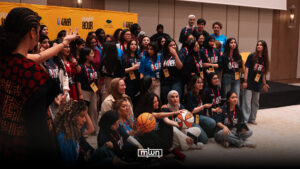
Stop looking at basketball as just a game of dunks and buzzer-beaters. In Africa, the court's becoming a classroom for a different kind of power play. If you've been following the Basketball Africa League (BAL), you've seen the growth. But the real story isn't just about the men's teams—it's about who's running the show behind the scenes.
The BAL4HER initiative is the NBA's quiet engine for social change. It's not some corporate checkbox. It's a targeted strike against the glass ceiling that has kept African women out of the front office for decades. While most sports programs focus solely on getting girls to dribble, BAL4HER is obsessed with making sure they know how to negotiate contracts, lead marketing teams, and manage entire leagues.
The strategy behind the sideline
It’s easy to talk about empowerment. It’s harder to build a pipeline. NBA Africa CEO Clare Akamanzi doesn’t just see this as a nice thing to do. She sees it as business. Investing in women is strategic growth. Period.
The recent workshop in Rabat, Morocco, brought together about 100 young professionals. They weren't just practicing free throws. They were sitting down with 30 high-level mentors to talk about sports psychology, resilience, and the grit needed to thrive in male-dominated industries.
- Mentorship that sticks: These aren't one-off speeches. The BAL4HER "Power Hour" uses speed-mentoring to connect emerging talent with veterans.
- Career diversity: The program pushes roles in sports management, data analytics, and media, not just coaching.
- On-court presence: Events like the U-23 women’s camps ensure the talent pool stays deep.
I’ve seen plenty of "women in sports" panels that go nowhere. This feels different because the league is putting its money where its mouth is. They're using the BAL season as a live lab. Participants get mentored, then they go straight into the arena to see the machinery of a professional league in action.
Representation isn't a buzzword
Let’s get real about why this matters in 2026. For a long time, the path for a talented girl in Dakar or Lagos was clear: play until you can’t, then find a "real" job. BAL4HER changes that trajectory. When you have someone like Chiney Ogwumike—a two-time WNBA All-Star and the first female BAL Ambassador—showing up, it makes the dream tangible.
Ogwumike isn't just a figurehead. She’s actively involved through her "Queens of the Continent" foundation. The partnership focuses on the specific hurdles African women face, like limited access to scouting and the social pressure to exit sports early.
The ripple effect beyond the hoop
You don't have to want a career in the NBA to benefit from this. The skills are universal. Negotiating a sponsorship deal for a local club is the same skill set you need to pitch a tech startup.
Amadou Gallo Fall, the BAL President, often says that Africa’s time is now. He’s right, but it only works if you're utilizing 100% of the talent pool. You can't win a game with half your roster sitting on the bench. By opening up the sports ecosystem to women, the BAL is effectively doubling its potential for innovation.
Real-world impact areas
- Financial Literacy: Workshops teach young athletes how to manage the money they might make.
- Personal Branding: In an era of social media, knowing how to own your narrative is worth more than a jump shot.
- Mental Health: Breaking the stigma around sports psychology and the pressure of elite performance.
Stop waiting for a seat
The most impressive part of the BAL4HER workshops in places like Johannesburg and Kigali is the shift in attitude. The message isn't "wait for someone to give you a chance." It's "build the skills so they can't ignore you."
We're seeing women move into roles as head of league production, business intelligence, and social impact specialists. These aren't "diversity hires." They're the people making the league profitable.
If you’re a young woman looking to break into this world, the entry point is changing. You don't need to be 6'4" to have a massive impact on African basketball. You just need to show up to the Power Hour, find a mentor, and start building that network.
The next move is simple. Look for the next BAL4HER workshop in your region. Apply. Get in the room. Don't just watch the game from the stands when you could be the one calling the plays from the front office.