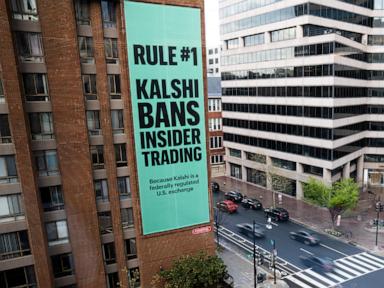
Federal regulators have finally moved from curious observation to open hostility toward the prediction market industry. For years, platforms like Kalshi and Polymarket operated in a legal gray area, but the Commodity Futures Trading Commission (CFTC) is now aggressively tightening the noose. The agency isn't just worried about technical compliance; it is terrified that these markets will fundamentally undermine the integrity of American elections by turning the democratic process into a gambling product. By proposing rules that would effectively ban derivatives linked to political contests, Washington is attempting to kill an emerging asset class before it can achieve mainstream legitimacy.
The core of the conflict lies in a fundamental disagreement over what these platforms actually do. To the CFTC, they are illegal bucket shops masquerading as financial innovation. To the traders and economists who use them, they are the most accurate forecasting tools ever devised. When you put your money where your mouth is, you have a financial incentive to be right rather than tribal. This creates a data set that often outperforms traditional polling and expert punditry, which is exactly why the political establishment finds them so threatening.
The Regulatory Hammer Drops
The CFTC’s recent moves represent a shift from reactive enforcement to preemptive strikes. The agency’s proposed rulemaking seeks to categorize "event contracts" involving elections, sporting events, or awards ceremonies as "contrary to the public interest." This is a broad, subjective standard that gives bureaucrats immense power to pick winners and losers in the marketplace.
Historically, the CFTC has been the "light-touch" regulator compared to the SEC, but that reputation is vanishing. They are currently locked in a high-stakes legal battle with Kalshi, a regulated exchange that has fought tooth and nail for the right to list congressional control contracts. The government’s argument is simple: if people can bet on elections, they might have an incentive to interfere with them.
This logic is flawed.
The amount of money required to "fix" a national election is exponentially higher than the liquidity available in these markets. If someone tried to move the needle on a presidential race by dumping millions into a prediction market, they would simply distort the price, creating a massive arbitrage opportunity for everyone else to bet against them. The market would self-correct long before it influenced a single voter in a swing state.
Why the Pollsters Are Scared
Traditional polling is broken. We have seen this cycle after cycle. Between declining response rates and the "shy voter" effect, data collected via cold calls is increasingly useless. Prediction markets solve this by bypassing the ego. A person might tell a pollster what they think is the "correct" social answer, but they will bet on the outcome they actually expect to happen.
The Incentive Structure of Truth
In a prediction market, the price of a contract functions as a real-time probability. If a contract for "Candidate A to win" is trading at $0.65$, the market is signaling a 65% chance of that outcome.
- Real-time updates: Unlike polls that take days to aggregate, markets react to news in seconds.
- Skin in the game: Participants lose money if they are blinded by bias.
- Information aggregation: Markets pull in disparate data points, from internal campaign memos to weather patterns on election day.
By attempting to shut these markets down, Washington is effectively opting for ignorance. They prefer the comfortable inaccuracy of curated polls over the cold, hard reality of market-driven data. It is a classic case of protecting the status quo at the expense of clearer insight.
The Offshore Problem
When you ban a service that people want, you don't make it go away; you just drive it underground or overseas. This is the "Prohibition Effect" in the digital age. Polymarket, which is technically blocked for U.S. users, has seen its volume explode into the billions. While the CFTC patted itself on the back for forcing Polymarket to geofence American IP addresses, any teenager with a VPN can still access the platform.
The result is a worst-case scenario for the U.S. government. Americans are still trading these markets, but they are doing so on platforms that pay no U.S. taxes, follow no CFTC consumer protection rules, and provide zero transparency to federal investigators.
The Cost of Protectionism
Washington’s crackdown creates a massive brain drain. The most talented developers and financial engineers in the prediction space are moving to jurisdictions like Dubai, Singapore, or the Bahamas. They are building the future of decentralized finance far away from the reach of the Potomac.
"We are witnessing the systematic dismantling of a tool that could provide the public with an objective truth-filter in an era of unprecedented misinformation."
If the CFTC succeeds in its ban, the "public interest" they claim to protect will be the first casualty. We will be left in a world where the only available data comes from partisan media outlets and flawed polling firms, while the "smart money" moves to offshore shadows where the public cannot follow the trail.
The Manipulation Myth
One of the loudest arguments against prediction markets is the fear of "insider trading." Critics argue that campaign staffers or well-connected lobbyists could use their private knowledge to profit.
This isn't a bug; it's a feature.
The goal of a prediction market is to arrive at the most accurate price possible. If an insider knows a candidate is about to drop out and they sell their shares, that information is immediately priced into the market. The price drops, and the public receives an early warning signal. In the stock market, we call this a crime. In a prediction market, we call it "price discovery."
The government’s obsession with preventing "unregulated gambling" ignores the fact that political outcomes have massive financial consequences. A business owner might want to hedge against a specific tax policy by betting on the candidate who opposes it. This is a legitimate use of a financial derivative, no different than a farmer hedging against the price of corn.
Breaking the Monopoly on Information
The real reason Washington is stepping up scrutiny is power. For decades, the flow of political information has been controlled by a tight-knit circle of party elites, consultants, and media executives. Prediction markets democratize that information. They provide a transparent, publicly accessible scoreboard that doesn't care about talking points or "momentum" narratives.
When the market says a bill has a 10% chance of passing, it makes it very difficult for a politician to go on TV and claim it’s a "sure thing" to drum up donations. The markets are a check on the political class's ability to manufacture reality.
The Path Forward
If the U.S. wants to remain a global leader in financial innovation, it needs to stop treating prediction markets like a vice and start treating them like a utility. This requires a new regulatory framework that acknowledges the unique nature of these contracts.
- Define political hedging: Acknowledge that election outcomes are financial risks that deserve hedging tools.
- Increase transparency: Require exchanges to report large positions to monitor for potential manipulation rather than banning the trades entirely.
- Lower barriers to entry: Allow domestic platforms to compete with offshore giants by offering a clear, predictable path to registration.
The CFTC is currently standing on the tracks, trying to stop a freight train with a clipboard. The demand for these markets is organic, global, and technologically unstoppable. By clinging to outdated definitions of what constitutes a "commodity," regulators are ensuring that the United States stays in the dark while the rest of the world trades on the future.
We are at a crossroads where the government must decide if it values "order" over accuracy. Every day the CFTC spends fighting Kalshi or drafting restrictive rules is another day the American public is denied access to the most potent information-gathering tool of the 21st century. The scrutiny isn't about protecting you; it's about protecting the gatekeepers who are terrified of being proven wrong by a ticker tape.
If you want to know what is actually going to happen in the next election, don't look at the polls. Look at the order book. And if the government has its way, you'll have to look very hard to find one.



:max_bytes(150000):strip_icc()/who-is-gautam-adani-7101011_final-ad94940cba6549c3b06a8baa1164f94b.png)