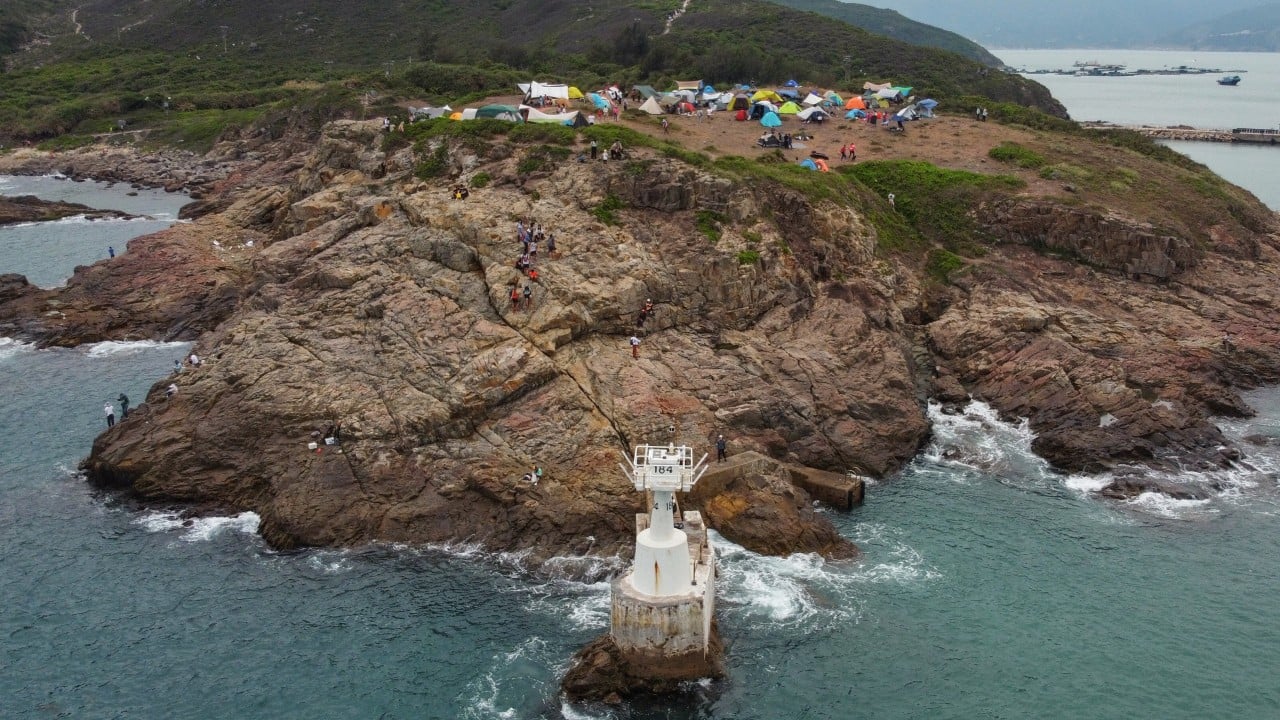
Hong Kong is a city of vertical glass and steel, but its edges are jagged, volcanic, and occasionally lethal. Most people flock to Cape D'Aguilar for the perfect Instagram shot at the "Crab Cave" or the lighthouse, but they forget they’re standing on the rim of the South China Sea. It only takes one rogue wave. That’s exactly what happened when a woman recently fell into the sea while taking photos at the historic Cape D'Aguilar lighthouse. She was lucky. A bystander jumped in, and emergency services arrived fast enough to prevent a tragedy. Most people aren't that lucky.
If you’re planning to visit this spot, you need to understand that the Shek O peninsula doesn't care about your follower count. The geography here is beautiful because it’s violent. The waves have spent thousands of years carving out those caves, and they haven't stopped just because you’re holding a smartphone. Meanwhile, you can read similar developments here: The Canmore Enigma Modeling the Friction Between Glamping Capital and Ecosystem Integrity.
The true cost of a Hong Kong lighthouse selfie
The incident at Cape D'Aguilar follows a predictable pattern. You walk down the long, paved road from the bus stop, see the stunning white lighthouse built in 1875, and feel a sense of security. It’s a declared monument. There are signs. There are other tourists. You feel safe.
But the lighthouse sits on a bluff where the wind speeds can double in seconds. When this woman fell, she wasn't doing anything "extreme." She was simply standing too close to the edge to get the right angle. The rocks there are notoriously slippery due to salt spray and algae. One slip, and you aren't just falling onto dirt; you’re falling into a churn of water that smashes against barnacle-encrusted stone. To understand the bigger picture, we recommend the excellent report by The Points Guy.
Emergency crews in Hong Kong, including the Government Flying Service and the Fire Services Department, spend an exhausting amount of time rescuing hikers and photographers from this exact area. It’s a drain on resources and puts rescuers at risk. When the sea is rough, a boat can’t just pull up to the rocks. They have to send divers or lower someone from a helicopter. It’s a high-stakes operation for a low-stakes photo.
Why the geography of Shek O is a trap
Cape D'Aguilar is a Marine Reserve. It's the only one in Hong Kong. Because of this, it has unique ecological protections, but it also means the terrain is left largely raw. You won't find guardrails everywhere. You won't find "safe zones" cordoned off with yellow tape.
The rocks around the lighthouse and the nearby "Thunder Cave" are composed of volcanic breccia. This stuff is sharp. If you fall, you’re going to get cut. If you fall into the water, the "wash"—the back-and-forth movement of water against the cliffs—creates a vacuum effect. It pulls you under and pins you against the rock face. Even a strong swimmer can’t fight a three-foot swell when it’s focused into a narrow crevice.
Many visitors don't check the tide tables before they head out. They arrive at high tide when the waves are already jumping onto the ledges. They see someone else standing on a rock and think, "If they can do it, I can." That’s survivor bias in action. Just because the person before you didn't get swept away doesn't mean the ledge is safe.
The myth of the safe photo spot
Social media has ruined our collective sense of risk. We see a photo of someone sitting on the edge of the "Crab Cave" with the blue ocean behind them and we think it's a controlled environment. It’s not. It’s a wilderness area.
I’ve seen people at Cape D'Aguilar wearing flip-flops or expensive loafers while climbing over wet basalt. That’s insane. You need grip. You need to be aware of the "sneaker waves"—those swells that are significantly larger than the ones before them. They appear out of nowhere.
The Hong Kong Observatory often issues swell warnings or strong monsoon signals. Most casual hikers ignore them. If there’s a "Strong Monsoon Signal" or a "Wait for the Swell" warning, the Cape D'Aguilar lighthouse becomes a no-go zone. The wind can literally knock you off your balance if you’re standing on a narrow ridge.
How to actually survive a trip to Cape D'Aguilar
You can get the shots without ending up on the evening news. It’s mostly common sense, which seems to be in short supply at the Marine Reserve lately.
First, stay on the marked paths. The lighthouse is beautiful from ten feet away. You don't need to be dangling your legs over the cliff to capture its scale. Use a zoom lens. Your phone probably has a 3x or 5x optical zoom; use it. It flattens the perspective and makes the lighthouse look more imposing anyway.
Second, watch the water for five minutes before you step onto any rock near the sea. Don't just look at the current wave. Watch the pattern. If you see wet patches on rocks that are currently above the waterline, that’s a clear sign that waves are reaching that height. If the rock is wet, stay off it. Period.
Third, go with a partner. The woman who fell was saved because people were there to help and call 999. If you’re solo and you slip into a crevice, no one might hear you over the roar of the surf. The reception out there can be spotty depending on your provider, though it’s generally okay near the radio station.
Respect the Marine Reserve and the locals
The area around the lighthouse isn't just a playground. It’s home to the Swire Institute of Marine Science (SWIMS). Researchers live and work there. When tourists get stuck or injured, it disrupts the entire ecosystem of the station.
There's also the "Bones of Miss Willy"—the whale skeleton display nearby. It’s a popular spot, but even there, people climb on things they shouldn't. The skeleton is fragile. The rocks are treacherous. The sea is indifferent to your presence.
Hong Kong’s coastline is world-class, but it’s not a theme park. The rescue at the lighthouse should be a wake-up call. We’re seeing more of these incidents because people are prioritizing the image over the experience—and over their own lives.
Stop looking at your screen while you walk. Look at where you’re putting your feet. Keep your back to the cliff, not the sea. If you want a dramatic ocean shot, go to the Shek O main beach where there are lifeguards and a sandy bottom. Cape D'Aguilar is for looking, not for risking your neck.
Check the weather forecast on the HK Observatory app before you leave home. If the winds are over 30 km/h or there’s a swell warning, go to a museum instead. If you do go, wear shoes with actual tread. Vibram soles or dedicated hiking boots aren't "overkill"; they're the bare minimum. Don't be the person that forces a rescue diver to risk their life because you wanted a better profile picture. The ocean always wins. You just want to make sure you're not there when it decides to claim its prize.