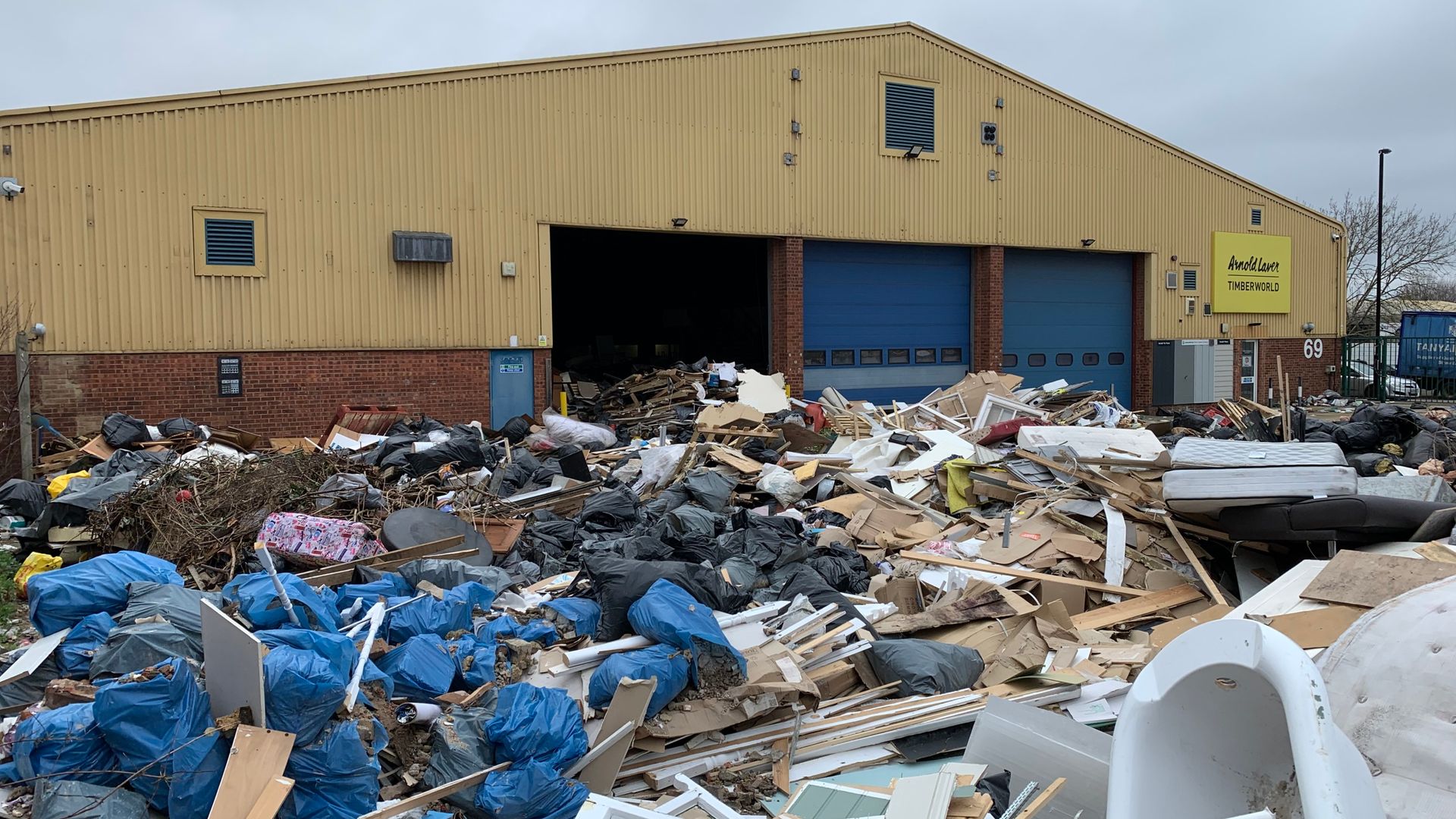
The Waste Arbitrage Model
Illegal waste disposal is rarely a crime of passion or a spontaneous lapse in judgment; it is a calculated response to the economic spread between the cost of regulatory compliance and the price of illicit dumping. When four individuals are sentenced for large-scale illegal waste operations, the legal outcome focuses on the individuals, but the structural analysis must focus on the Profit-to-Risk Ratio.
The fundamental mechanism driving this criminal activity is Regulatory Arbitrage. In a functioning market, the cost of disposing of hazardous or industrial waste includes taxation (such as landfill tax), transportation to certified facilities, and processing fees required to mitigate environmental externalities. By bypassing these nodes, an operator converts a societal liability into a private margin.
The lifecycle of an illegal dumping operation typically follows a three-stage economic progression:
- Site Acquisition via Deception: Utilizing shell companies or misrepresenting the intended use of leased land to bypass due diligence.
- Volume Aggregation: Collecting waste from legitimate businesses that are often willing to "look the other way" in exchange for disposal rates significantly below market value.
- Asset Stripping and Abandonment: Once the site reaches physical or legal capacity, the operating entity is liquidated, leaving the cost of remediation to the public sector or the landowner.
The Cost Function of Environmental Remediation
The sentencing of a "gang of four" represents the final stage of a failure chain. The delta between the fines imposed and the actual cost of environmental restoration often reveals a systemic deficit.
Direct vs. Indirect Externality Costs
The true impact of illegal dumping is quantified through three distinct layers of economic damage:
- Primary Remediation Costs: The immediate logistical expense of excavating, transporting, and legally treating the dumped material. This is often ten times higher than the initial cost of legal disposal due to the cross-contamination of materials.
- Secondary Ecological Degradation: The leaching of heavy metals or chemicals into the water table. This introduces a long-tail liability, as groundwater contamination can remain undetected for years, eventually impacting local agricultural yields and public health.
- Market Distortion: Illegal operators underbid legitimate waste management firms. This creates a "race to the bottom" where law-abiding companies lose market share, reducing the overall capital available for investment in green waste technology and circular economy infrastructure.
The Enforcement Gap and Probability of Detection
A primary driver of persistent illegal dumping is the Low-Probability, High-Impact nature of current enforcement. If the probability of being caught ($P$) multiplied by the expected fine ($F$) is less than the guaranteed profit from illegal activity ($G$), the criminal enterprise remains rational from a purely financial perspective.
$$P \times F < G$$
Currently, the $P$ variable is suppressed by limited aerial surveillance and the difficulty of tracking waste "chain of custody." When waste moves from a generator to a broker and then to a transporter, the paper trail frequently breaks. Criminal syndicates exploit these "dark nodes" in the supply chain.
Strategic Bottlenecks in Waste Tracking
The second limitation of the current oversight system is the reliance on physical inspections. Environmental agencies are often under-resourced, creating a "surveillance vacuum." The transition from a paper-based waste transfer note system to a digital, blockchain-verified ledger is the only technical solution capable of closing these gaps. Without a serialized, immutable record of every ton of waste from cradle to grave, the opportunity for "ghost loads"—waste that exists on a truck but disappears from the record—will persist.
Behavioral Incentives for Generators
The focus of legal prosecution is usually on the "dumpers," but the "generators" of the waste provide the necessary fuel for the industry. Businesses generating large volumes of waste face intense pressure to optimize their OpEx.
The decision to hire a low-cost, unverified waste carrier is driven by Information Asymmetry. The generator can claim ignorance of the carrier's illegal methods, effectively transferring their legal risk while capturing the financial savings. To combat this, the legal framework must shift toward Strict Vicarious Liability. If the waste generator is held financially responsible for the final destination of their waste regardless of the contractor used, the market for "cheap" illegal disposal would evaporate overnight as due diligence becomes a survival requirement rather than a secondary concern.
The Physicality of the Crime: Soil and Silt
Illegal dumping is not merely an eyesore; it is a mechanical disruption of land utility. Large-scale dumping of construction and demolition (C&D) waste alters the soil's load-bearing capacity and hydraulic conductivity.
- Compaction Issues: Illicitly buried waste prevents natural soil compaction, rendering land unsuitable for future development without massive stabilization costs.
- Chemical Migration: In the absence of a professional liner system (standard in legal landfills), rainwater leaches through the waste, picking up contaminants and directing them into the local topography.
This creates a "zombie land" effect where the property value drops to near zero, yet the tax and maintenance liabilities remain. The sentencing of individuals provides a sense of justice, but it does not restore the land's utility or the lost economic potential of the site.
Institutional Strengthening and Data-Driven Policing
To move beyond reactive sentencing, enforcement must adopt a Predictive Risk Model. By analyzing land use patterns, business liquidation rates, and anomalies in reported waste volumes, authorities can identify high-risk areas before significant dumping occurs.
- Satellite Imagery and AI: Using automated change detection to identify unauthorized site activity in real-time.
- Financial Forensics: Tracking the flow of cash between waste brokers and transport companies to identify the financial "brains" behind the physical operation.
- Inter-Agency Fusion: Combining data from environmental agencies, tax authorities, and local police to map the intersection of environmental crime and money laundering.
The convergence of these data points allows for a shift from "clean-up operations" to "disruption operations."
Strategic Recommendation for Industrial Stakeholders
The path forward requires a transition from voluntary compliance to a Hardened Supply Chain model. Organizations must treat waste disposal with the same level of auditing rigor as they do their financial accounting.
Implementing a "Zero-Gaps" waste strategy involves:
- Mandatory Site Audits: Physically verifying the end-destination facilities of all third-party waste contractors.
- Unit-Level Tracking: Utilizing GPS and weight-sensor data to correlate the volume of waste leaving a facility with the volume arriving at a licensed site.
- Pre-emptive Legal Indemnification: Structuring contracts that include heavy penalties for carriers who fail to provide verifiable disposal certificates, backed by performance bonds.
The goal is to increase the cost of illegal operation to the point where the arbitrage window closes. Justice in the courtroom is a necessary deterrent, but systemic resilience is only achieved when the economics of the crime no longer compute.
Stakeholders should immediately audit their "Tier 2" and "Tier 3" waste vendors. The recent sentencing serves as a clear signal that the window of "plausible deniability" is closing, and the next wave of enforcement will likely target the financial beneficiaries of these illegal disposal chains, not just the drivers of the trucks.