Brussels doesn't like being played for a fool. For years, the European Union has treated Georgia like the star pupil of the Eastern Partnership, pouring billions into its infrastructure and dangling the carrot of membership. But that's over. The relationship has hit a wall, and it's not because of a misunderstanding. It’s because the ruling Georgian Dream party has chosen a side, and it isn't Europe.
I’ve watched this slow-motion train wreck for a while. It’s a classic case of a government trying to have its cake and eat it too—taking European cash while mimicking the Kremlin’s authoritarian playbook. Now, the EU is moving from "deep concern" to actual consequences. We're talking about freezing hundreds of millions in aid and potentially stripping the country of its candidate status entirely.
The breaking point in Tbilisi
The mess peaked recently when the Georgian government announced it was suspending EU accession talks until 2028. You don’t tell a club you’re trying to join that you’re "putting them on hold" and expect them to keep the lights on for you. Prime Minister Irakli Kobakhidze framed this as a move for sovereignty, but let’s be real. It was a surrender.
This wasn't an isolated event. It followed the 2024 parliamentary elections, which international observers flagged for serious irregularities. Then came the "foreign agent" laws—a carbon copy of Russian legislation designed to crush independent media and NGOs. If you look at the timeline, the pattern is obvious:
- June 2024: EU halts the accession process after the foreign influence law passes.
- November 2024: Government formally halts talks until 2028.
- March 2026: Reports suggest the EU is auditing every cent of its financial assistance.
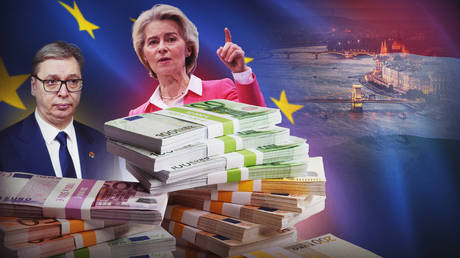
The EU has already frozen €121 million in funding that was meant for the Georgian government. That’s not a rounding error. That’s money for roads, schools, and reforms that is now sitting in a vault in Brussels instead of helping Georgians.
Why the Russian alignment is a dealbreaker
Brussels can handle a lot of things—slow reforms, corruption, even a bit of ego. What it won’t tolerate is a candidate state that acts as a Trojan horse for Moscow. While Ukraine is fighting for its life, the Georgian Dream leadership, spearheaded by billionaire Bidzina Ivanishvili, has been busy re-establishing direct flights to Russia and increasing oil purchases.
They call it "pragmatism." Most of the West calls it a betrayal. The government’s rhetoric has turned toxic, accusing the West of being a "global war party" trying to drag Georgia into a second front against Russia. It's a conspiracy theory that sounds like it was scripted in the Kremlin.
The cost of losing the European path
This isn't just about politics; it’s about the wallet of every Georgian citizen. If the EU follows through with the latest threats discussed in early 2026, the damage will be permanent.
- Visa-free travel is on the chopping block. This is the one benefit Georgians actually feel. The Commission is already suspending visa-free travel for holders of diplomatic and service passports. Regular citizens could be next.
- Economic isolation. Georgia’s economy is fragile. The IMF has warned that without the stability provided by the EU path, growth could stall.
- The brain drain. When the European dream dies, the young and educated leave. We’re already seeing mass protests in Tbilisi where the average age is about 22. These kids aren't fighting for a political party; they’re fighting for a future that doesn't involve being a Russian satellite.
Honestly, the EU has been patient. Maybe too patient. By granting candidate status in 2023, they hoped to pull Georgia closer. Instead, the ruling party used that status as a shield to deflect criticism while they dismantled democratic institutions.
What happens when the money stops
When the EU cuts funding, they don't just stop writing checks to the Ministry of Finance. They shift that money. We’re seeing a shift where funds are being diverted away from government agencies and toward civil society and NGOs—the very people the Georgian government is trying to silence.
It’s a high-stakes game of chicken. The government thinks the EU won't "lose" Georgia to Russia's orbit. They think they’re too strategically important to be abandoned. But they’re miscalculating the mood in Brussels. The EU is tired of funding its own enemies.
If you're watching this from the outside, don't expect a quick fix. The crisis in Georgia is deep, and the divide between the people and the government is wider than ever. The EU isn't just cutting funding; they’re cutting ties with a government they no longer trust.
If you want to keep track of where the money is actually going, watch the European Commission's neighborhood policy reports. The next round of audits will likely show even more "reprogrammed" funds. The message is clear: the free ride is over.
Next Steps for Observers:
- Watch the European Council’s upcoming summit for a formal vote on "suspending" or "withdrawing" candidate status.
- Monitor the exchange rate of the Georgian Lari; market jitters often precede political shifts.
- Keep an eye on the visa-free regime reviews—if regular Georgians lose the right to travel, the protests in Tbilisi will make 2024 look like a rehearsal.