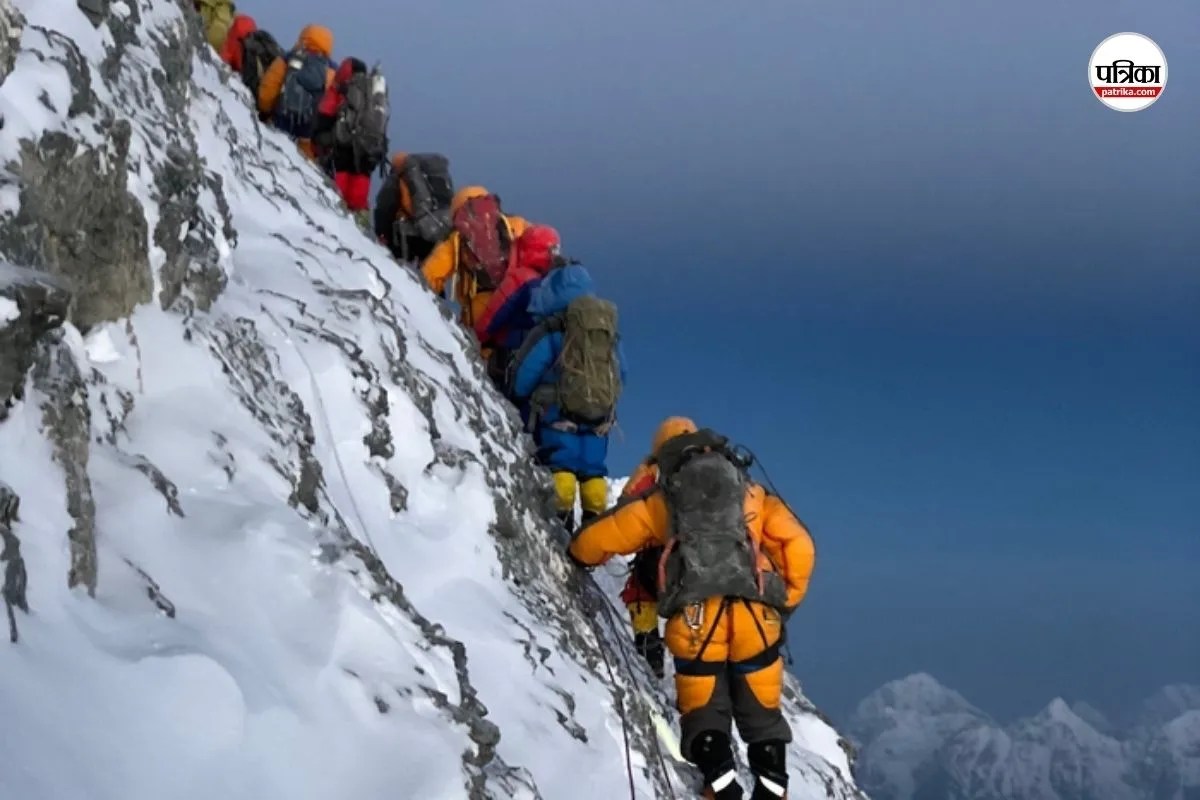
The headlines are screaming about a "slow poison" on Everest. They are painting a picture of a massive criminal conspiracy where 32 people were arrested for orchestrating fake helicopter rescues to fleece insurance companies. They want you to believe that greedy trekking agencies are the villains of the Himalayas.
They are wrong. For another look, see: this related article.
The media is chasing a ghost. While the arrests are real, the narrative that this is some grand heist by local operators is a convenient distraction. It shields the real culprits: global insurance giants and a broken high-altitude rescue system that values a balance sheet over a human life.
The Myth of the Easy Payday
The common narrative suggests that agencies are spiking hikers' food with laxatives to trigger "emergency" evacuations. This is the "slow poison" the tabloids love. Let’s look at the math before we buy the hype. Related analysis on this trend has been shared by National Geographic Travel.
A standard helicopter evacuation from Everest Base Camp (EBC) to Kathmandu costs between $2,500 and $5,000. If an agency "overcharges" an insurance company $15,000, they aren't exactly retiring on the margin. To make this a sustainable criminal enterprise, you need volume. You need dozens of people "getting sick" simultaneously.
But here is what the industry won't tell you: high-altitude pulmonary edema (HAPE) and high-altitude cerebral edema (HACE) look exactly like the symptoms of mild food poisoning or exhaustion in their early stages.
Insurance companies aren't being "scammed" by fake illnesses; they are being forced to pay for the physiological reality of sending thousands of amateur hikers into the death zone. The "fraud" isn't the rescue—it's the expectation that you can insure a 60-year-old with no mountain experience for a 17,000-foot trek and not expect a bill.
The Insurance Industry’s Dirty Secret
Insurance companies are not victims here. They are the architects of the chaos.
For years, these firms have offshored their risk assessment. They don't have doctors on the ground in Gorak Shep. They don't have inspectors at the helipads. They rely on "cost-containment" firms that try to haggle down the price of a life-saving flight while the patient is still gasping for air.
I have seen cases where an insurer refused to authorize a flight because the pulse oximeter reading was 70% instead of 65%. In the thin air of the Himalayas, that 5% difference is the margin between a headache and a body bag.
When the insurance companies realized their premiums were being eaten by the sheer reality of mountain sickness, they didn't fix their underwriting. They cried "fraud." They pressured the Nepali government to crack down, not to save lives, but to protect their Q4 margins.
The "Slow Poison" Logic Fallacy
The idea that agencies are systematically poisoning clients is a logistical nightmare that defies common sense. If you poison your client, your reputation dies. In the age of Instagram and TripAdvisor, a single bad review about "unexplained stomach cramps" can tank a $500,000-a-year trekking business.
The real "poison" is the culture of the "Instant Everest" experience.
Agencies are under pressure to get people to the top or the base camp faster than human biology allows. They skip acclimatization days to fit a 14-day trek into a 10-day vacation window. When the client inevitably collapses, the helicopter is the only way out.
Is it a scam? Or is it the inevitable result of a commercialized mountain where "safety" is sold as a premium feature rather than a baseline requirement?
Who Are the 32 Arrested?
The arrests targeted small-scale operators, trekking guides, and a few hospital administrators. These are the low-hanging fruit.
Notice who wasn't arrested: the CEOs of the major insurance conglomerates who continued to sell "comprehensive" mountain coverage while knowing their payout models were unsustainable.
The Nepali government is performing a theater of accountability. By arresting a few dozen people, they signal to the international community that the mountain is "safe" and "regulated." It ensures the permit fees—which run into the millions—keep flowing into the treasury.
The Problem With "Rescue Commissions"
Let’s talk about the kickbacks. Yes, some agencies get a "commission" from helicopter companies for calling in a rescue.
In a vacuum, this looks like a conflict of interest. In the reality of the Nepal highlands, it’s often the only way these agencies stay solvent. The profit margins on a standard EBC trek are razor-thin due to massive price-cutting wars.
Imagine a scenario where a guide has to choose between calling a helicopter for a client who might be dying or waiting six hours to see if they improve. If that guide knows his agency gets a $500 referral fee from the heli-op, he calls the bird.
Is that fraud? Or is it a safety incentive disguised as a kickback?
I would rather have a hundred "unnecessary" rescues than one body left on the trail because a guide was afraid an insurance adjuster in London would flag the claim as suspicious.
The Real Crime: The Privatization of Rescue
The true scandal isn't that a few people overbilled for a helicopter. The scandal is that there is no centralized, non-profit, government-run rescue service on the world’s most famous mountain.
In the French Alps, the PGHM (Peloton de Gendarmerie de Haute Montagne) handles rescues. It is professional, state-funded, and decoupled from the profit motive of trekking agencies.
On Everest, rescue is a private market.
When you make survival a commodity, you get market fluctuations. You get competition. You get middle-men trying to shave a percentage off the top. The "fraud" the media is obsessed with is just the free market doing what the free market does: finding ways to maximize revenue in a high-demand environment.
Stop Blaming the Sherpas
The subtext of the "32 arrested" story often carries a whiff of colonial bias. It suggests that the "local" operators are corrupt and the "international" insurance companies are being swindled.
The Sherpas and local guides are the ones carrying the physical risk. They are the ones putting themselves in the path of avalanches to save a tourist who didn't train properly. If they are padding a bill to cover the costs of a rescue that the insurance company will try to deny anyway, that’s not a heist. It’s a survival tactic against a predatory financial system.
The Solution No One Wants to Hear
If we actually wanted to stop "insurance fraud" on Everest, we would do three things:
- Mandatory Pre-Trek Medicals: Not a form you sign at home, but a physical check-in in Namche Bazaar. If your vitals don't hit the mark, you don't go higher. No exceptions.
- Standardized Rescue Rates: The government should set a flat, non-negotiable fee for every heli-lift. No commissions, no kickbacks, no haggling.
- The "Rescue Tax": Add a $500 "Search and Rescue" fee to every trekking permit. Use that pool of money to fund a standing rescue fleet that doesn't need to check an insurance policy before it starts the engine.
But the insurance companies won't support this because it would prove that the "fraud" was actually just the cost of doing business. And the trekking agencies won't support it because it removes their ability to compete on price.
Your Trek Is the Problem
If you are reading this and planning a trip to Nepal, understand this: you are part of the incentive structure.
When you hunt for the "cheapest" trek online, you are forcing agencies to cut corners. You are forcing them to look for alternative revenue streams—like helicopter commissions. You are essentially asking to be part of a system that requires a "scam" to function.
Don't look for the "32 criminals" in the news. Look at the insurance policy in your inbox and the "budget" price of your tour operator. That’s where the real slow poison is hidden.
The mountain doesn't care about your insurance claim. It is indifferent to your "fraud" investigations. The only thing that matters on Everest is the oxygen in your blood and the integrity of the people standing next to you. If you've compromised that for a lower premium, you've already lost.
Stop looking for villains in the Himalayas and start looking at the spreadsheets in Zurich and London. That’s where the real theft is happening.