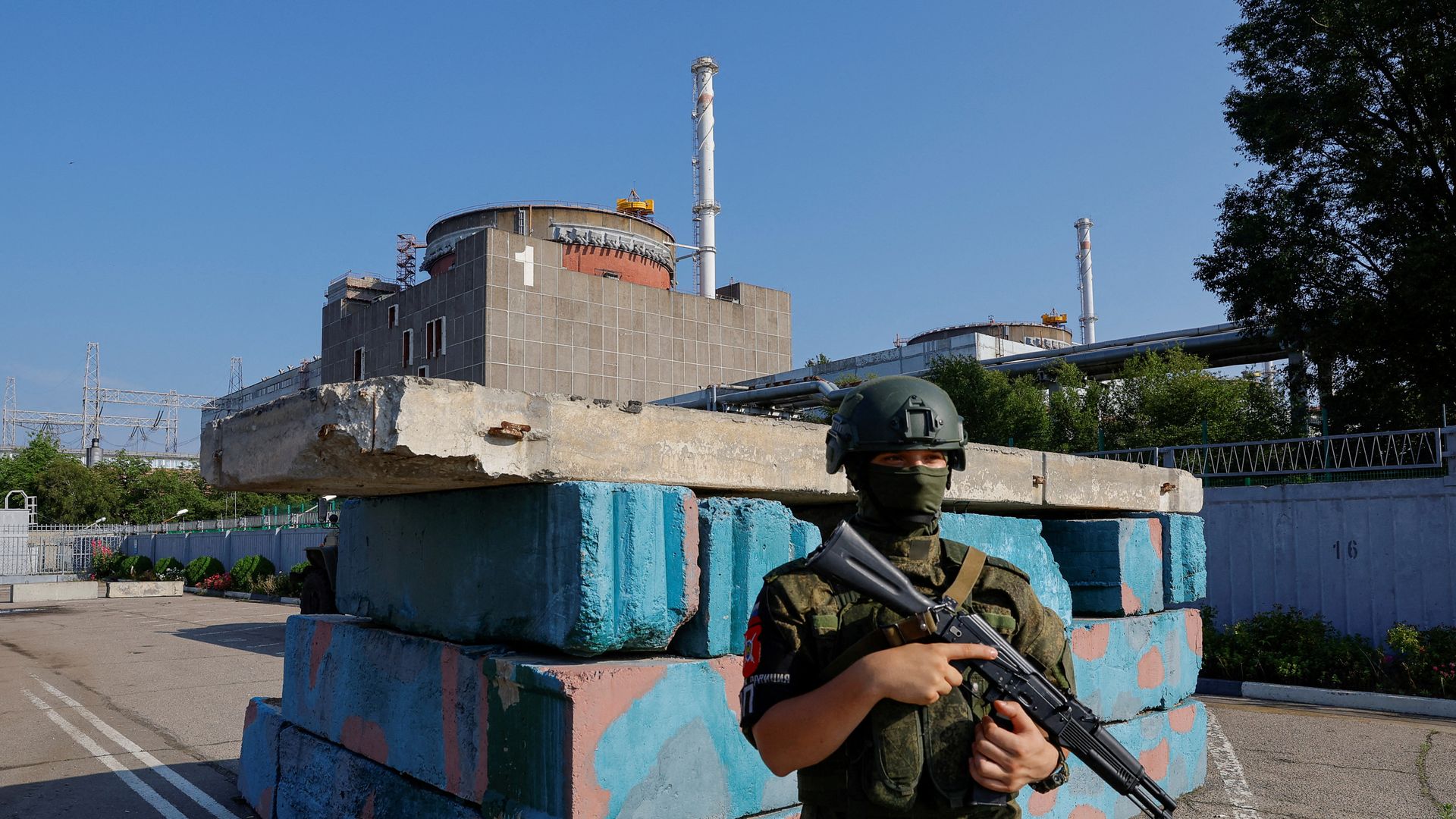
The death of a worker at the Zaporizhzhia Nuclear Power Plant (ZNPP) following a drone strike is not just another casualty of the conflict in Ukraine. It represents a terrifying erosion of the "seven indispensable pillars" of nuclear safety. For two years, the world has watched a slow-motion car crash at Europe’s largest nuclear facility, but the transition from structural damage to the targeted killing of personnel marks a darker shift in the geography of this war. While the immediate cause was a strike on a transport vehicle, the root cause is the continued militarization of a site that was never designed to be a fortress.
Russia’s state nuclear corporation, Rosatom, reported that the strike hit a car carrying a plant employee in the city of Enerhodar, which serves as the primary residential hub for ZNPP staff. This isn't just about one life lost. It is about the psychological warfare waged against the skeletal crew keeping six VVER-1000 reactors from a catastrophic meltdown. You cannot run a nuclear plant with a terrified, exhausted, and dwindling workforce.
The Myth of the Neutral Zone
International law and the International Atomic Energy Agency (IAEA) have pleaded for a demilitarized zone around Zaporizhzhia since the early days of the 2022 invasion. Those pleas have fallen on deaf ears. Instead, the facility has become a pawn in a high-stakes game of nuclear chicken. Moscow blames Kyiv for the drone strikes, citing a pattern of "nuclear terrorism." Kyiv maintains that Russia is using the plant as a shield to launch artillery, knowing the Ukrainian military cannot risk a full-scale return fire that might puncture a containment dome.
The reality on the ground is more complex than a simple binary of who pulled the trigger. The plant is currently in a state of cold shutdown, a technical status that reduces the risk of a steam explosion but does not eliminate the need for constant cooling. To maintain that cooling, you need three things: water, electricity, and people. By killing the people, you compromise the entire system just as effectively as if you had bombed the turbines.
Engineering Under Fire
A nuclear reactor is a massive heat engine. Even when it isn't generating electricity, the radioactive decay in the fuel rods produces significant heat. At ZNPP, the cooling systems rely on external power lines that have been severed and repaired dozens of times. When the lines go down, the plant switches to backup diesel generators. These generators are the last line of defense.
The Human Component of Safety
We often talk about the reactors as if they are autonomous machines. They are not. A nuclear plant requires a massive logistical tail. Workers must monitor pressure valves, check for leaks in the cooling loops, and manage the chemistry of the water to prevent corrosion.
When a drone hits a worker's car, every other technician at the plant asks the same question: "Am I next?" This leads to a brain drain that no amount of imported Russian labor can fully fix. Local Ukrainian staff who stayed behind to prevent a disaster are working under extreme duress, often viewed with suspicion by the occupying forces. If these experts flee or are killed, the margin for human error grows exponentially.
The Drone Problem
The use of First-Person View (FPV) drones has changed the nature of this siege. Unlike traditional artillery, which is relatively imprecise, a drone operator can see exactly what they are hitting. The strike in Enerhodar was precise. It targeted a specific vehicle. This suggests that the attackers—whoever they may be—are no longer concerned about the optics of hitting civilian infrastructure or personnel associated with the plant.
The IAEA monitors on-site have frequently reported hearing explosions and seeing drone activity. However, their mandate is limited. They are observers, not forensic investigators. They can tell us that a drone hit the training center or a laboratory, but they are rarely able to provide the "smoking gun" that assigns definitive blame. This ambiguity serves both sides in the propaganda war while leaving the actual safety of the plant in a state of permanent precarity.
The Power Grid Vulnerability
Beyond the physical walls of the plant, the surrounding infrastructure is crumbling. The destruction of the Kakhovka Dam in 2023 already compromised the long-term water supply for the cooling ponds. Now, the focus has shifted to the electrical substations.
- External Power Lines: The plant has lost its connection to the main 750kV lines multiple times.
- Backup Generators: These are designed for short-term emergencies, not months of continuous operation.
- Physical Security: Landmines have been detected within the perimeter of the site.
The death of a worker is a flashing red light on the dashboard of global security. If the personnel are not safe in their homes or on their way to work, the chain of command and technical oversight at ZNPP will eventually collapse.
The Intelligence Gap
We are operating in an information vacuum. Russian forces control the physical site, meaning all data coming out of the plant is filtered through their security apparatus. Ukraine provides satellite imagery and intercepts that often tell a different story. In this environment, truth is the first casualty, followed closely by the safety margins of the reactors.
The international community acts as if a nuclear accident would be a localized event. History suggests otherwise. A breach at Zaporizhzhia would not care about borders or political allegiances. The radioactive plume would follow the wind, potentially contaminating the very soil both nations are fighting to control.
Tactical Blunders and Strategic Risks
There is no tactical advantage to hitting nuclear plant workers that outweighs the strategic risk of a meltdown. If Russia cannot guarantee the safety of the staff it claims to be managing, its "administration" of the plant is a failure. If Ukraine is targeting personnel, it risks losing the moral high ground and the vital support of its Western allies.
The death of an employee is a signal that the "red lines" regarding nuclear safety have been erased. We are no longer talking about accidental shell fragments; we are talking about targeted strikes in the vicinity of a nuclear site. This is a progression toward a disaster that everyone says they want to avoid but which no one seems willing to prevent.
The international response has been a series of strongly worded statements that have done nothing to stop the drones. Sanctions against the Russian nuclear sector have been slow and inconsistent because many European nations still depend on Russian fuel rods and technical services. This financial entanglement makes a firm diplomatic stance nearly impossible.
The situation at Zaporizhzhia is a grim reminder that our international safety frameworks are built for a world that no longer exists. They assume that all parties share a basic interest in avoiding a nuclear catastrophe. That assumption is being tested every day that a drone flies over Enerhodar. The cooling ponds are still full, and the reactors are still in shutdown, but the human infrastructure is bleeding out. Without a radical change in the military status of the region, we are not waiting for a "what if," but a "when." Stop looking at the domes and start looking at the people who keep them from cracking.