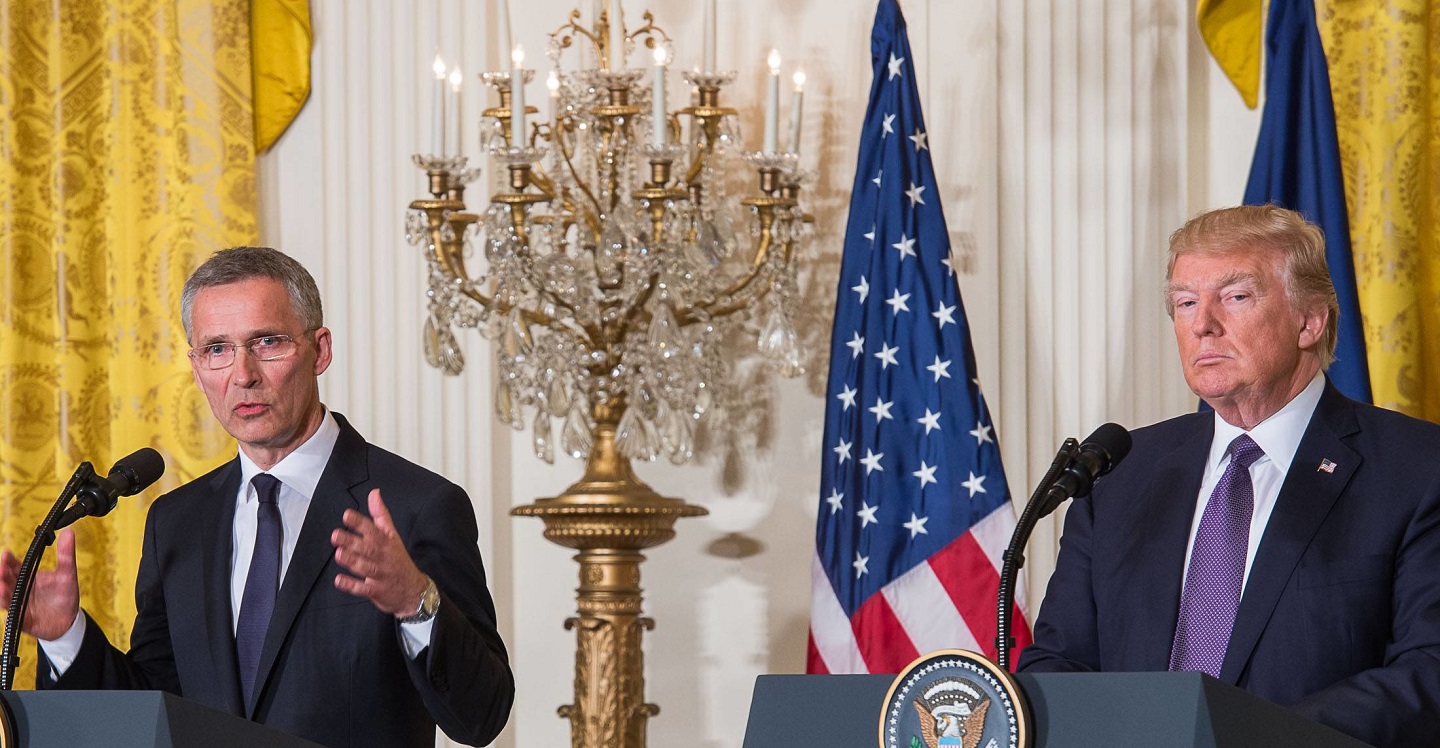
The security of the Strait of Hormuz is not a binary state of "open" or "closed" but a fluctuating gradient of operational risk that directly dictates the global energy risk premium. When the U.S. Secretary of State and the UK Foreign Secretary coordinate on Iranian regional activity, they are not merely engaging in diplomatic signaling; they are attempting to manage a multi-vector crisis involving state-sponsored maritime interdiction, proxy-led kinetic friction, and the fragility of global supply chains. Restoring free navigation requires more than verbal de-escalation; it demands a restructuring of the regional security architecture to address the asymmetry between low-cost disruption and high-cost defense.
The Triad of Maritime Instability
Current tensions in the Persian Gulf and the Gulf of Oman are driven by three distinct but intersecting strategic pressures. Failure to isolate these variables results in reactive policy rather than proactive stabilization.
- The Asymmetric Denial Capability: Iran and its regional affiliates utilize "anti-access/area denial" (A2/AD) strategies. This involves using swarming fast-attack craft, sea mines, and shore-based anti-ship missiles. The cost of a single drone or mine is negligible compared to the $100 million+ value of a Long Range 2 (LR2) tanker and its cargo.
- The Diplomatic-Kinetic Feedback Loop: Hostile actions in the Strait often serve as "kinetic bargaining chips" during broader negotiations regarding nuclear proliferation or regional sanctions. Each interdiction or attempted seizure is a data point intended to test Western resolve and drive up insurance premiums.
- The Intelligence-Interception Gap: Securing 21 miles of navigable water at the Strait’s narrowest point requires persistent ISR (Intelligence, Surveillance, and Reconnaissance). The current challenge lies in the transition from detecting a threat to deploying a physical deterrent in the minutes before an boarding attempt occurs.
The Economic Mechanics of Chokepoint Vulnerability
The Strait of Hormuz facilitates the passage of approximately 21 million barrels of oil per day, representing roughly 21% of global petroleum liquids consumption. Standard economic models often overlook the "cascading friction" that occurs when navigation is threatened.
The Insurance Premium Spike
When a "War Risk" zone is declared or expanded, Protection and Indemnity (P&I) clubs and underwriters adjust rates instantaneously. This is a direct tax on the global economy. A 10% increase in freight and insurance costs for Middle Eastern crude doesn't just affect the pump price; it ripples through petrochemical manufacturing and aviation logistics, creating a persistent inflationary floor.
The Inventory Buffer Depletion
Global supply chains have moved toward "just-in-time" delivery. A disruption in the Strait forces refineries to dip into strategic reserves. Once those reserves hit a critical threshold, the market enters a state of backwardation, where current prices soar far above future expectations, disincentivizing long-term stability and encouraging speculative volatility.
Strategic Logic of the U.S.-UK Bilateral Response
The coordination between Washington and London serves as the backbone of International Maritime Security Construct (IMSC). This partnership is designed to distribute the operational burden and provide a unified legal front against maritime seizures.
- Legal Legitimacy: By emphasizing "free navigation," the U.S. and UK ground their military presence in the United Nations Convention on the Law of the Sea (UNCLOS). Even though the U.S. is not a formal party to UNCLOS, it adheres to its customary international law provisions, providing a framework to challenge "innocent passage" violations by Iranian forces.
- Asset Distribution: The UK’s Royal Navy often provides the "persistent presence" through Type 23 frigates or Type 45 destroyers, while the U.S. 5th Fleet provides the "over-the-horizon" heavy lift, including carrier strike groups and advanced aerial assets. This layered defense forces an adversary to calculate the risk of escalating against two major powers simultaneously.
The Ceasefire Variable: De-escalating the Proxy Network
Talk of an Iran-linked ceasefire—specifically regarding the conflict in Yemen or broader regional hostilities—is the primary lever for reducing maritime risk. The Houthi movement’s ability to strike vessels in the Red Sea and the Gulf of Aden has effectively extended the "danger zone" from the Strait of Hormuz to the Bab el-Mandeb strait.
A ceasefire is not a humanitarian gesture in this context; it is a tactical necessity to decouple maritime trade from land-based regional conflicts. If the "Axis of Resistance" perceives that maritime disruption no longer serves their broader political goals, the frequency of kinetic incidents drops. However, the limitation of this strategy is the "Agency Problem": local commanders or autonomous proxy cells may not always adhere to high-level diplomatic agreements, leading to "black swan" incidents that can reignite a conflict cycle despite official ceasefires.
Rebuilding the Security Architecture
To move beyond the cycle of crisis and temporary de-escalation, three structural shifts must occur in the Gulf’s security management.
Technical Hardening of Commercial Assets
Shipowners must move beyond passive defense. This includes the wider adoption of non-lethal deterrents and "citadel" protocols, where crews can lock down the vessel’s propulsion and communications from a hardened interior, making ship seizures significantly more difficult and time-consuming for boarding parties.
Regional Burden Sharing
The historical reliance on Western navies is reaching a point of diminishing returns. Lasting stability requires the integration of GCC (Gulf Cooperation Council) navies into a cohesive, interoperable coastal defense grid. This reduces the "foreign occupier" narrative used by Iran and creates a localized vested interest in maintaining the status quo.
The Digitization of Maritime Domain Awareness
Traditional radar is insufficient against low-profile, composite-hull fast boats. The next phase of security involves deploying a mesh network of autonomous underwater vehicles (AUVs) and high-altitude long-endurance (HALE) drones. By creating a transparent "glass ocean," the element of surprise—which is the primary weapon of asymmetric forces—is neutralized.
Probability of Sustained Navigation Freedom
The baseline expectation for the next 18 months is a state of "managed instability." While a total closure of the Strait of Hormuz remains a low-probability, high-impact event (a "Grey Swan"), the persistence of harassment and attempted seizures is a near-certainty.
The efficacy of U.S.-UK diplomacy will be measured by the "Interdiction Delta": the ratio of attempted seizures to successful ones. If the diplomatic pressure on Tehran, coupled with a credible military deterrent, can keep this ratio near zero, the market will eventually price out the conflict premium. If, however, a ceasefire fails to materialize or is ignored by proxy forces, we will see a shift toward "convoy-based" trade, a regressive and expensive maritime model not seen at scale since the "Tanker War" of the 1980s.
The strategic priority must remain the decoupling of maritime transit rights from regional political grievances. Every time a commercial vessel is used as a lever in a nuclear or territorial dispute, the fundamental principle of the "Global Commons" erodes. The restoration of free navigation is not a return to a peaceful past, but the enforcement of a rigorous, technologically-backed standard of transit that makes interference prohibitively expensive for the disruptor.