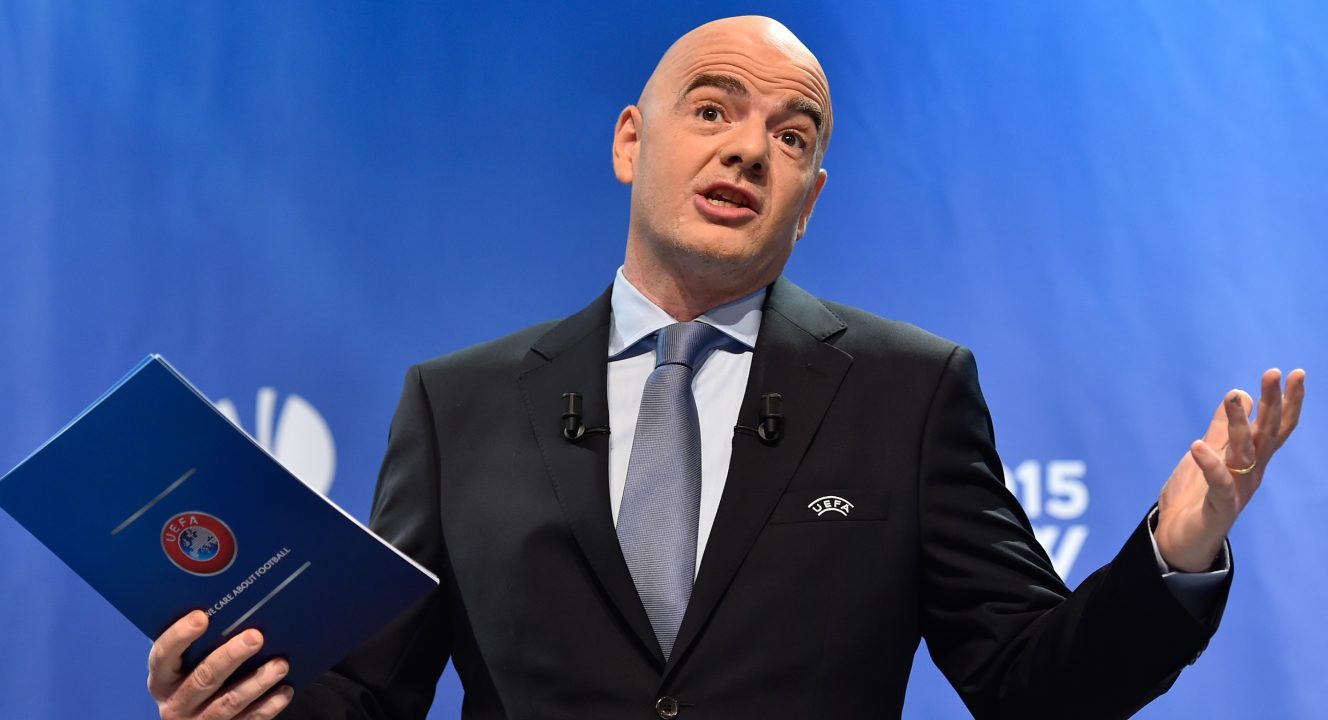
FIFA President Gianni Infantino is betting on the unifying power of the pitch to override decades of frozen diplomacy. By asserting that Iran must travel to the United States for the 2026 World Cup, the head of world football is doing more than just stating a tournament requirement. He is forcing a collision between the strict visa policies of the U.S. State Department and the mandatory "open door" guarantees that FIFA demands from every host nation. For the 2026 tournament, which is spread across the U.S., Canada, and Mexico, the logistics of entry are no longer a bureaucratic footnote. They are a potential flashpoint.
Infantino’s recent rhetoric centers on a simple, perhaps naive, premise. He believes football exists in a vacuum where geopolitical tensions dissolve at the touchline. However, the reality of 2026 is far more complex. The United States and Iran have not held formal diplomatic relations since 1980. Sanctions are heavy. Travel is restricted. Yet, to host a World Cup, the U.S. government had to provide written assurances to FIFA that all qualified teams, officials, and accredited media would be granted entry.
The Paper Shield of FIFA Guarantees
When a country bids for the World Cup, it signs a host city agreement and a government guarantee. These documents are legally binding in the eyes of FIFA, though their standing in domestic constitutional law is often murky. The U.S. government promised to facilitate visas for all participants. This sounds straightforward until it involves a nation currently designated by the host as a state sponsor of terrorism.
The friction is inevitable. FIFA operates as a sovereign entity without a territory, demanding that nations suspend their standard security protocols for a month of sport. Infantino is signaling to Washington that he expects those promises to be kept, regardless of the political climate in the Middle East or the domestic pressure on the White House. He is essentially daring the U.S. government to deny a visa to a starting midfielder or a team doctor, which would trigger a crisis that could see the U.S. stripped of hosting rights in a worst-case, though unlikely, scenario.
The Logistics of a Diplomatic No Mans Land
How does a team from Tehran actually get to Los Angeles or Miami? Because there is no U.S. Embassy in Iran, players and staff usually have to travel to third-party countries like Turkey, Armenia, or the UAE just to sit for a visa interview.
For a high-profile national team, the "administrative processing" that typically dogs Iranian travelers cannot happen. The 2026 World Cup schedule is rigid. There is no room for a three-month delay in a visa background check. This creates a two-tier immigration system where athletes are fast-tracked while their fellow citizens remain barred or scrutinized. This disparity is a PR minefield for the U.S. government and a point of contention for activists who argue that sports should not grant a "get out of jail free" card to representatives of a controversial government.
Security vs Spectacle
The U.S. security apparatus views a World Cup through the lens of threat assessment. Having the Iranian national team on American soil for several weeks presents a massive security challenge. It is not just about the safety of the players. It is about the protests that will inevitably follow them.
In Qatar 2022, we saw the stands become a battleground for Iranian domestic politics. Pro-government fans clashed with those supporting the "Woman, Life, Freedom" movement. In the U.S., which has one of the largest Iranian diaspora populations in the world, these tensions will be magnified tenfold. FIFA’s "no politics" rule is notoriously difficult to enforce. While Infantino wants the focus on the ball, the stands in 2026 will be a sea of competing flags and political slogans. The U.S. host cities will have to manage large-scale protests and potential violence, all while maintaining the "celebratory atmosphere" FIFA insists upon.
The Precedent of 1998 and 2022
History gives us a roadmap, but it is a bumpy one. The 1998 match between the U.S. and Iran in France was dubbed the "most politically charged match in World Cup history." It ended with players exchanging roses and a joint team photo. It was a masterpiece of optics that changed exactly zero percent of the underlying geopolitical reality.
In 2022, the tension returned when the U.S. Soccer Federation briefly displayed an Iranian flag on social media without the Islamic Republic’s emblem to show support for protesters. The Iranian government reacted with fury, demanding the U.S. be kicked out of the tournament. Infantino watched this unfold and clearly believes he can manage similar outbursts in 2026 by sheer force of will. He is banking on the idea that the "show must go on" and that the commercial value of the 48-team tournament is too great for any side to sabotage.
The Revenue Driver Behind the Diplomacy
We must be honest about why FIFA is so adamant about participation. The 2026 World Cup is projected to be the most profitable event in the organization's history. With 48 teams and 104 matches, the gate receipts and broadcasting rights are astronomical.
Excluding a qualified nation because of visa issues would result in a massive legal and financial headache. Sponsors like Coca-Cola, Visa, and Adidas pay for a global event, not a "Western-aligned" event. If the U.S. blocks Iran, it sets a precedent that could affect future bids from other "difficult" nations. China, for instance, watches these developments closely. FIFA’s business model depends on being able to tell any nation on earth that they can host, provided they have the stadiums and the cash, regardless of their human rights record or their standing with the UN.
A Collision of Sovereignty
The real story here is the erosion of national sovereignty in the face of global sporting bodies. For one month, FIFA expects to dictate who enters the United States. This is a tall order for a country that has spent the last decade tightening its borders.
Infantino’s "they have to come" stance is a reminder that FIFA views itself as a United Nations with a better balance sheet. They don’t see the U.S. State Department as a barrier; they see it as a service provider for their tournament. If the U.S. refuses to blink and denies entry to certain officials, FIFA has the power to impose massive fines or move matches to Mexico or Canada. It is a game of high-stakes chicken.
The Role of the Diaspora
The Iranian-American community is not a monolith. Some see the team’s presence as a chance to showcase Iranian culture and pride. Others see the team as a tool of the regime and will demand the U.S. government deny them the platform.
This internal conflict within the host nation adds a layer of domestic political risk that Infantino likely ignores. A U.S. administration, especially in an election cycle or its immediate aftermath, might find it politically impossible to be seen "welcoming" representatives of a hostile power. FIFA’s demand for a smooth entry process ignores the reality of how American voters perceive these issues.
The Myth of the Neutral Pitch
Football is never just football. The pitch is a stage where national identities are performed and contested. When Infantino says Iran "has to come," he is trying to preserve the myth that the World Cup is a neutral space.
But the very act of granting a visa is a political act. The act of playing a national anthem is a political act. The 2026 World Cup will be the largest stage in the world, and there is no way to prevent the geopolitical crises of the day from spilling over into the stadiums of North America.
Technical Hurdles and Financial Sanctions
Beyond the visas, there are the bank accounts. U.S. sanctions make it nearly impossible for Iranian entities to move money through the global financial system. How does the Iranian Football Federation pay for its hotels? How do they pay for their internal travel?
FIFA often has to act as a financial intermediary, using its own accounts to cover the expenses of sanctioned nations and then deducting those costs from the prize money the team earns. This creates a shadow financial network just to keep the tournament running. It is a workaround that highlights just how much effort goes into maintaining the illusion of a unified global sport.
The Deadline for a Decisive Shift
The clock is ticking. Qualifying rounds are moving forward, and the logistics of the 2026 tournament are being locked in now. Security protocols, transportation hubs, and visa processing centers are already being established.
If there is to be a standoff between FIFA and the U.S. government, it will happen in the next 18 months. The U.S. must decide if it will honor the "open door" guarantees it gave during the bidding process or if it will prioritize its standard national security vetting. Infantino has made his position clear. He expects the U.S. to bend.
The 2026 World Cup is being sold as a celebration of unity across a continent. But if a qualified nation is kept from the starting line because of a passport, the entire project of the "Global Game" is exposed as a selective club. The pressure is on Washington to decide if a football tournament is worth a temporary suspension of its geopolitical stance, and on FIFA to see if its rules actually hold weight when they meet the reality of the American border.
The U.S. government should immediately establish a dedicated, transparent channel for 2026 World Cup visas that balances security with its contractual obligations to FIFA. Waiting for a last-minute crisis will only ensure that the tournament is remembered for a diplomatic failure rather than the sport itself. Either the guarantees mean something, or they are just ink on a page designed to win a bid. It is time for the host nation to show its hand.