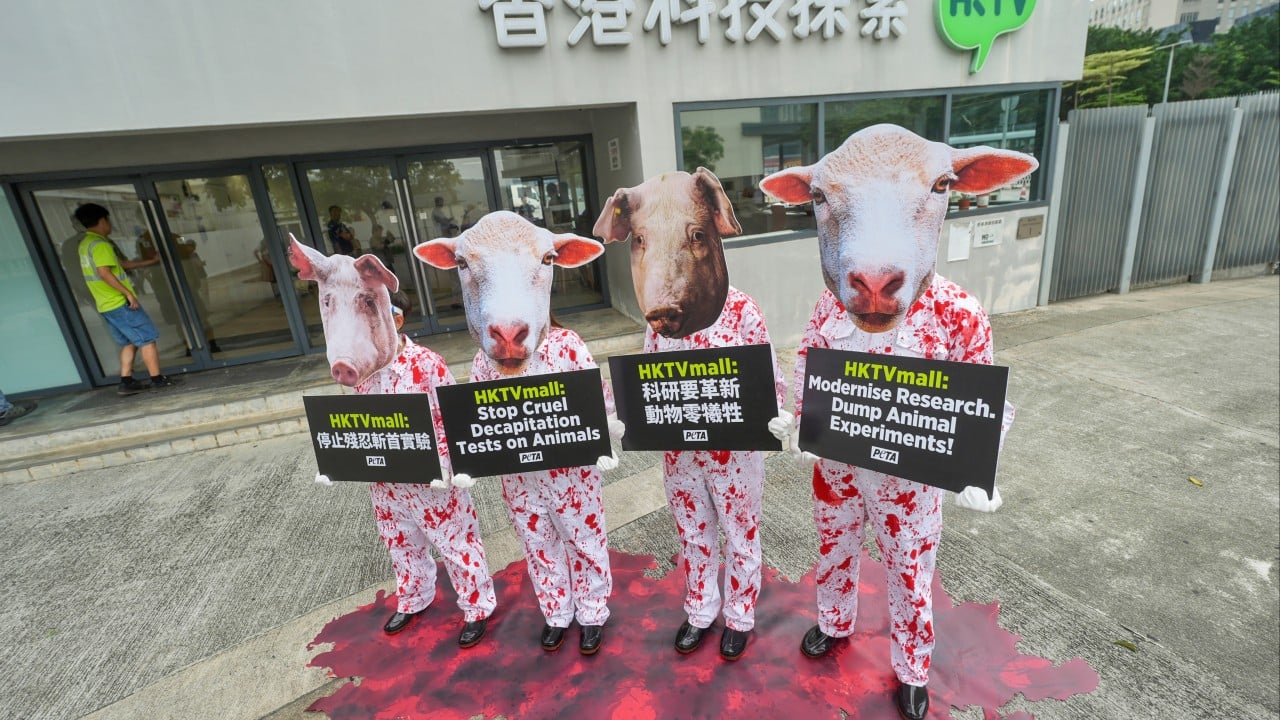
Hong Kong’s largest e-commerce platform, HKTVmall, is currently facing a public relations firestorm and a growing boycott movement driven by local animal rights groups. The backlash centers on the company’s expansion into life science research, specifically involving animal testing at a new laboratory facility. While the company frames this move as a necessary leap into high-tech innovation, activists view it as a betrayal of the brand’s consumer-facing identity. This clash highlights a fundamental tension in the city’s corporate sector between the aggressive pursuit of biotech dominance and the shifting ethical expectations of a more socially conscious middle-class consumer base.
The Pivot from Retail to Research
Ricky Wong, the veteran entrepreneur behind HKTVmall, has never been one to play it safe. After disrupting the telecommunications industry and then the retail sector, his latest venture involves moving HKTVmall’s parent company, Hong Kong Technology Venture (HKTV), into the realm of biomedical sciences. The company recently established a laboratory designed to conduct pharmaceutical research and development.
This is not a small-scale side project. It is a strategic attempt to diversify away from the slim margins of grocery delivery and into the lucrative world of life sciences. However, the transition has hit a massive roadblock. Animal rights organizations, including groups like the Animal Liberation Alliance and various local grassroots networks, have sounded the alarm over the use of animals in the company’s experiments. They argue that a platform built on the daily trust of pet owners—HKTVmall is a primary source for pet food and supplies in Hong Kong—cannot simultaneously fund practices that cause animal suffering.
The boycott is gaining traction because it hits HKTVmall where it hurts: its active user base. For many Hong Kongers, the platform is an essential utility. But the emotional connection to animal welfare in a city with one of the highest per-capita pet ownership rates in the region has turned a corporate expansion plan into a reputational liability.
The Ethical Vacuum in the Biotech Push
Hong Kong is currently obsessed with becoming a global hub for innovation and technology. The government has poured billions into the Science Park and the Lok Ma Chau Loop, incentivizing companies to move into biotech and pharmaceutical R&D. In this environment, HKTV’s move makes sense on paper. The tax breaks are significant, and the potential for a breakthrough drug or medical patent offers returns that retail can never match.
But the "innovation at all costs" mindset often ignores the social license required to operate. HKTVmall didn't just sell electronics; it sold a vision of a modern, efficient Hong Kong. When that brand suddenly becomes associated with laboratory cages, the disconnect is jarring.
The company’s defense has largely focused on compliance. They point out that their research follows all local legal requirements and international standards for animal testing. This is a classic corporate miscalculation. Legal compliance is the floor, not the ceiling, of public expectation. In 2026, consumers do not care if an action is technically legal if they find it morally objectionable.
The Science of Alternatives
A significant portion of the criticism stems from the belief that animal testing is an outdated methodology. Critics point to the rise of in vitro testing, organ-on-a-chip technology, and advanced computer modeling as viable alternatives that HKTVmall could have championed to align with its "tech-forward" image.
By opting for traditional animal models, the company appears to be choosing the path of least resistance rather than true innovation. If HKTVmall wanted to be a disruptor in the life sciences, it had the opportunity to invest in cruelty-free research methods that are increasingly becoming the gold standard in forward-thinking global labs. Instead, they adopted a 20th-century approach that has alienated their 21st-century customers.
Tracking the Economic Impact of the Boycott
Measuring the success of a boycott is notoriously difficult. People often say they will stop buying while continuing to browse the app out of convenience. However, HKTVmall’s own data may soon show a different story. The pet supply segment is one of the most consistent and high-frequency categories on the platform. If even a small percentage of "pet parents" migrate to competitors like HKTVmall's rivals or specialized pet stores, the revenue dip will be noticeable in the next quarterly report.
Moreover, the boycott is about more than just immediate sales. It is about brand equity. HKTVmall spent years positioning itself as the "people’s choice" against traditional land-based monopolies. That underdog status vanishes the moment the public perceives the company as a cold, clinical entity indifferent to animal life.
The ripple effect is already visible on social media. Hong Kong’s digital ecosystem is compact and highly reactive. Once a narrative takes hold—in this case, "HKTVmall kills animals"—it becomes incredibly difficult to shift. The company’s PR response has been criticized as being too slow and too corporate, failing to address the emotional core of the protest.
The Transparency Problem
One of the biggest failures in this saga is the lack of transparency. Most consumers had no idea that their grocery orders were indirectly funding a life science laboratory until activists broke the news. This "stealth" expansion into a controversial field is what fueled the sense of betrayal.
In the modern business environment, radical transparency is a defensive necessity. Had HKTVmall been upfront about their research goals, the ethical safeguards in place, and their long-term plan to reduce animal usage, they might have controlled the narrative. By staying quiet until they were caught in the spotlight, they allowed their critics to define the terms of the debate.
Institutional Pressure and ESG
This isn't just a headache for the marketing department. It’s an Environmental, Social, and Governance (ESG) nightmare. Institutional investors increasingly look at how companies handle social issues. A sustained boycott and a reputation for poor ethical standards can lead to a lower ESG rating, making the company less attractive to global capital.
While the Hong Kong market might be less sensitive to animal rights than Europe or North America, the trend is moving in only one direction. International partners and investors will hesitate to associate with a brand that is a lightning rod for controversy.
The Competitive Landscape Reacts
Competitors are not sitting idly by. Smaller e-commerce players and specialized delivery services are already pivoting their marketing to emphasize "ethical sourcing" and "community values." They are positioning themselves as the compassionate alternative to the "corporate machine" that HKTVmall is perceived to have become.
This is the danger of being the market leader. You have a massive target on your back, and any perceived ethical lapse provides an opening for more agile, values-aligned competitors to chip away at your market share. For HKTVmall, the loss of a customer isn't just one lost sale; it's the loss of years of data, loyalty, and recurring revenue.
A Crisis of Identity
At its heart, this is a crisis of identity. Is HKTV a retail company or a biotech company? By trying to be both, they have created a conflict of interest in the eyes of the public. You cannot easily market puppy pads and cat treats on one page while conducting invasive experiments on another.
The company's leadership appears to have underestimated the sentimental value people place on animals. In a city as dense and stressful as Hong Kong, pets are often viewed as family members. Threatening that bond, even indirectly through corporate investment choices, is a gamble that rarely pays off.
The Way Forward for HKTVmall
To survive this, the company needs to do more than issue a press release. They need to demonstrate a tangible commitment to modernizing their research practices. This could involve:
- Establishing an independent ethical oversight committee that includes animal welfare advocates.
- Investing heavily in non-animal research technologies and making those investments public.
- Providing a clear timeline for phasing out the most controversial types of animal testing.
The current strategy of "weathering the storm" is unlikely to work. The digital footprint of this boycott will remain, surfacing every time a new customer searches for the HKTVmall app.
The move into life sciences was intended to future-proof the company. Instead, it has created a hole in the hull of their flagship retail business. Success in the laboratory will mean very little if the platform that funds it collapses under the weight of a public revolt. The price of biomedical ambition is proving to be much higher than Ricky Wong and his board of directors ever anticipated.
The platform's next move will determine if it remains a household name or becomes a cautionary tale of corporate overreach. There is no middle ground when the public's moral compass is triggered. HKTVmall must now choose between its laboratory ambitions and the loyal customers who built its empire.