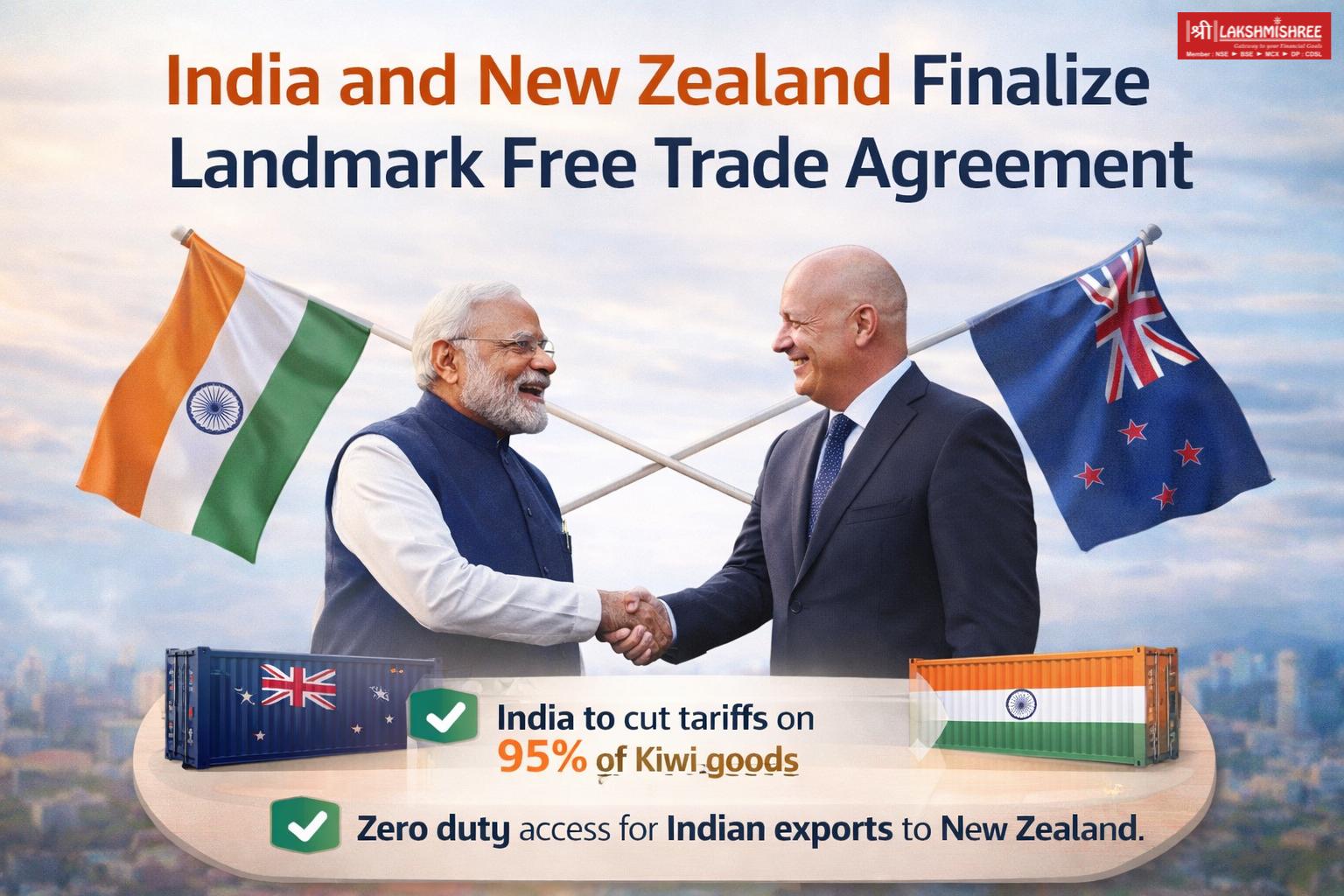
Thirteen months of high-level handshakes and diplomatic platitudes haven't changed the fundamental math of the Indo-Pacific. While Christopher Luxon and Narendra Modi trade smiles over "strategic milestones," the reality is that the New Zealand-India Free Trade Agreement (FTA) is a zombie project. It is a deal that cannot happen in its current form, and pretending otherwise is a waste of precious diplomatic capital.
The mainstream narrative suggests that New Zealand is "on the cusp" of a breakthrough because of shared democratic values and a mutual desire to hedge against China. This is a fairy tale. I’ve watched trade negotiators burn through decades of career capital chasing the Indian market, only to hit the same brick wall every single time: the Indian farmer.
If you think this deal is about "broadening horizons," you aren't looking at the data. You're looking at a press release.
The Dairy Wall is Unbreakable
The "lazy consensus" among Wellington’s policy circles is that New Zealand can somehow charm India into opening its dairy sector. This isn't just optimistic; it’s delusional. India is the largest milk producer on the planet. Its dairy industry is not a corporate monolith; it is a social safety net comprising 80 million small-scale farmers.
To Narendra Modi, a single percentage point drop in the price of domestic milk—caused by an influx of cheap Kiwi milk solids—isn't a market adjustment. It’s a political suicide note.
New Zealand’s primary export engine is built on $20 billion of dairy exports. India’s trade policy is built on protecting the Amul model. These two realities are diametrically opposed. When the New Zealand Prime Minister talks about a "strategic milestone that goes beyond trade," what he’s actually saying is, "We can't get the dairy deal we want, so we’re going to talk about cricket and student visas instead."
Stop Calling it a "Trade" Deal
We need to kill the term "FTA" when discussing India. India doesn't do traditional FTAs with Western agricultural powerhouses. Look at the Australia-India Economic Cooperation and Trade Agreement (ECTA). Australia, a much larger geopolitical player than New Zealand, had to settle for a "deal-lite" that largely excluded its most sensitive agricultural products.
New Zealand doesn't have the luxury of settling for "lite." Our economy is too concentrated. If dairy, meat, and horticulture are off the table—which they effectively are due to India’s high tariff walls and "Atmanirbhar Bharat" (Self-Reliant India) policy—what are we actually trading?
- Education? India is already New Zealand’s second-largest source of international students. We don't need an FTA to sell degrees; we need better immigration processing.
- Technology? New Zealand's tech exports to India are a rounding error compared to our trade with the US or Australia.
- Logistics? Improving direct flights is a commercial decision for Air New Zealand, not a diplomatic triumph for the Beehive.
The "beyond trade" rhetoric is a smokescreen for the fact that the economic fundamentals are stuck in the mud.
The China Hedge Fallacy
The most seductive argument for the India-New Zealand FTA is that it provides an "alternative" to China. I’ve seen boards of directors and cabinet ministers nod in solemn agreement at the idea of diversifying away from Beijing.
Let's look at the numbers. China accounts for roughly 30% of New Zealand's total trade. India accounts for less than 1%. To replace even a fraction of the Chinese market, India would need to undergo a structural transformation of its import regime that hasn't happened in thirty years of "liberalization."
India is not "the next China" for New Zealand exporters. It is a protectionist fortress that views imports as a necessary evil rather than an economic stimulant. Relying on an India FTA as a strategic hedge is like trying to replace a Boeing 747 with a fleet of paper planes because you're worried about the pilot's attitude.
The High Cost of "Strategic" Ambiguity
There is a real cost to this obsession. While New Zealand officials spend years chasing the Indian dragon, they are neglecting deeper integration with more compatible markets.
We are burning time. India’s negotiation style is famously glacial. They use "strategic partnership" talk to extract concessions in services and visa access while giving up nothing on goods. By framing this as a "milestone," the government is setting expectations that it cannot meet.
When the deal eventually manifests—and it will, because politicians need the photo op—it will be a hollowed-out husk. It will be a list of "cooperation agreements" on green hydrogen and "workshops" on digital transformation. It will contain zero meaningful tariff reductions for the products that actually pay New Zealand's bills.
The Actionable Pivot: Forget the FTA
If New Zealand actually wants to win in India, it needs to stop asking for a trade deal and start investing in Indian infrastructure.
India doesn't want our milk; it wants our expertise in cold-chain logistics so its own milk doesn't spoil. It doesn't want our apples; it wants our agritech to increase its own yields.
The path to Indian market relevance isn't through the Ministry of Commerce in New Delhi. It's through joint ventures in Punjab and Maharashtra that bypass the tariff walls entirely.
- Stop the Dairy Lobbying: It’s a non-starter. Mentioning it in every meeting only makes us look out of touch with Indian domestic politics.
- Focus on Niche Services: Instead of bulk commodities, pivot to high-end environmental services and food safety tech.
- Aggressive Visa Reciprocity: If you want India to listen, you have to talk about people. India’s primary export is its talent. Unless New Zealand is willing to significantly loosen its borders for Indian professionals, India will never take our trade demands seriously.
The Brutal Truth
The "13 months after" victory lap is a PR stunt. We are no closer to a meaningful economic integration with India than we were a decade ago.
We are obsessed with the form of diplomacy—the summits, the joint statements, the handshakes—while ignoring the function. The function of a trade deal is to move goods and services with less friction. India, by its very design, is a high-friction environment for a country like New Zealand.
Stop waiting for a "milestone." Start acknowledging that the India-New Zealand FTA is a diplomatic vanity project that will never deliver the "diversification" the country desperately needs.
The "strategic milestone" isn't a bridge to a new market. It's a gold-plated dead end.
Pick a different road or get used to the view.