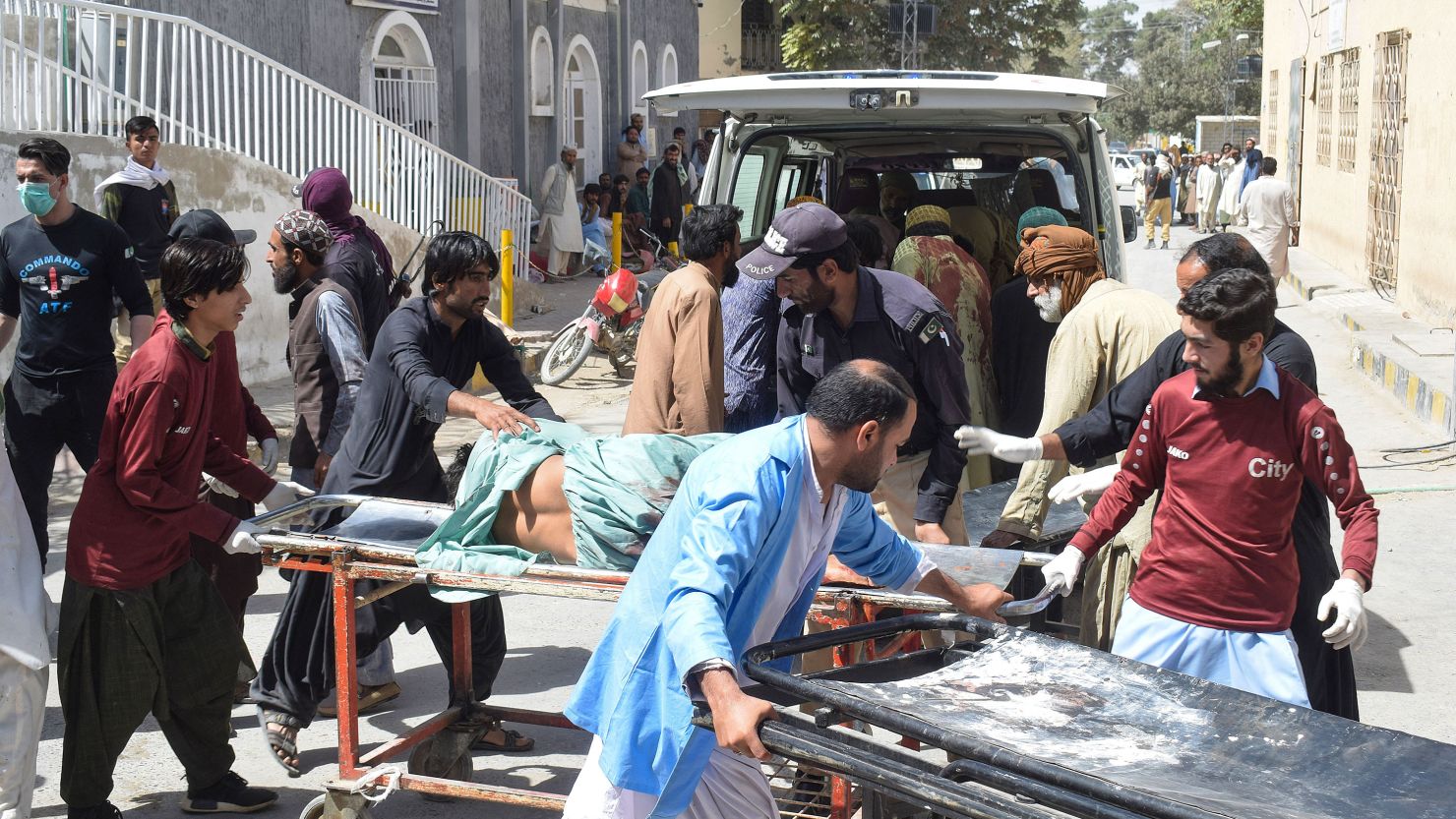
The official story is always the same. A high-stakes "intelligence-based operation" goes down in the dead of night. There is a fierce exchange of fire with "terrorists" from a banned outfit. When the dust settles, the militants are dead, and not a single officer has a scratch. It is a clean sweep, at least on paper.
But the paper trail tells a different story in the morgues of Quetta and Karachi. In February 2026 alone, human rights monitors documented 87 killings across Balochistan. At least 30 of those victims were not "insurgents" caught in the heat of battle. They were men who had already been in the custody of security forces for weeks or months. They were "disappeared" persons whose final appearance was as a corpse in a ditch, branded as a casualty of a fake encounter. Recently making waves in related news: Amjad Ayub Mirza Slams the Shielding of Terror Networks as the Pahalgam Anniversary Nears.
This is the grim reality of the "staged killing"—a tactical execution used to bypass the slow, often corrupt, and perpetually intimidated Pakistani judicial system. For the security apparatus, it is an efficient way to "clear" the books on suspected separatists. For the families, it is the end of hope.
The Mechanics of the Fake Encounter
The staged killing follows a predictable, almost industrial rhythm. It usually begins with an enforced disappearance. A student is picked up from a library, or a laborer is taken from his home in the middle of the night by men in plain clothes or Frontier Corps (FC) uniforms. No warrant is produced. No explanation is given. Further insights into this topic are explored by NPR.
The victim then enters a legal vacuum. They are held in undisclosed locations, often for months. During this time, families file petitions in the High Courts, only to be told by intelligence agencies that the person is not in their custody.
The transition from "missing" to "killed in an encounter" usually happens when the Counter-Terrorism Department (CTD) or the FC feels the need to produce results after a major insurgent attack. On February 16, 2026, the CTD claimed they killed four "terrorists" in Karachi during a gunfight. Three of them—Jalil Noor Mohammad, Niaz Qadir Bakhsh, and Hamdan Muhammad Ali—had been "disappeared" since December 2025. Hamdan’s father had even managed to file a First Information Report (FIR) regarding his son's abduction weeks before the shootout.
The math of these gunfights rarely adds up. In most documented cases, the "terrorists" are killed while in handcuffs or from close range. The crime scenes are sanitized before independent observers can arrive. The state’s narrative depends on a public that is either too scared to ask questions or too exhausted by the decades-long conflict to care.
The Shadow Economy of Death Squads
While the FC and CTD handle the official "encounters," a darker layer of the state's strategy involves "death squads." These are locally recruited militias, often composed of former insurgents who surrendered or criminals given a license to operate. They serve as the state's deniable muscle.
These squads are not just about ideology; they are a business. They are given a free hand to run protection rackets, manage drug smuggling routes, and control local resources in exchange for "neutralizing" suspected Baloch nationalists. When a prominent activist or a young student is found dead with signs of torture, it is often the work of these proxies. This allows the military to maintain a degree of separation from the most brutal atrocities.
In early 2026, these squads intensified their activities in Khuzdar and Kech. On February 8, a 22-year-old pregnant woman was shot dead in her home by an unidentified gunman in Khuzdar—a hallmark of the "unknown perpetrator" strategy used to terrorize families of activists. These are not collateral damages of war. They are targeted strikes designed to break the social fabric of the Baloch resistance.
The Insurgency and the State’s Overreaction
To understand why the state has turned to extrajudicial executions, one must look at the escalating sophistication of the Baloch Liberation Army (BLA) and other armed groups. The "Operation Herof 2" campaign, launched in late 2024, showed a level of coordination previously unseen. Major attacks on Gwadar and the Reko Diq mining sites—areas central to Pakistan’s economic survival—have embarrassed the security establishment.
The military's response has been a blunt-force trauma approach. Instead of nuanced counter-insurgency that wins over the population, they have opted for collective punishment. When the BLA strikes a convoy, the security forces often round up the nearest able-bodied men from the surrounding villages.
This creates a self-fulfilling prophecy. Every student extrajudicially killed in a staged encounter becomes a martyr for the next generation of recruits. The Baloch Yakjehti Committee (BYC), led by figures like Mahrang Baloch, has tried to channel this anger into peaceful protests. But even these are met with water cannons, tear gas, and further "disappearances" of the protesters themselves.
The Silence of the Courts
The judiciary in Pakistan is technically independent, but in Balochistan, it is paralyzed. Judges who show too much interest in missing persons cases often find themselves "transferred" or their families threatened. When a body is found, the police often refuse to register an FIR against the security forces, or they file it against "unknown persons."
The legal system has become a conveyor belt for the CTD. They obtain "remand" for suspects, keep them for weeks, and then, just as the remand expires and they are supposed to be moved to a regular jail where they could see a lawyer, they "die in a shootout." This bypasses the risk of a trial where the lack of evidence would lead to an acquittal.
It is a breakdown of the social contract. When the state decides that the law is a luxury it can no longer afford, it ceases to be a legitimate authority and becomes just another armed faction in a civil war.
A Crisis of Investment
For the outside world, this is not just a human rights issue; it is a geopolitical risk. Pakistan is desperately trying to sell Balochistan’s mineral wealth—specifically the copper and gold at Reko Diq—to international investors and the United States. They want the world to see a stable province ready for business.
However, the reality of "death squads" and "staged killings" makes for a poor investment climate. The China-Pakistan Economic Corridor (CPEC) is already under constant threat. If the state continues to use extrajudicial violence as its primary tool of governance, it will eventually lose the very territory it is trying to monetize.
The international community, particularly the UN and human rights bodies, have documented these abuses for years with little to no consequence for Islamabad. As long as the military remains the sole architect of Balochistan policy, the "kill and dump" cycle will continue.
The path forward requires more than just a change in personnel; it requires a dismantling of the death squad infrastructure and a return to the rule of law. Until then, the morgues in Balochistan will continue to fill with men who were "captured" by the state only to "die" in its defense.
Stop the staged encounters. Close the secret detention centers. Anything less is just a stay of execution for the next generation.