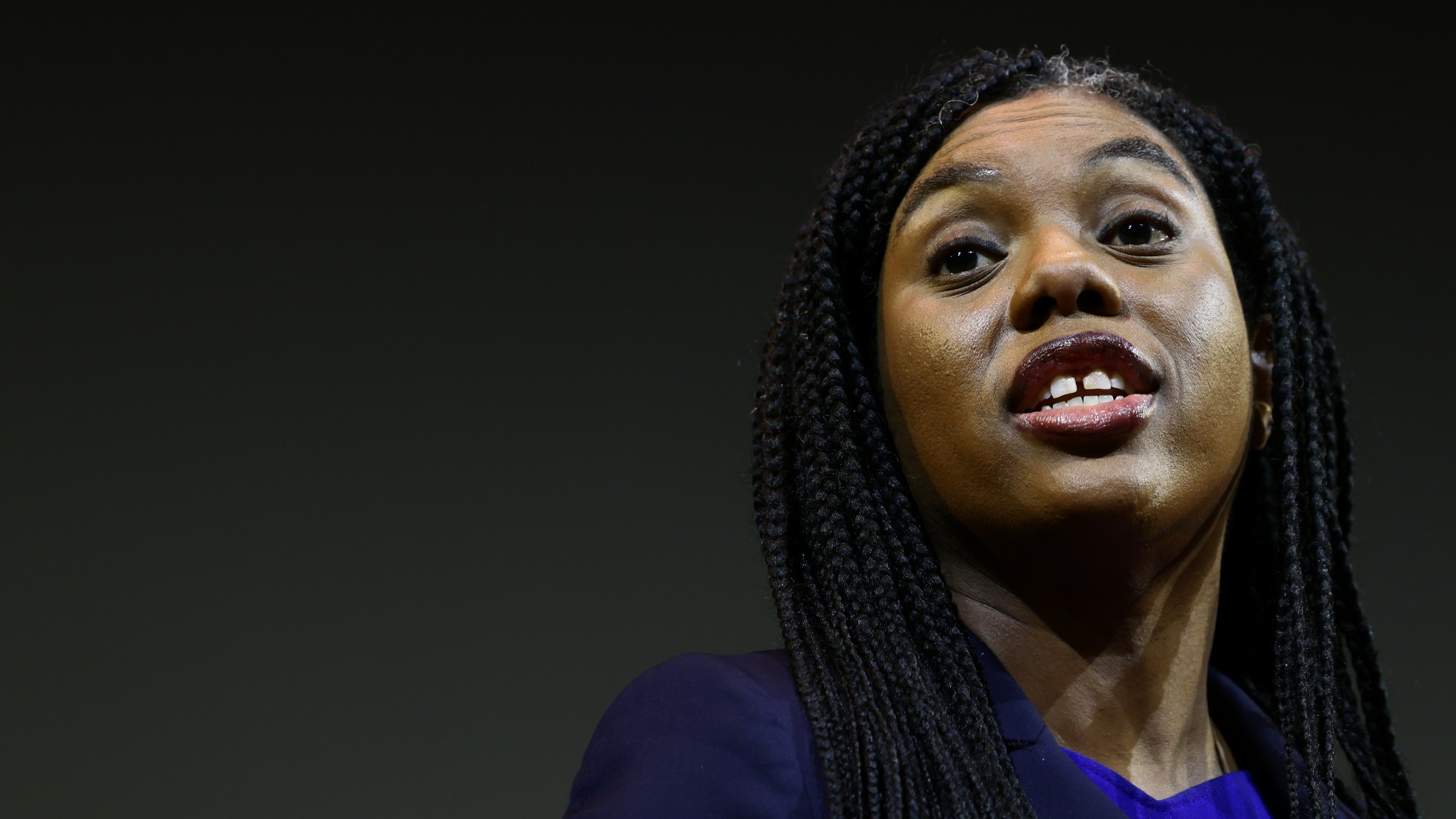
The British press loves a "backbone." It’s a cheap, easy metaphor for a political class that has spent a decade behaving like jellyfish in a tide pool. The narrative surrounding Kemi Badenoch is currently calcifying into a myth: that she is the "iron lady" of the 2020s, the only one brave enough to fight the culture wars, and the sole savior of a Tory party currently languishing in the electoral wilderness.
This is a delusion.
The "Badenoch or bust" crowd is making the classic mistake of confusing online engagement with electoral viability. They are mistaking friction for progress. In reality, doubling down on a candidate whose primary skill is picking fights with the civil service and social media activists isn't a strategy for a comeback. It’s a suicide note written in capital letters.
The Myth of the Universal Culture War
The lazy consensus suggests that the Conservative Party lost because it wasn't "conservative" enough. The argument goes that if only they had fought harder against "woke" ideology, they would have held the Red Wall.
I’ve spent years analyzing internal polling and voter migration patterns. The data doesn't support the "anti-woke" savior narrative. The Tories didn't lose because they failed to define what a woman is; they lost because nobody could afford their mortgage and the waiting lists for a hip replacement hit record highs.
Badenoch’s brand is built on being a combatant. She is an ideological specialist in a country currently suffering from a generalized systemic collapse. When the pipes are bursting, you don’t hire a philosopher of plumbing; you hire someone who knows how to use a wrench. Badenoch is currently offering a lecture on the history of PVC while the basement floods.
The Competency Crisis vs. The Identity Crisis
Let’s look at the "backbone" argument. Her supporters point to her tenure at the Department for Business and Trade as proof of her steel. They cite her willingness to scrap EU-era regulations and her bluntness with stakeholders.
But bluntness is not a substitute for results. If you look at the actual trade figures and the sluggishness of post-Brexit growth, the "backbone" hasn't translated into a "boom."
The UK electorate is currently exhausted. They are not looking for a new commander for the culture wars; they are looking for a manager who can make the trains run on time. The contrarian truth is that the next Tory leader shouldn't be the loudest person in the room. They should be the most boringly efficient person in the room.
Badenoch’s high-friction style is an asset in a leadership contest among a shrinking, aging membership. It is a massive liability in a general election where the "swing" voter is a 35-year-old nurse in Milton Keynes who just wants her energy bills to go down.
The Echo Chamber Trap
We see this pattern in corporate failures all the time. A brand loses market share, so it retreats to its "core" customers, alienating everyone else in the process. This is exactly what the Conservative Party is doing by gravitating toward Badenoch.
They are optimizing for the 150,000 people who pay membership dues rather than the 15 million people they need to win a majority. It’s a classic case of survivorship bias. The people left in the party are the ones who love the rhetoric, so they assume the rest of the country loves it too.
It’s a lie.
Most people don't spend their lives on X (formerly Twitter). They don't know who the "woke blob" is. They don't care about the intricacies of the Equality Act. When Badenoch leans into these topics, she isn't "speaking truth to power"; she is speaking a foreign language to the average voter.
The Liability of "Authenticity"
"She says what she thinks."
In politics, this is often a euphemism for "she has no filter." While her supporters call it authenticity, her detractors—and more importantly, the undecideds—see it as volatility.
I have seen political careers go up in flames because a leader couldn't resist a "gotcha" moment. Badenoch’s history of public spats—whether with journalists, actors, or her own civil servants—suggests a temperament suited for a pundit, not a Prime Minister.
In a high-stakes geopolitical environment, where the UK needs to rebuild relationships with European neighbors and navigate a fractured global economy, a leader who treats every interaction as a duel is a diplomatic disaster waiting to happen. You can’t "backbone" your way through a trade negotiation with the US or the EU. You need tact. You need patience. You need the ability to keep your mouth shut when it’s strategically advantageous.
The Wrong Kind of Radical
The party needs a radical shift, but not the one Badenoch is selling.
The real radicalism required is a complete overhaul of the British state’s relationship with housing, infrastructure, and energy. We need a leader who is obsessed with the planning system, not the pronouns of a university student union.
Badenoch is a distraction. She provides a dopamine hit for the base while the structural foundations of the party continue to rot. Her supporters claim she is the only one who can take the fight to Reform UK.
Wrong.
The way to defeat Reform UK is not to become a "lite" version of Nigel Farage. It is to deliver the economic stability and public services that make Farage’s populism irrelevant. By trying to out-Farage Farage, Badenoch simply validates his talking points and moves the goalposts further to the right, leaving the center ground wide open for a decade of Labour dominance.
The Inevitable Backlash
Imagine a scenario where Badenoch wins the leadership.
The first six months will be a whirlwind of media appearances and "straight-talking" interviews. The base will be ecstatic. The polling might even see a small "new leader" bump.
Then, the reality of opposition sets in. Every time she picks a fight, it will be framed by the government as "the same old Tories." Every time she goes on a tangent about identity politics, Labour will respond with a graph about NHS waiting lists. She will be successfully painted as an extremist because she refuses to moderate her tone for a wider audience.
She isn't the antidote to the Tory malaise; she is the final stage of the disease.
Stop Looking for a Hero
The Conservative Party’s obsession with finding a "messiah" is their biggest weakness. First, it was Boris. Then it was Truss. Now it’s Badenoch.
They are looking for a personality to mask a policy vacuum.
A "backbone" is useless if the brain isn't connected to the reality of the 21st-century voter. If the Tories want to survive, they need to stop looking for someone to shout at the TV and start looking for someone who can actually govern.
Badenoch is the candidate of the 2010s, fighting the battles of the 2010s. The world has moved on. The UK has moved on. If the party follows her into the fray, they won't find a "bust" or a "backbone." They’ll find a dead end.
Pick the fighter if you want to feel good in the short term. Pick the administrator if you want to win an election. You cannot do both with Kemi Badenoch.