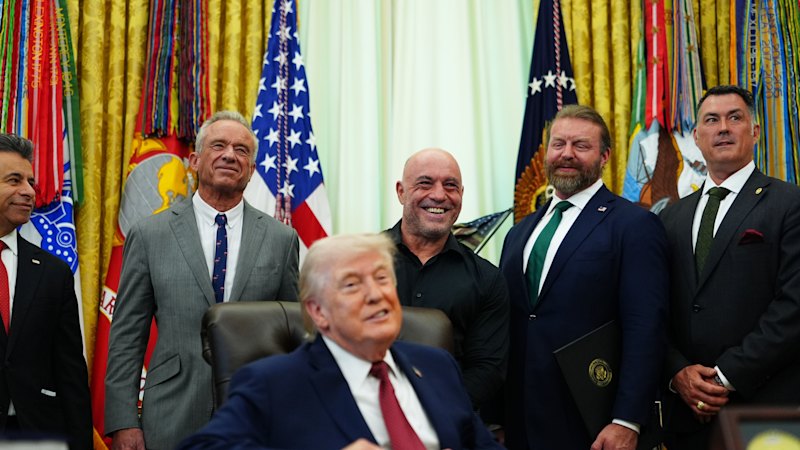
The federal government’s stance on "magic mushrooms" and other mind-altering substances just took a 180-degree turn. On April 18, 2026, President Trump signed a major executive order that basically tells the FDA and the DEA to get out of the way. If you’ve been following the mental health crisis, especially among veterans, you know that traditional meds aren't cutting it for everyone. This order is designed to fast-track access to treatments like psilocybin and ibogaine for people who’ve run out of options.
It’s not just a vague promise. The order puts real money on the table—$50 million to be exact—to help states build out their own psychedelic research programs. We’re talking about a federal-state partnership that mimics the "Texas model," where the state actually funds the science instead of just waiting for big pharma to catch up.
Why Ibogaine is the Star of This Order
You might not have heard of ibogaine, but the veteran community talks about it constantly. It's a powerful psychedelic derived from a West African shrub. Unlike your typical SSRI that you take every day, ibogaine is often used in a single, intense session to "reset" the brain. It’s shown incredible promise for ending opioid addiction and treating severe PTSD.
The problem? It’s currently a Schedule I substance, right up there with heroin. That forces thousands of U.S. veterans to fly to clinics in Mexico or Costa Rica just to get a shot at a normal life. Trump mentioned this specifically during the signing, flanked by former Navy SEALs like Marcus Luttrell. The new order directs the FDA to use "national priority vouchers" to speed up the review of ibogaine and other breakthrough therapies. This could cut down the approval timeline from years to literally weeks.
Breaking the FDA Logjam
Let’s be honest: the FDA has been dragging its feet. Back in 2024, they rejected MDMA for PTSD treatment, which felt like a massive gut punch to researchers. This executive order is a direct response to that bureaucratic caution. By invoking the Right to Try Act, the administration is opening a side door for patients with life-threatening conditions or terminal illnesses.
If you’re a veteran with treatment-resistant PTSD and you’ve tried everything else, you shouldn’t have to wait for a five-year clinical trial to finish. Under this order:
- The FDA must expedite reviews for any psychedelic with a "breakthrough therapy" designation.
- The DEA is pressured to reclassify these drugs the moment they show medical utility.
- Federal agencies have to collaborate with the VA to get these trials into veteran-specific hospitals.
It’s a shift from "drugs are bad" to "results are what matters." It’s a pragmatic approach that ignores the old-school stigma in favor of stopping the veteran suicide epidemic.
The Rogan Factor and Bipartisan Support
One of the weirder parts of this story is how it happened. Trump openly admitted that Joe Rogan tipped him off about the potential of ibogaine. It’s a reminder of how much the conversation has shifted. This isn't a "hippie" issue anymore; it’s a "save our soldiers" issue.
While some drug policy critics worry that we’re moving too fast, the momentum is clearly on the side of the advocates. When you have HHS Secretary Robert F. Kennedy Jr. and conservative firebrands like Dan Crenshaw agreeing on something, you know the status quo is dead. They aren't looking for a recreational free-for-all. They’re looking for clinical, supervised settings where these tools can be used safely.
The Risks Nobody Wants to Talk About
I’m not going to tell you it’s all sunshine and rainbows. Ibogaine, in particular, has a reputation for being hard on the heart. It can cause irregular rhythms, and there have been recorded deaths in unmonitored settings. That’s exactly why federal oversight—rather than underground use—is so important. By bringing it into the light, the government can mandate that doctors are on-site with EKG machines and emergency equipment.
What Happens Next for You
If you’re looking for a way to access these treatments, don't expect to walk into a pharmacy tomorrow. The "priority vouchers" mentioned by FDA Commissioner Marty Makary will likely be issued within the next few weeks. This will trigger a flurry of activity in the biotech sector.
If you or a loved one are struggling, here is the immediate reality:
- Check the Right to Try status: Talk to your doctor about whether you qualify as an "eligible patient" under the 2018 Act, which this order just gave a massive boost.
- Look for VA-sponsored trials: The VA is already running trials in New York, California, and Oregon. More states will likely join now that federal funding is flowing.
- Watch the rescheduling: Keep an eye on the DEA. If psilocybin or ibogaine moves to Schedule II or III, the legal barriers for your local clinic to offer these therapies will vanish.
This isn't just about drugs; it's about the right to heal. The government is finally admitting that the "War on Drugs" might have accidentally buried some of our best weapons against mental illness. If you're tired of the same old pills that just numb the pain, this might be the most important piece of news you'll read this year.
Talk to a specialist who understands psychedelic-assisted therapy. Don't go the underground route if you don't have to; the legal path is finally widening. Keep your eyes on the FDA announcements next week for the specific list of drugs receiving the first priority vouchers.