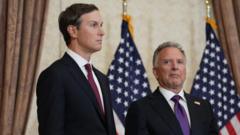
The mainstream press is currently obsessed with the visual of Steve Witkoff and Jared Kushner boarding a plane to Islamabad. They are calling it a "diplomatic breakthrough." They are framing Pakistan as the "bridge" to Tehran. They are wrong.
Pakistan isn't a bridge; it’s a debtor nation looking for a bailout, and Witkoff and Kushner aren't diplomats in the traditional sense—they are real estate minds applying "highest and best use" logic to a region that operates on ancient blood feuds and modern energy cartels. To view this trip through the lens of traditional State Department statecraft is to fundamentally misunderstand how the second Trump administration intends to reorder the Middle East.
The Myth of Pakistani Neutrality
Every pundit from D.C. to London is recycling the same tired narrative: Pakistan has "deep ties" with Iran and "strategic necessity" with the U.S., making them the perfect intermediary.
This is a fantasy.
Pakistan’s relationship with Iran is defined by border skirmishes in Sistan-Baluchestan, sectarian friction, and a gas pipeline project that has been "nearing completion" for two decades while remaining perpetually stalled by the threat of U.S. sanctions. Islamabad does not have "influence" in Tehran. It has a shared border and a shared fear of regional instability.
When Kushner and Witkoff land in Islamabad, they aren't looking for a messenger. They are looking for a lever. Pakistan is currently gasping for liquidity, trapped in a cycle of IMF programs and rollover debt from China. The Trump envoys understand that you don't ask a debt-ridden country to mediate; you buy their cooperation to isolate the target.
Why the Market is Misreading the Kushner Factor
The "lazy consensus" argues that Jared Kushner’s return to the fold signals a continuation of the Abraham Accords. While that’s partially true, it misses the shift in methodology. Kushner’s previous success wasn't built on "fostering dialogue"—it was built on a brutal realization that economic incentives can override ideological grievances if the numbers are big enough.
Witkoff brings the same heat. He is a developer. He looks at maps and sees "underutilized assets." In this specific geopolitical play, Iran is the "distressed property" that needs to be fenced off, and Pakistan is the "zoning board" that can be swayed with the right investment package.
The goal isn't to bring Iran to the table for a polite chat about nuclear enrichment. The goal is to complete the encirclement. If you flip Pakistan—effectively pulling them out of the "neutral" column and firmly into the pro-Riyadh, pro-Washington orbit—Iran loses its only significant eastern outlet.
Stop Asking if Pakistan Can Moderate Iran
The premise of the question is flawed. You’re asking if a middleman can fix a broken marriage. The real question is: Can the U.S. make Pakistan’s economic survival contingent on the total isolation of the IRGC?
I have seen private equity deals collapse because the "bridge" between the two parties was actually just a double-agent trying to collect fees from both sides. Pakistan has played this game with the U.S. for forty years. They take the "Coalition Support Funds" or the IMF loans, then look the other way while the Taliban or various proxies set up shop.
The difference this time? Witkoff and Kushner aren't career bureaucrats who are afraid of a "failed state" on their resume. They are transactional. If the deal doesn't pencil out, they walk.
The Real Power Dynamic: The Saudi Shadow
You cannot talk about this mission without talking about Riyadh. Witkoff and Kushner are effectively acting as the Western wing of a Saudi-led regional realignment.
- The Saudi-Pakistan Debt Trap: Saudi Arabia holds the keys to Pakistan’s central bank deposits.
- The Iran-Saudi Thaw: While Riyadh and Tehran have restored ties, it is a cold, tactical peace.
- The Outcome: By sending envoys to Pakistan, the Trump team is signaling that the path to Washington—and the path to Saudi capital—runs through a specific set of demands regarding Iran.
The Economic Reality of the "Peace" Mission
Let's talk about the $10 billion hole in the room. Pakistan needs cash. Iran has oil but no way to pay Pakistan for the infrastructure needed to transport it without triggering the "snapback" sanctions that the Trump administration is ready to deploy.
The media calls this a "peace mission." A more accurate term would be a "foreclosure notice."
The envoys are likely presenting a binary choice to the Pakistani military leadership:
- Continue the flirtation with the Iran-Pakistan pipeline and face the full weight of a Treasury Department that views "secondary sanctions" as a primary weapon.
- Abort the Iranian energy deals in exchange for a massive, private-sector-led investment package (the "Kushner Special") that focuses on logistics, agriculture, and perhaps a revamped Gwadar Port that doesn't just serve Beijing.
The Risk Nobody Is Discussing
Every contrarian take requires a dose of reality. The danger here isn't that the "diplomacy" fails. The danger is that it succeeds too well.
If you backed a cornered animal—in this case, an Iranian regime feeling the walls close in from the Abraham Accords to the west and a newly "bought" Pakistan to the east—you don't get a peace treaty. You get a desperate breakout.
By utilizing Witkoff and Kushner—men who represent the pinnacle of American capital—the U.S. is telling Iran that the "shadow war" is over and the "balance sheet war" has begun. Iran cannot win a balance sheet war. Their only response is kinetic.
Why the "Experts" Are Wrong About the Timing
"Why now?" the critics ask. "Why before the inauguration?"
Because in the world of high-stakes acquisition, you don't wait for the closing date to start the due diligence. You move when the target is weakest. Iran is reeling from internal dissent and the degradation of its proxies in Lebanon and Gaza. Pakistan is one bad harvest away from a total default.
The timing isn't about the political calendar; it’s about the "distressed debt" cycle of the nations involved.
The Brutal Truth About the Witkoff-Kushner Strategy
This isn't about "stability." Stability is a word used by losers who want to maintain a failing status quo. This is about disruption.
The status quo has been a nuclear-capable Iran and a double-dealing Pakistan. The Trump envoys are looking to break that cycle by replacing "aid" with "equity." They want Pakistan to have a literal stake in the new Middle Eastern order—one where their prosperity is tied to the success of the Neom project and the Haifa-to-Dubai rail links, rather than the scraps of the Iranian black market.
The Playbook for the Next Four Years
If you want to know what the next four years look like, stop reading the "Foreign Affairs" journals. Start reading the "Journal of Private Equity."
The Witkoff-Kushner mission to Pakistan is a template.
- Identify the weak link in the adversary's chain.
- Apply extreme financial pressure.
- Offer a way out that involves a total surrender of strategic autonomy.
- Label it "Regional Integration."
The press will continue to report on "talks" and "envoys." They will look for communiqués and joint statements. They are looking at the wrong ledger. The only thing that matters is the term sheet.
Pakistan is being told to pick a side. For the first time in decades, the side of the U.S. comes with a price tag that the Pakistani generals might actually find attractive enough to betray their neighbors.
The "bridge" to Iran is being dismantled, and a toll booth is being built in its place.
Don't call it diplomacy. Call it a hostile takeover.