The British government has finally blinked. In a move that feels more like a necessary surrender than a grand gesture, the Home Office has signaled its intention to relax licensing laws, allowing pubs across England and Wales to stay open until 1:00 AM for specific matches during major tournaments. While the headlines focus on the celebration of late-night goals and pint-filled cheers, the underlying reality is a desperate attempt to rescue a hospitality sector currently gasping for air. This extension is not a gift. It is a tactical acknowledgement that the rigid bureaucracy of the Licensing Act 2003 is fundamentally mismatched with the modern rhythms of international sport and the economic needs of the high street.
For years, publicans have been forced to navigate a minefield of Temporary Event Notices (TENs) just to keep the lights on for a few extra hours. These applications cost money, take weeks to process, and are often subject to the whims of local police or environmental health officers. By implementing a blanket extension for high-profile fixtures, the government is cutting through a layer of administrative sludge that has long hindered the ability of small businesses to capitalize on peak demand. However, the move also exposes the deep-seated friction between local residents, law enforcement, and a business sector that provides over two million jobs.
The High Cost of the Final Whistle
When a major tournament kicks off, the financial stakes are massive. Industry data suggests that a successful run for the national team can inject hundreds of millions of pounds into the economy through beverage sales and foot traffic. Yet, when matches go to extra time or penalties, the current legal framework often forces landlords to flick the switches and usher patrons out just as the drama reaches its peak. This is not just a missed opportunity for profit; it is a logistical nightmare.
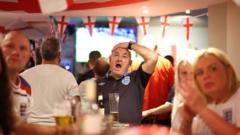
Imagine a packed venue in Manchester or London. The tension is palpable. The clock ticks past 11:00 PM. Under standard licensing, the sale of alcohol must cease. The landlord is then faced with an impossible choice: break the law and risk losing their license, or attempt to clear hundreds of emotionally charged fans out onto the street simultaneously. This mass exodus creates exactly the kind of public order flashpoint that police claim to want to avoid. The 1:00 AM extension provides a necessary buffer, allowing for a phased "cooling off" period that benefits both the till and the local beat officer.
Beyond the Beer Garden
To view this as merely a "booze extension" is to miss the broader industrial shift. The hospitality industry is currently battling a perfect storm of soaring energy costs, labor shortages, and a cost-of-living crisis that has tightened the public's discretionary spending. For many suburban and rural pubs, the World Cup or the Euros are not just highlights of the year; they are the difference between solvency and permanent closure.
The extension of hours allows these venues to transform into community hubs. It provides the breathing room needed to recover from the quiet weekday shifts where the margins are razor-thin. We are seeing a move toward "event-led" hospitality. In this model, the pub isn't just a place to get a drink; it is a theatre. The government’s decision to streamline these hours suggests a growing awareness that the old "nine-to-five" mindset of British legislation is failing to support the 24-hour reality of global entertainment.
The Police Pushback and the Resident Veto
Despite the clear economic benefits, the path to these extensions is rarely smooth. Every time the Home Office proposes a relaxation of the rules, they meet stiff resistance from the "NIMBY" (Not In My Back Yard) lobby and certain police federations. The argument is always the same: extended hours lead to increased crime and disorder.
But the data tells a more nuanced story. Violent crime in city centers often peaks precisely when the clubs and pubs all close at the same time, funneling thousands of people into a small area to compete for taxis and late-night food. By staggering these closing times—or extending them to a point where the crowd naturally thins—you often see a reduction in the "bottleneck" effect. The veteran landlord knows that a customer who has time to finish their drink and sober up slightly is far less trouble than one who has been unceremoniously dumped on the pavement at the stroke of midnight.
The Temporary Event Notice Trap
Before these blanket extensions were considered, publicans were reliant on the TENs system. This is a relic of a bygone era. A TEN allows a venue to carry out a "licensable activity" on a one-off basis. However, each premises is limited in the number of TENs they can apply for per year. If a landlord uses their quota on the group stages of a tournament, they might find themselves unable to open late for a bank holiday or a local festival later in the year.
The move to a national mandate for the World Cup removes this gamble. It levels the playing field between the big chains—who have the legal teams to manage complex licensing schedules—and the independent "wet-led" pub that might only have a handful of staff. It is a rare instance of deregulation actually favoring the small operator.
The Economic Ripple Effect
The benefits of a late-night extension reach far beyond the bar. Think about the supply chain. Increased hours mean increased orders for breweries, snack manufacturers, and cleaning services. It means more hours for bar staff who are often working on precarious contracts and rely on the tips and overtime generated by big events.
- Logistics: Delivery schedules must be tightened to handle the surge in volume.
- Security: Door staff firms see a massive uptick in demand, creating temporary employment.
- Transport: Uber and local taxi firms see a sustained peak rather than a single, unmanageable burst.
When the government tinkers with licensing hours, they are effectively adjusting the flow rate of a massive economic engine. The World Cup extensions serve as a pilot program for how we might manage high-street recovery in the future.
The Governance of Celebration
There is a cultural element here that shouldn't be ignored. For too long, the British approach to licensing has been rooted in a Victorian sense of paternalism—the idea that the public must be protected from themselves by strict closing times. In much of Europe, licensing is far more fluid, and the result is often a more relaxed, less binge-centric drinking culture.
By allowing pubs to stay open later for the World Cup, the state is making a concession to the reality of modern leisure. People want to watch the game in a communal setting, and they want to do so without the looming threat of a "last orders" bell ruining the atmosphere. This is about more than just alcohol; it’s about the right to congregate.
Potential Pitfalls of the Blanket Policy
While the move is broadly welcomed, it isn't perfect. A blanket extension doesn't account for the specific needs of different neighborhoods. A pub in a remote industrial estate is very different from one located directly beneath a block of flats.
Some local authorities argue that their power is being usurped by central government. They believe that licensing should always be a local matter, handled by people who understand the specific dynamics of the street in question. There is a risk that by forcing these extensions, the Home Office creates friction between landlords and their immediate neighbors—friction that won't go away once the tournament ends.
The Regulatory Horizon
As we look at the state of the British pub, it is clear that the "World Cup boost" is a temporary fix for a structural problem. The industry is being taxed at a rate that is simply unsustainable for many. Between business rates, VAT, and alcohol duty, the government takes a massive slice of every pint sold.
While extending hours is a step in the right direction, it doesn't address the core issue of profitability. A pub that stays open until 1:00 AM still has to pay the staff, the electricity, and the additional security. If the government truly wants to protect the "great British pub," they need to look at more than just the clock. They need to look at the ledger.
The Licensing Act 2003 was supposed to usher in a "café culture" in the UK. Instead, it created a complex web of red tape that has arguably made the industry more fragile. The World Cup extensions are a recognition that the current system is too rigid. They provide a vital safety valve, but they also highlight the need for a total overhaul of how we regulate our social spaces.
Practical Steps for Landlords
For those running venues, the extension isn't an automatic ticket to easy money. It requires meticulous planning.
- Staffing Resilience: Ensure your team isn't burned out. Extended hours during a month-long tournament is a marathon, not a sprint.
- Community Liaison: Talk to the neighbors now. A little bit of proactive communication can prevent noise complaints before they happen.
- Inventory Management: Adjust your orders to reflect the late-night crowd. They might be looking for more low-alcohol or soft drink options as the night progresses.
- Security Protocols: Review your entry and exit policies. The 11:00 PM to 1:00 AM window requires a different level of vigilance than a standard afternoon shift.
The success of these extensions will be measured not just in sales, but in the lack of "incidents." If the industry can prove that it can handle these hours responsibly, it builds a powerful case for permanent reform. The burden of proof is on the publicans, but the responsibility for a viable future lies with the policymakers.
The government must decide whether the pub is a nuisance to be managed or an asset to be protected. If it is the latter, then these extensions should be the beginning of a conversation, not the end of one. We are currently watching a live experiment in how the British state balances commerce with control, played out in the glow of a thousand big screens.
Landlords should treat this 1:00 AM window as a trial run for a new era of British hospitality. Do not simply stay open; manage the space with the precision of a venue that intends to be here for the next twenty years. Document your successes, track your safety metrics, and use that data to lobby for the permanent flexibility the sector so clearly needs.