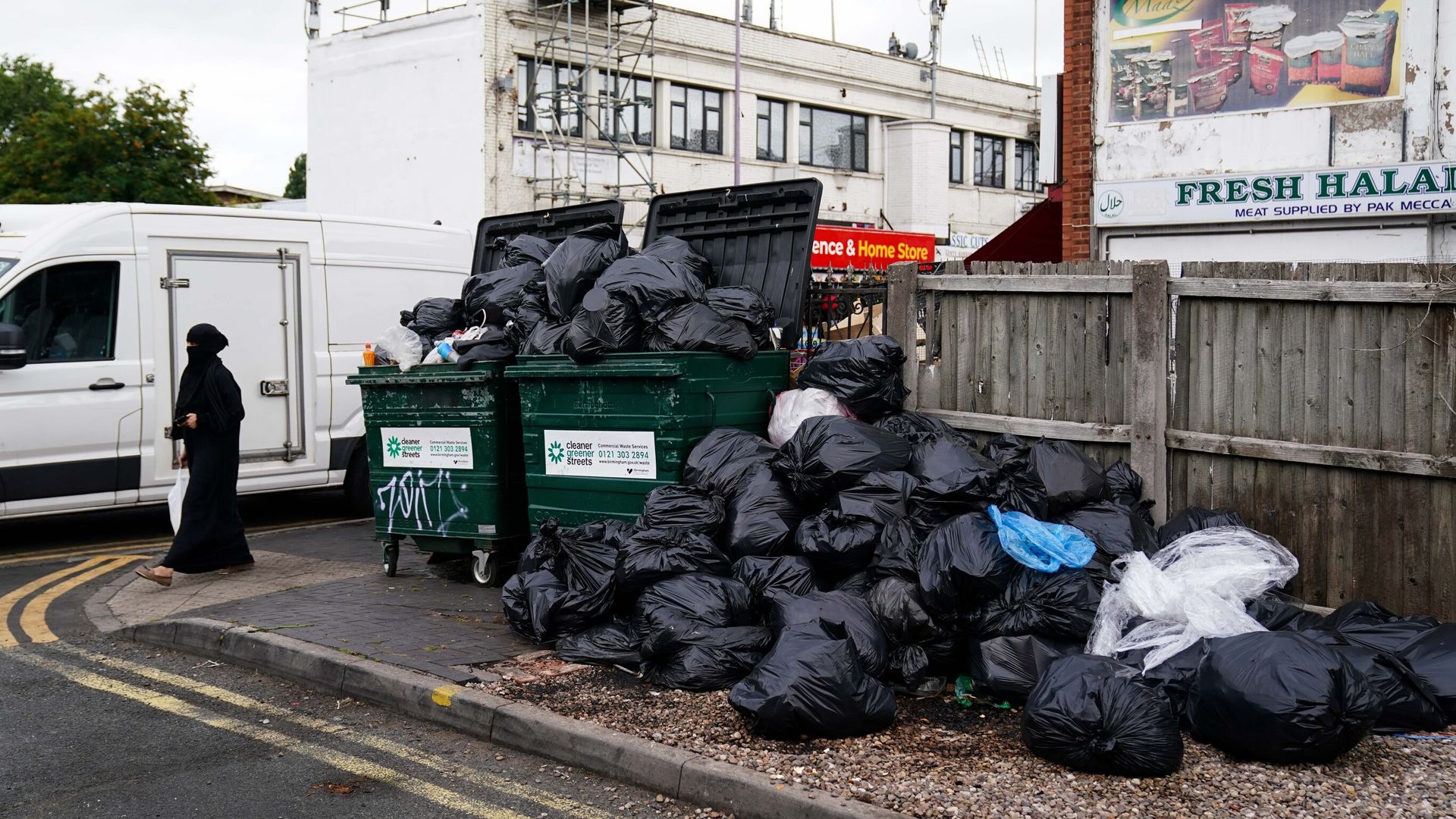
The smell is the first thing that breaks you. It isn’t just the scent of sour milk or the metallic tang of rotting meat; it is the smell of a city’s social contract curdling in the summer heat. In Birmingham, that smell has been a constant companion for over four hundred days.
Walk down any side street in Small Heath or Handsworth and you will see the physical manifestation of a breakdown. Black plastic bags, once taut and disciplined, have surrendered to the elements. They sit in slumped piles like defeated soldiers, their bellies burst open by foxes or the sheer internal pressure of a year’s worth of discarded lives. To the Council Leader, John Cotton, this is a logistical nightmare involving budget deficits and trade union negotiations. But to the family living in a terrace house where the maggots are beginning to migrate from the pavement to the front porch, it is a siege.
For more than a year, the second city of the UK has been locked in a bitter stalemate. On one side stands a council grappling with a financial black hole so deep it threatens to swallow the city whole. On the other, the workers who haul away our excesses, demanding the pay equity they were promised years ago. Between them lies the rubbish.
The Anatomy of a Stalemate
To understand how a city allows itself to be buried in its own filth, you have to look past the headlines about "industrial action." Imagine a bin loader—let's call him Mick—who has spent twenty years swinging heavy plastic behind a roaring truck. Mick isn't a villain. He’s a man who watches the cost of a loaf of bread climb while his paycheck stays tethered to an old reality. He sees the "Equal Pay" settlements being handed out to other departments and wonders why his sweat is valued differently.
But then, look at the resident. Look at Sarah, a mother of two who hasn't been able to open her kitchen window in July because the fly population has reached biblical proportions. Sarah pays her Council Tax. She plays by the rules. Yet, every Tuesday morning, she looks out at the same overflowing wheelie bin and feels a simmering, helpless rage.
The conflict isn't just about money. It’s about the invisible people who make a city function suddenly becoming very visible by their absence. We take for granted that the remnants of our lives—the nappies, the half-eaten takeaways, the broken toys—will simply vanish once a week. When they don't, the facade of civilization thins out.
The Cost of a Clean Slate
John Cotton recently stood before the cameras to announce that the end is "within sight." It’s a carefully chosen phrase. It suggests a finish line, a light at the end of a very long, very dark tunnel. The council has reached a memorandum of understanding with the GMB union. They are talking about "intensive negotiations" and "settlement frameworks."
In plain English? They are finally blinking.
The council is broke. That isn't a metaphor. Birmingham City Council issued a Section 114 notice—effectively declaring bankruptcy—last year. The equal pay liability, which triggered much of this unrest, is estimated at roughly £760 million. To fix the bins, to pay the workers, and to stop the rot, the city is having to sell off its crown jewels. Libraries are being shuttered. Youth centers are going dark. Streetlights are being dimmed.
The price of a clean street is, ironically, a hollowed-out city.
Consider the irony of the situation. To settle a strike caused by a lack of money, the city must spend money it doesn't have, leading to cuts that will likely spark the next strike in a different department. It is a snake eating its own tail. The negotiations aren't just about how many bins get picked up on a Friday; they are about the very soul of municipal governance.
The Invisible Stakes
Why did it take a year? Why did it take four hundred days of filth for the "sight" of an end to emerge?
Power is a stubborn thing. In the corridors of the Council House, admitting defeat early is seen as a sign of weakness that invited more claims. For the unions, backing down without a transformative deal is a betrayal of the membership. So they waited. They waited while the piles grew. They waited while the rats moved in. They waited while the public’s patience evaporated.
The human element here is the erosion of pride. Birmingham used to be the "City of a Thousand Trades," a powerhouse of the industrial world. Now, it is a city that struggled for a year to complete the most basic task of a local government. That does something to the psyche of a population. It creates a sense of abandonment.
When you walk past a mountain of trash every day for fourteen months, you start to believe that the people in charge have forgotten you exist. You start to feel that your neighborhood is a "sacrifice zone." The psychological toll of the Birmingham bin strike is far heavier than the actual tonnage of the waste.
The Long Walk Back to Normal
Even if the deal is signed tomorrow, the bins won't be empty by Thursday. The backlog is gargantuan. There is a physical debt to be paid to the streets.
The recovery will require more than just trucks. It will require a massive, city-wide "deep clean" that the council says is already in the planning stages. But how do you clean the resentment? How do you scrub away the memory of a year spent living in a landfill?
The "within sight" promise is a fragile one. It relies on the unions accepting a deal that likely won't give them everything they want, and a council finding ways to fund a settlement from an empty cupboard. It is a precarious dance on a tightrope made of barbed wire.
The reality of the situation is that there are no winners. The workers have lost a year of goodwill. The council has lost the trust of its constituents. The residents have lost the simple dignity of a clean environment.
But there is a flicker of something resembling hope. For the first time in months, the language coming out of the meetings isn't combative; it's exhausted. Sometimes, exhaustion is the only thing that can end a war. Both sides are tired of the smell. Both sides are tired of the angry phone calls. Both sides are tired of being the national poster child for municipal failure.
The Weight of What Remains
As the trucks eventually begin to roll again—truly roll, without the threat of a walkout—the city will hold its breath. We will watch the bins being tipped with a fervor usually reserved for a goal at Villa Park or St Andrew’s.
But let’s not mistake a cleared pavement for a solved problem. The financial crisis that fueled this strike hasn't gone away. The equal pay claims are still a ticking time bomb. The city’s budget is still a work of fiction.
The strike might be ending, but the reckoning is just beginning.
Tonight, somewhere in a suburb of Birmingham, a man will walk his dog past a pile of rubbish he has seen every day since last spring. He will look at it and wonder if this is truly the end. He will think about the "within sight" promise and hope that the "sight" isn't a mirage.
He will remember the year the city stopped working. He will remember how quickly the things we take for granted can turn into a burden that we are forced to carry, bag by heavy bag, until our backs start to break.
The smell might eventually fade, but the memory of the rot stays in the bones.