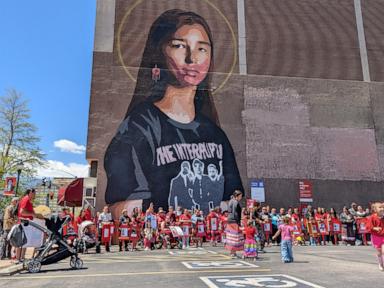
Red handprints painted over mouths have become the stark, haunting visual of a movement that refuses to be quieted. Across North America, Indigenous communities are grappling with a crisis of Missing and Murdered Indigenous People (MMIP) that has transitioned from a hidden epidemic to a full-blown human rights emergency. While public awareness campaigns and annual marches bring temporary visibility, the underlying machinery of law enforcement, data collection, and jurisdictional overlap continues to fail the very people it is sworn to protect. This is not merely a streak of bad luck or a series of isolated tragedies. It is the predictable outcome of a systemic vacuum where Indigenous lives are frequently devalued by the bureaucracy of justice.
The numbers are staggering, yet they remain an undercount. In the United States, Indigenous women are murdered at rates more than ten times the national average in certain counties. According to the National Crime Information Center, thousands of cases of missing Native Americans are reported annually, but the actual figure is likely much higher due to chronic misclassification by police. When a victim is listed as "White" or "Hispanic" instead of Native American on a police report, the specific resources and tribal notifications required for these cases never trigger. This data erasure is the first step in a long process of institutional forgetting.
The Jurisdictional Labyrinth That Protects Predators
Justice on tribal lands is often a legal jigsaw puzzle that ends in a stalemate. Because of a complex web of federal laws, tribal sovereignty is frequently hamstrung when a crime occurs. If a non-Native person commits a violent act against an Indigenous person on reservation land, the tribal police often lack the legal authority to prosecute the offender. This creates a "legal no-man’s land" where perpetrators know they can operate with a high degree of impunity.
Federal authorities like the FBI are supposed to step in when local tribal police are barred from acting, but the reality is often a story of declined cases. Investigations stall. Evidence sits in lockers. Families are left to conduct their own searches with nothing but social media and grit. This jurisdictional gap is not a flaw in the system; it is a structural feature of federal Indian law that has remained largely unchanged for decades despite the rising body count.
The Data Desert and the Cost of Invisibility
You cannot solve a problem you refuse to measure. Currently, there is no centralized, mandatory federal database that accurately tracks every missing Indigenous person across all jurisdictions. Information is scattered between the National Missing and Unidentified Persons System (NamUs), state databases, and private tribal records. These systems rarely talk to one another.
The Misclassification Trap
When a body is found or a person goes missing, the initial intake form is the most critical document in the investigation. However, law enforcement officers often rely on visual assumptions rather than asking families about heritage.
- Racial Misidentification: Native victims are frequently mislabeled, which excludes them from specialized federal task force statistics.
- Media Bias: The "Missing White Woman Syndrome" remains a documented reality in newsrooms, where cases involving Indigenous victims receive a fraction of the airtime or digital space.
- Inadequate Reporting: Many tribal communities lack the high-speed internet or technical infrastructure to upload data to national systems in real-time.
This lack of reliable data creates a feedback loop of neglect. If the official numbers look lower than the reality, lawmakers feel less pressure to allocate the massive funding required for specialized cold case units or improved forensic equipment.
Beyond the Awareness Ribbon
Awareness is the floor, not the ceiling. While marches and "Red Dress" installations are vital for communal healing, they do not change the budget of a tribal police department that might only have two officers patrolling an area the size of Delaware. True progress requires a fundamental shift in how the federal government honors its trust responsibility to tribal nations.
Savanna’s Act and the Not Invisible Act were steps in the right direction, aiming to improve data sharing and coordination. Yet, legislative ink does not always translate to boots on the ground. Funding for these initiatives often gets bogged down in committee or distributed so thinly that it barely covers the cost of a few training seminars. Families don't need another pamphlet; they need investigators who stay on the case past the first 48 hours.
The Extraction Link and the Rise of Man Camps
A factor frequently ignored in mainstream analysis is the correlation between industrial extraction projects and violence against Indigenous women. When oil, gas, or mining operations set up "man camps"—temporary housing for thousands of transient male workers—in or near tribal lands, local crime rates often spike.
The influx of high-wage, temporary workers who have no ties to the local community creates a high-risk environment. These camps are often located in remote areas where law enforcement is already stretched thin. The transient nature of the workforce makes it incredibly difficult for investigators to track suspects once a project ends and the workers move to the next state. The commodification of the land and the commodification of the people living on it appear to be inextricably linked.
The Burden of the Search
In the absence of a functional state response, Indigenous families have been forced to become their own private investigators. They have organized "Search and Rescue" teams that operate on shoe-string budgets, utilizing traditional knowledge of the land that outside investigators often ignore. They use drone technology, canine units funded by community donations, and massive social media networks to do the work that should be the responsibility of the Department of Justice.
This is a heavy emotional and financial tax on a population already dealing with historical trauma. When a grandmother has to spend her retirement savings to hire a private investigator because the local sheriff won't return her calls, the social contract has been completely severed.
The Failure of the Amber Alert System
Traditional emergency alert systems are often ill-equipped for the realities of reservation life. Many Indigenous people live in areas with spotty cell service or lack the specific criteria required to trigger an Amber Alert. Some states have begun implementing "Feather Alerts"—a specific notification system for missing Indigenous people—but the rollout is inconsistent. Without a national standard, these alerts stop at state lines, allowing a kidnapper to disappear into the next jurisdiction before the notification even hits a phone.
The Economic Engine of Vulnerability
Poverty is a predator’s best friend. Economic marginalization makes individuals more vulnerable to human trafficking and exploitation. When social safety nets are frayed, and housing is unstable, people are forced into risky situations just to survive.
Intergenerational trauma plays a role here as well. The legacy of the boarding school era, which stripped Indigenous children of their culture and family structures, left a wake of fractured communities. Predators target these fractures. They look for the "invisible" people who they believe won't be missed. The fight for the missing is therefore not just a fight for police reform; it is a fight for economic justice, mental health resources, and the restoration of tribal authority.
The red handprint is a symbol of a voice being silenced, but the movement behind it is becoming a roar. The era of accepting "jurisdictional issues" as a valid excuse for unsolved murders is over. If the systems currently in place cannot protect Indigenous lives, then those systems must be dismantled and rebuilt with tribal leadership at the helm. Justice delayed is not just justice denied; in the case of the missing and murdered, it is a death sentence.
Hold the agencies accountable. Demand the data. Fund the searches. The time for symbolic gestures has passed, leaving only the urgent, cold reality of those who haven't come home.