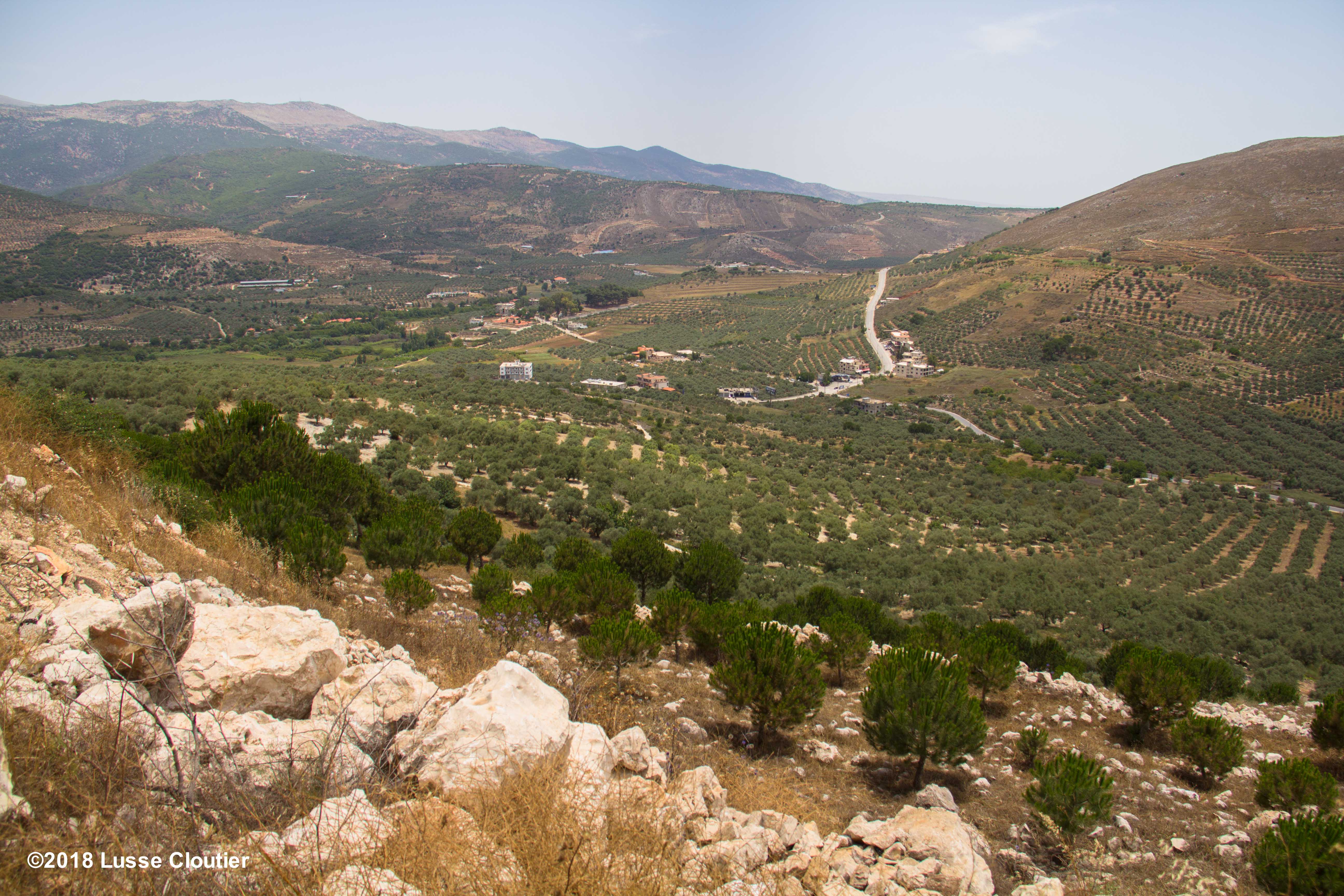
Journalists love the romanticism of the border crossing. They frame the entry into South Lebanon as a journey into a mysterious, volatile "front line," dripping with adjectives about scorched earth and stoic villagers. It sells copies. It creates a neat, binary narrative for the comfortable reader thousands of miles away.
But it is a lie.
The obsession with the "front line" is a strategic failure of observation. By focusing on the dramatic smoke of artillery shells or the staged anger of a roadside protest, the standard reporter misses the structural reality of the region. They mistake a highly managed, semi-permanent state of friction for an unfolding, chaotic crisis.
I have spent enough time in the backrooms of the Bekaa and the quiet cafes of Tyre to know that if you are looking for the story at the border, you are already five moves behind.
The Performance of Border Security
The conventional wisdom dictates that the border is a binary: here is safety, there is danger. Here is control, there is chaos. This ignores the reality of asymmetric governance. South Lebanon is not a lawless zone waiting to be ignited; it is a meticulously calibrated ecosystem where every actor knows their role in the play.
Imagine a scenario where a high-stakes poker game is running, but the players have agreed beforehand that no one will ever leave the table with a net gain or loss. They keep playing to keep the chips moving. That is the border dynamic.
The media focuses on the physical barrier—the walls, the cameras, the drones. They treat these as signs of a looming clash. They are actually signs of a managed stasis. The military infrastructure on both sides serves the same function: it defines the boundaries of the theater. When a shell lands, it is rarely an escalation born of madness. It is a signal, a diplomatic telegram sent via ballistics, acknowledged and filed by the recipient.
Why The Analysis Breaks
Most reporting on this region suffers from the "Snapshot Fallacy." You land, you talk to three guys who tell you what you want to hear—or what they are paid to tell you—and you write a piece about the "tension in the air."
True expertise requires ignoring the air. It requires looking at the logistics.
Where are the supply lines moving? What are the market prices for basic commodities in the villages closest to the line? When you stop listening to the rhetoric of the spokesmen and start watching the movement of non-military freight, you see a different picture. You see a society that has adapted to the friction not by resisting it, but by incorporating it into the business model.
The "danger" is a premium service. It keeps the international NGOs flooding the area with funding. It keeps the political machinery relevant. It provides a convenient distraction from the fact that the actual governing institutions in the region have been hollowed out by decades of factionalism and incompetence.
The Architecture of Stagnation
Let’s dismantle the idea that this is a "pivotal" moment. People keep waiting for the "big one"—the total collapse of the status quo.
They are wrong.
The status quo is the goal. The actors involved are not looking for a decisive victory; they are looking for a permanent stalemate that ensures their continued survival. In this environment, stability is not the absence of conflict; it is the presence of manageable, predictable conflict.
I’ve seen the same pattern across multiple theaters. When a power vacuum exists, it is rarely filled by a single entity. It is filled by a cartel of interests that realize they make more money and hold more power by keeping the pot simmering than by letting it boil over. If you look at the economics of the southern border, you realize that peace would be the most disruptive force imaginable. Peace would force these factions to answer for their economic failures. Peace would make them obsolete.
Beyond the Front Line
If you want to understand what is happening, stop interviewing the fighters. Stop walking along the fence line looking for debris to photograph.
Go to the tax offices. Look at the land registries. Track the movement of capital.
The real struggle isn't happening in the fields of the South; it is happening in the bank accounts of the elite who profit from the perpetual fear of the border. They have successfully convinced the world that this is a place of existential dread, so nobody looks closely at the ledger.
The next time you see a headline about an "incursion" or a "flare-up," ask yourself who benefits from the spike in volatility. Ask yourself what domestic political problem is being covered up by the manufactured noise at the border.
The truth is rarely found in the smoke. It is found in the silence that follows the artillery, when the dust settles and the same people remain in charge, holding the same levers of power, extracting the same rent from a frightened, exhausted populace.
Stop asking if a war is coming. A war is already here. It is a war against your understanding of the facts.