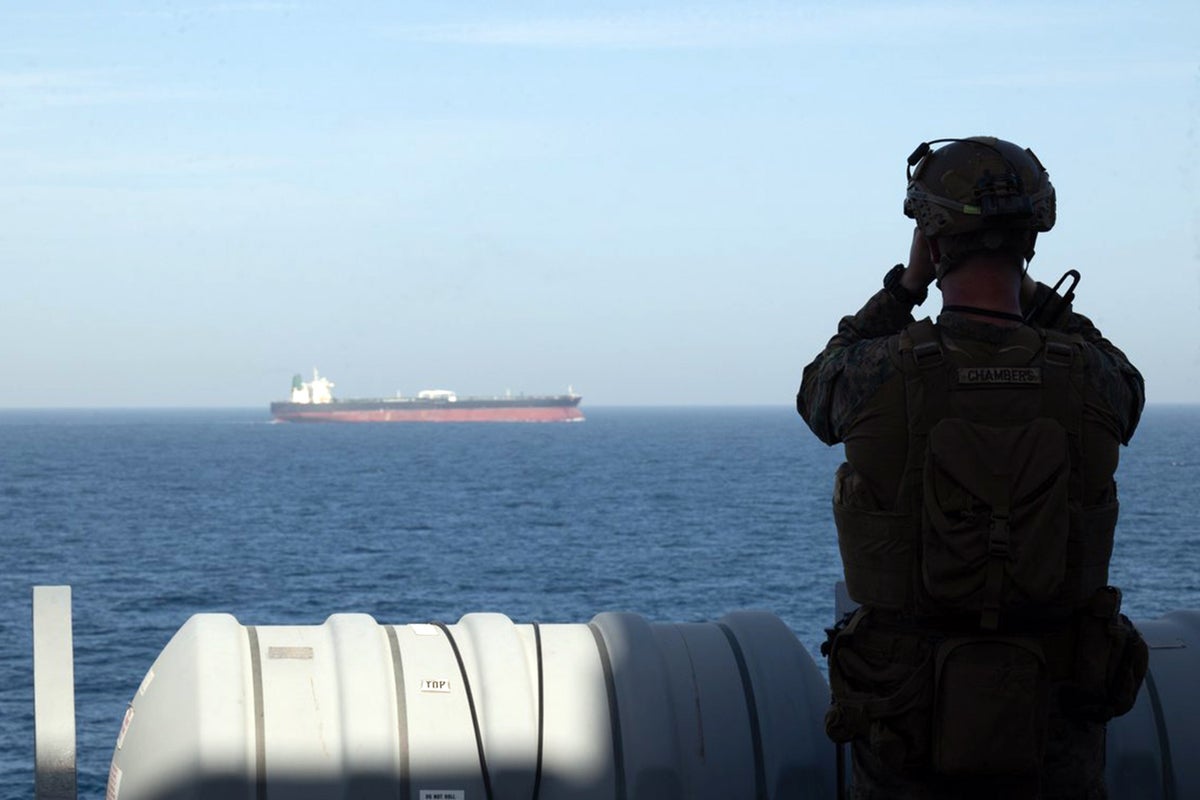
The global energy architecture relies on a flawed premise: that the Strait of Hormuz is a temporary chokepoint rather than a permanent systemic vulnerability. For decades, Gulf states treated the possibility of a total maritime blockade as a low-probability, high-impact event, investing in "insurance" infrastructure rather than full-scale redundancy. The current conflict renders this logic obsolete. Total bypass is not a technical challenge waiting for capital; it is a mathematical impossibility under current infrastructure constraints.
The Arithmetic of Dependency
The Strait of Hormuz facilitates the transit of approximately 21 million barrels per day (bpd) of petroleum liquids, accounting for roughly 20 percent of global supply. This volume is not a variable that can be easily distributed across secondary networks. It is a fixed throughput requirement.
Current bypass infrastructure is comprised of two primary systems:
- Saudi Arabia’s East-West Pipeline (Petroline): While nominally rated for higher capacities, operational throughput is constrained by terminal loading capacity at the Red Sea port of Yanbu. Effective export capacity fluctuates between 3 million and 4.5 million bpd.
- UAE’s Habshan–Fujairah Pipeline (ADCOP): Designed with a capacity of approximately 1.5 million to 1.8 million bpd, this link provides a critical, albeit small, outlet to the Gulf of Oman.
Summing these assets reveals a hard ceiling for bypass capacity: approximately 6 million bpd in an optimized scenario. This leaves a structural deficit of 15 million bpd. Any strategy claiming to "reroute" Hormuz flows that ignores this 15-million-barrel daily gap is engaging in fiscal fantasy rather than logistics.
The Three Bottlenecks of Redundancy
Transitioning from a maritime-dependent model to a pipeline-based model is hampered by three distinct engineering and operational constraints.
Terminal Throughput Constraints
A pipeline is only as effective as the port at its terminus. Upgrading pipe diameter is a linear engineering challenge, but expanding deep-water tanker loading berths is a massive, multi-year civil works project. Saudi Arabia’s Yanbu terminal demonstrates this limit; even when the pipeline pushes more volume, the ability to berth, load, and clear supertankers becomes the system’s restrictive factor.
The Geography of Risk
Moving oil from the Persian Gulf to the Red Sea or the Gulf of Oman merely shifts the geopolitical exposure from one chokepoint to another. Exports via Yanbu must still traverse the Bab el-Mandeb strait to reach global markets. This creates a reliance on secondary maritime corridors that are equally prone to disruption. A bypass that requires a different, equally vulnerable exit point is not a solution; it is a change of venue for the same threat.
The Hydrocarbon Mix Problem
Existing bypass infrastructure was designed primarily for crude oil. The energy sector, however, is increasingly fragmented. Liquefied Natural Gas (LNG) and refined product flows require vastly different storage and handling protocols than crude. Attempting to force these diverse energy products through a limited set of crude-only pipelines is technically non-viable without significant, capital-intensive retrofitting.
Assessing Future Strategic Alternatives
The failure of existing bypasses has ignited interest in new, high-cost, high-complexity projects. These fall into two distinct categories:
- The Land-Bridge Model: Proposals such as the Iraq–Jordan pipeline to the port of Aqaba or revived concepts for a trans-Arabian link aim to reach the Mediterranean. These suffer from the "sovereignty trap": they require the long-term political alignment of multiple transit states, each with conflicting national interests. The political friction required to maintain a multi-country energy corridor is often higher than the cost of the project itself.
- The Direct Ocean Access Model: Projects that target ports on the Indian Ocean (such as the Jask terminal in Iran or potential developments in Oman) bypass the Gulf entirely. While this eliminates the Hormuz risk, it does not solve the upstream issue: the distance from the major extraction fields in the Northern Gulf to these southern export points remains thousands of kilometers. This introduces massive operational costs and physical security challenges for the pipelines themselves.
Operational Reality Check
The market is currently operating in a state of sustained, involuntary energy rationing. Because the bypass capacity is insufficient to replace the maritime throughput, the global system is forced into a state of continuous inventory drawdown and demand suppression.
For any firm or state entity evaluating energy security, the strategic play is not the pursuit of a singular "bypass" project. No pipeline can replace the 15-million-bpd gap. Instead, entities must shift to a distributed storage and localized refining strategy.
- Strategic Inventory Decoupling: Move storage closer to end-users rather than keeping it near the production source. This creates a buffer that allows for the management of shorter-term, high-intensity disruptions.
- Refinery Decentralization: The reliance on large, centralized refining complexes that require consistent, massive-volume feedstock is a liability. Investment should pivot toward modular, smaller-scale refining capacity closer to consumption hubs.
- Logistics Agnostic Feedstock: Build the capability to manage a more diverse range of energy sources, reducing the "just-in-time" dependency on massive crude tanker fleets.
The era of assuming free-flowing maritime channels from the Persian Gulf has concluded. The infrastructure gap is not a temporary logistical hurdle—it is a permanent, quantified disadvantage that must be priced into every aspect of global energy supply chain planning.