The efficacy of Department of the Treasury sanctions on Iranian petroleum exports is determined not by the volume of designations, but by the friction coefficient applied to the "Shadow Fleet" logistics chain. Recent escalations in Office of Foreign Assets Control (OFAC) activity represent a shift from broad sectoral targeting toward granular, entity-level disruption. To evaluate the impact of these measures, one must analyze the three structural pillars of the Iranian illicit oil trade: jurisdictional arbitrage, the decoupling of vessel identity from physical assets, and the fragmentation of financial clearing houses.
The Architecture of the Shadow Fleet
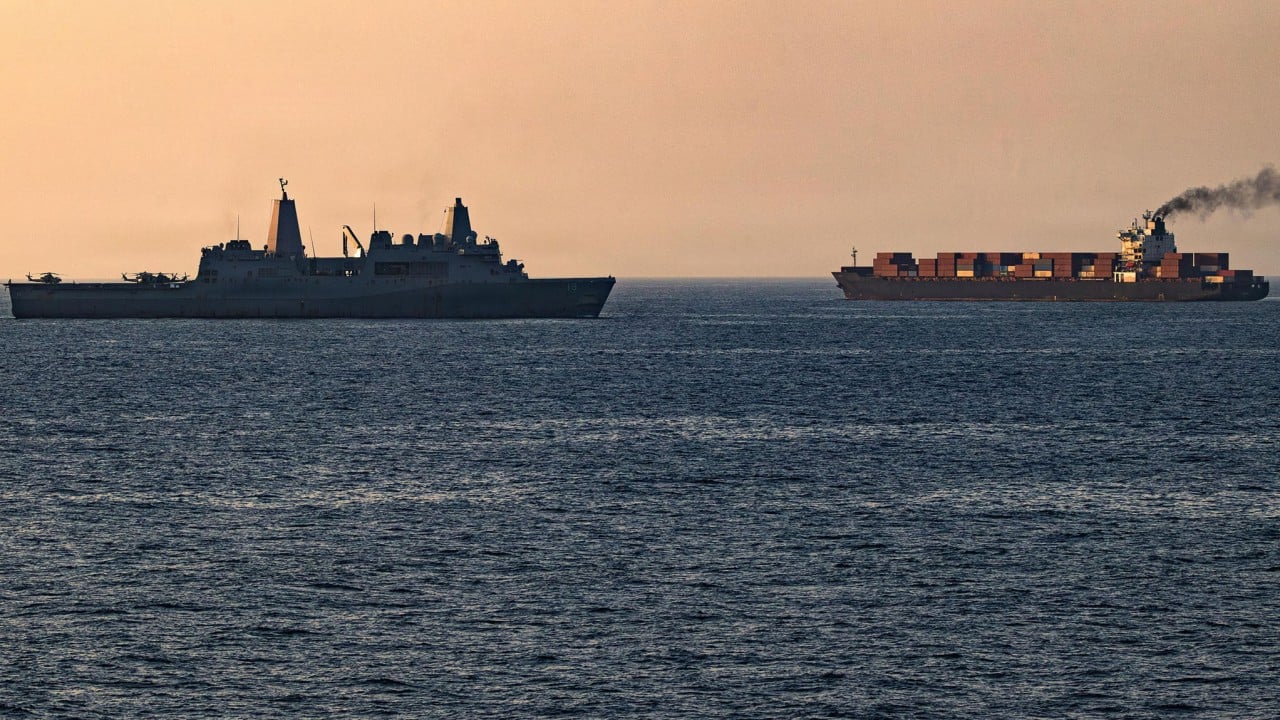
The primary obstacle to effective sanctions enforcement is the evolution of the "Ghost" or "Shadow" fleet—a decentralized network of aging tankers operating outside Western maritime service ecosystems. These vessels utilize a specific tactical sequence to bypass the G7 price cap and traditional monitoring: Read more on a connected topic: this related article.
- Flag of Convenience (FoC) Rotation: Vessels frequently switch registries between jurisdictions with low regulatory oversight. This creates a lag in international databases, making real-time tracking legally ambiguous for maritime authorities.
- AIS Manipulation and Spoofing: Automatic Identification Systems (AIS) are deactivated or manipulated to broadcast false coordinates. By "darkening" or mimicking the signatures of unrelated vessels, tankers obscure Ship-to-Ship (STS) transfers in regions like the Riau Archipelago or the Persian Gulf.
- Tiered Ownership Structures: Assets are held by Special Purpose Vehicles (SPVs) registered in jurisdictions like the Marshall Islands or Panama. These entities are often shell companies with no employees or physical offices, designed to be abandoned the moment a vessel is sanctioned.
The cost of operating this fleet is a critical variable. When the Treasury designates a specific tanker, the vessel’s insurance (P&I club) coverage is typically revoked, and it is barred from major ports. This forces the cargo into "distress" pricing, where Iran must offer significant discounts—often $10 to $15 below Brent benchmarks—to compensate buyers for the increased legal and environmental risks.
The Friction Cost of Jurisdictional Arbitrage
Sanctions function as an artificial tax on Iranian exports. The "Sanctions Tax" is composed of increased freight rates, middleman commissions, and the necessity of using non-standard financial channels. Iranian crude usually moves through "front companies" in third-party hubs. These entities re-brand the oil as "Malaysian," "Omani," or "UAE" origin through blending or fraudulent documentation. Further journalism by Reuters highlights similar views on the subject.
The logic of the current Treasury strategy focuses on the "Point of Exchange." By targeting the facilitators—the brokers and small-scale refineries (teapots) primarily located in China—the U.S. attempts to constrict the demand side of the equation. However, the limitation of this approach is the existence of the "Sino-Iranian Internal Loop." Because these transactions are often settled in Renminbi (RMB) through small, non-internationally active banks, they remain insulated from the SWIFT-based financial system and U.S. dollar-clearing mechanisms.
Quantification of Risk vs. Reward for Facilitators
A rational actor facilitates Iranian oil trades only when the expected utility (profit) exceeds the risk-adjusted cost of secondary sanctions. The Treasury’s objective is to shift this equilibrium.
- Primary Sanctions: Prohibit U.S. persons and entities from dealing with designated parties.
- Secondary Sanctions: Threaten to cut off non-U.S. entities from the U.S. financial system if they engage in "significant transactions" with sanctioned actors.
For a global bank, the risk of losing access to the U.S. dollar market is an existential threat, making compliance near-absolute. For a small, independent refinery in Shandong province with no U.S. exposure, the threat of secondary sanctions is negligible. This creates a "Sanctions Sink"—a segment of the market where U.S. leverage is effectively zero. The Treasury’s tactical shift involves identifying the specific vessels and managers that do require access to international waters or maritime services, thereby reintroducing friction into an otherwise insulated loop.
The Environmental and Insurance Bottleneck
A critical, often overlooked mechanism in sanctions enforcement is the degradation of maritime safety. As the Treasury squeezes reputable service providers out of the market, Iran is forced to use vessels that are often 20 years or older, lacking standard classification society certifications.
These ships operate without Western-backed Protection and Indemnity (P&I) insurance. In the event of a collision or oil spill in the Malacca Strait, there is no solvent insurer to cover the billions in cleanup costs. This environmental risk provides the U.S. with a diplomatic lever: framing sanctions enforcement not as a geopolitical tool, but as a necessary measure for international maritime safety. By pressuring coastal states to deny "dark" tankers passage through territorial waters, the U.S. can physically restrict the flow of oil without firing a shot.
Structural Vulnerabilities in the Iranian Model
Despite the resilience of the Shadow Fleet, the Iranian export model suffers from three inherent vulnerabilities:
- Concentration Risk: A vast majority of sanctioned exports are destined for a single market (China). This creates a buyer’s market where the purchaser dictates the discount, eroding the net revenue available to the Iranian state.
- Asset Attrition: As tankers are designated and scrapped, the cost of acquiring replacement hulls increases. The market for aging VLCCs (Very Large Crude Carriers) is finite, and sustained OFAC pressure drives up the "entry fee" for new shadow operators.
- Transparency of the Ledger: While the physical movement of oil can be hidden, the underlying financial flows leave footprints. Blockchain analysis and enhanced "Know Your Customer" (KYC) requirements in regional financial hubs make it increasingly difficult to move the billions of dollars required to sustain national budgets without detection.
Strategic Deployment of the "Whack-a-Mole" Framework
Critics of Treasury policy often point to the "Whack-a-Mole" phenomenon, where a sanctioned entity is immediately replaced by a new shell company. This perspective misses the cumulative impact of administrative friction. Each time an entity is replaced, the network loses time, pays incorporation and legal fees, and must re-establish trust with its counter-parties. In a high-stakes commodities market, trust is a quantifiable asset. Breaking these trust networks forces the Iranian regime into increasingly desperate and expensive logistical arrangements.
Tactical Recommendation for Asset Management and Compliance
Entities operating in the energy and maritime sectors must move beyond basic screening lists. The current enforcement environment requires a "Network-Based Compliance" model.
- Vessel Behavior Analysis: Monitor for "dark periods" (AIS outages) and illogical port-call sequences. A tanker that lingers in the Gulf of Oman and then appears in the South China Sea without a recorded loading event is a high-probability sanctions risk.
- Ultimate Beneficial Ownership (UBO) Verification: Look past the immediate holding company. If a vessel is owned by a single-ship SPV incorporated in a high-risk jurisdiction, the burden of proof for the origin of funds must be shifted to the client.
- Purity of Cargo Certification: Chemical analysis of crude samples can identify the specific sulfur and metal profiles unique to Iranian grades, regardless of what the manifest claims.
The future of petroleum interdiction lies in the integration of geospatial intelligence with real-time financial tracking. As the Treasury increases the frequency of designations, the "Shadow Fleet" will be forced into even smaller, more dangerous, and more expensive corridors. The strategic play is not to stop every drop of oil, but to ensure that the cost of exporting it exceeds the value of the revenue gained, thereby neutralizing the economic utility of the resource.