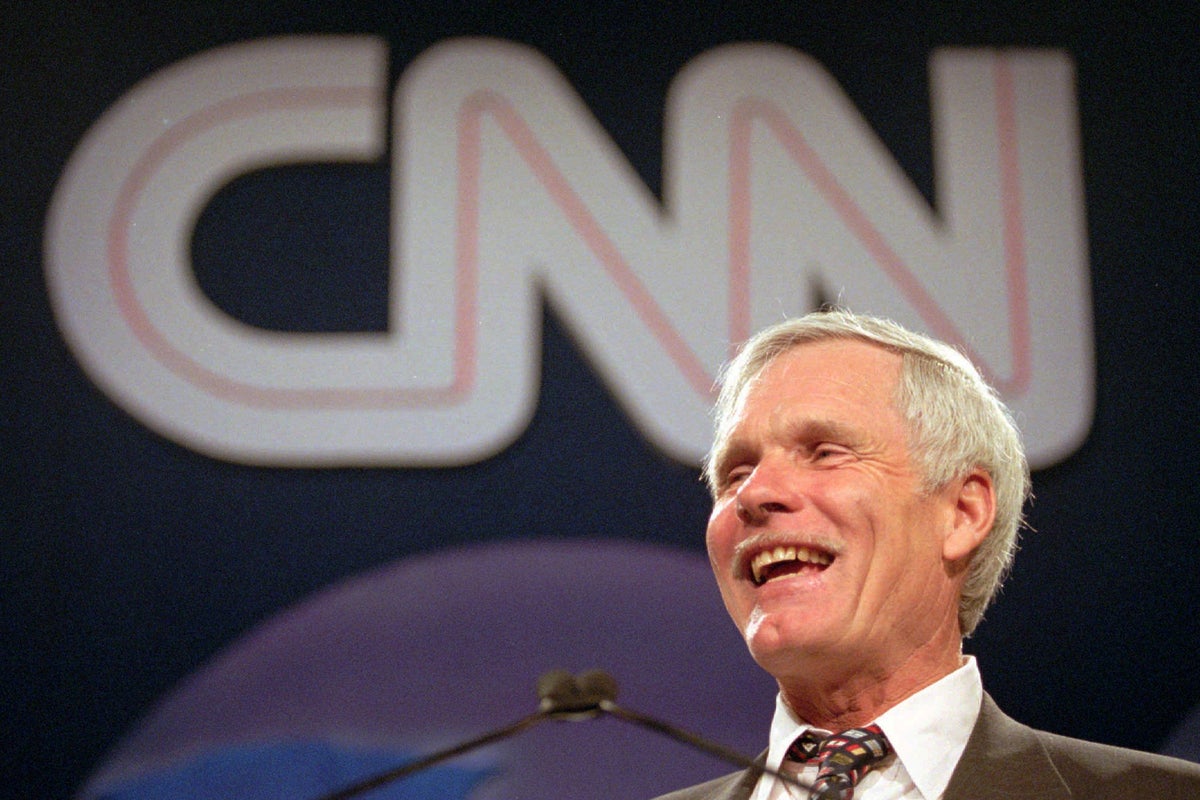
The obituaries are rolling in with the predictable rhythm of a metronome. They paint a picture of a "visionary," a "maverick," and the man who "democratized" information by birthing the 24-hour news cycle. It is a comforting narrative. It is also fundamentally wrong.
Ted Turner didn't build a monument to journalism. He built a high-speed assembly line for content, and in doing so, he accidentally provided the blueprint for the very polarization and superficiality that critics now claim is destroying the fabric of society. To celebrate Turner as a hero of the press is to misunderstand the difference between providing a service and creating an addiction.
The Myth of the 24-Hour Necessity
The "lazy consensus" among media historians is that Turner filled a desperate void. Before CNN, the world supposedly sat in darkness until the 6:00 PM evening news. This assumes that more information equals better-informed citizens. It’s a classic logical fallacy: the Volume-Value Trap.
The reality? Most days do not contain 24 hours of news. They barely contain twenty minutes of it.
By stretching the news to fit a never-ending clock, Turner forced the industry to prioritize the "urgent" over the "important." When you have 1,440 minutes to fill every single day, you cannot afford to wait for facts, deep vetting, or historical context. You need noise. You need speculation. You need a panel of four people shouting at each other because a shouting match is cheaper and faster to produce than a six-month investigative piece.
I have sat in newsrooms where the "ticker" dictates the soul of the broadcast. We didn't ask "Is this true?" as often as we asked "Can we keep this moving?" That is the Turner legacy: the commodification of the "breaking" banner.
The CNN Effect was a Bug Not a Feature
Political scientists often talk about the "CNN Effect"—the idea that real-time video of global conflict forces the hands of policymakers. The eulogies treat this as a triumph of transparency.
It wasn't. It was the birth of reactive governance.
Before the 24-hour cycle, leaders had the luxury of a few hours to process intelligence before responding. Turner’s model stripped that away. He created a world where a president has to make a statement because a grainy satellite feed is playing in every airport lounge in the world. This didn't make foreign policy smarter; it made it performative.
Turner’s genius wasn't in journalism; it was in logistics. He figured out how to use the "Superstation" model to bypass local affiliates and go straight to the cable wire. He was a distribution king, not a content king. By the time the world realized that the 24-hour cycle was a mental health crisis disguised as a civic duty, the checks had already cleared.
Breaking the Business of Truth
Let’s look at the numbers. The competitor pieces focus on the $7.5 billion sale to Time Warner. They frame it as the ultimate validation.
In reality, that merger was the beginning of the end for the "Ted Turner" brand of dominance. Turner’s insistence on scale above all else created a beast that required constant growth to survive. When you prioritize scale, you eventually have to chase the lowest common denominator.
- 1980: CNN launches with a promise of "the news, as it happens."
- 1990s: The realization hits that conflict drives higher ratings than peace.
- 2000s: Every other network adopts the "Breaking News" aesthetic for a cat stuck in a tree.
Turner’s model effectively killed the local newspaper. By nationalizing and globalizing the "attention economy," he sucked the oxygen out of local markets. Why care about the city council meeting when you can watch a live car chase in Los Angeles? He taught us that the world is a series of spectacular events rather than a collection of communities.
The Contradiction of the "Outspoken Maverick"
The press loves to talk about Turner’s "brazen" personality—the "Mouth of the South." They use this to humanize him. But look at the actual business moves. Turner was one of the first to realize that you don't need to be right; you just need to be first and you need to be loud.
He didn't just compete with the Big Three (ABC, CBS, NBC); he devalued their currency. He turned the anchor into a high-paid narrator for raw footage. If you want to know why today's media is obsessed with pundits rather than reporters, look at the budget sheets Turner pioneered. Reporters are expensive. Insurance for war zones is expensive. A guy in a suit in an Atlanta studio talking about a Tweet is nearly free.
Imagine a scenario where the 24-hour cycle never happened.
- Information would move slower, but it would be more verified.
- The "Outrage Machine" would lack a permanent home.
- The barrier to entry for "news" would remain high enough to keep out the grifters.
Turner broke that barrier. He invited everyone into the room and then realized he couldn't control the volume.
The Philanthropy Pivot
The $1 billion pledge to the United Nations is cited as his "greatest act." It was a magnificent gesture, and it undoubtedly did good. But in the context of his career, it served as the ultimate reputation-laundry cycle.
It allowed the world to forgive the fact that his "headline news" format was shortening human attention spans to the length of a golden retriever’s. He spent the first half of his life breaking the way we process reality and the second half trying to buy a seat at the table of the global elite.
We are told he was "ahead of his time." No. He was a man who saw a technological loophole (satellite distribution) and drove a truck through it. He didn't care about the collateral damage to the social discourse because he was too busy counting the subscribers.
The Brutal Reality of the Legacy
If you want to honor the man, be honest about what he left behind.
He left a world where "news" is a sub-genre of entertainment. He left a media landscape where every minor incident is treated with the same gravitas as a nuclear launch because the "Breaking News" graphic is already paid for. He left us with the idea that we need to know everything the moment it happens, even if knowing it changes nothing about our lives.
He was a titan of industry, a brilliant salesman, and a world-class yachtsman. But he was the architect of our current information hellscape.
Stop calling him the man who "gave us the news." He was the man who took the news and turned it into a 24-hour psychic tax on the human race.
The tragedy isn't that Ted Turner is gone. The tragedy is that his invention is still running.