In the early hours of Friday morning, at the Mansoura filling point in northern Gaza, two men were shot dead while doing one of the most dangerous jobs on earth. They weren't soldiers, and they weren't combatants. They were drivers of UNICEF-contracted water trucks, tasked with the mundane but vital work of moving clean liquid from a pipe to a thirsty population.
The primary query here is straightforward: Israeli fire killed two humanitarian workers at a critical infrastructure node. But the secondary, more haunting question is why a routine operation, coordinated through established deconfliction channels, ended in a lethal volley of gunfire. This incident at Mansoura is not merely a localized tragedy; it is a clinical demonstration of how the collapse of "safe zones" and the targeting of essential utility workers has turned the simple act of drinking water into a lethal gamble for two million people.
The Strategic Choke Point at Mansoura
To understand the gravity of these killings, one must look at the geography of Gaza’s thirst. The Mansoura filling point is not just a random stop on a map. It is currently the only operational truck filling point for the Mekorot water supply line serving Gaza City.
When those drivers were killed, the mechanical heart of northern Gaza’s water distribution stopped beating. UNICEF immediately suspended onsite activities. In a siege environment, a suspension of aid isn't just a logistical delay; it is a direct increase in the mortality rate of children who are already resorting to drinking brackish, contaminated well water.
The Breakdown of Deconfliction
Humanitarian organizations operate under a system called deconfliction. This involves sharing GPS coordinates and movement timelines with the Israeli military (IDF) to ensure that aid convoys are recognized as non-targets.
- Coordination: UNICEF stated there were no changes in movement or procedures. The trucks were exactly where they were supposed to be.
- Identification: Water trucks are large, slow-moving civilian vehicles. At a known filling point like Mansoura, their presence is predictable.
- The Failure: When "routine operations" result in fatalities, it suggests a systemic breakdown in the military’s rules of engagement or a deliberate policy of high-pressure denial.
The "why" behind these deaths often sits in the gray area between "mistaken identity" and "calculated deterrence." By making the delivery of water high-risk, the entire humanitarian apparatus is forced to self-censor and retreat, leaving the civilian population to bear the brunt of the shortage.
The Engineering of a Water Crisis
Gaza’s water crisis is not a natural disaster. It is a man-made catastrophe built on the destruction of specific technological assets. Before the current escalation, Gaza relied on three main sources:
- The Coastal Aquifer: Heavily over-extracted and contaminated by seawater and sewage.
- Desalination Plants: High-tech facilities that require massive amounts of electricity and fuel to function.
- The Mekorot Lines: Direct pipelines from Israel that provide the highest quality water.
The war has effectively neutralized the first two. With the power grid down and fuel blockaded, desalination plants have become silent monuments of concrete and steel. This leaves the Mekorot lines—and filling points like Mansoura—as the final lifeline.
When you kill the drivers at the last remaining filling point, you aren't just killing two people. You are severing the final artery of a life-support system.
The Biological Cost of the Siege
The absence of clean water is a slow-motion weapon. It doesn't kill with the speed of a fragmenting shell, but its reach is wider. When water trucks stop running, the biological clock starts ticking for every displaced family in the north.
The Diarrheal Spiral
In crowded shelters, the lack of water for hygiene leads to the rapid spread of Hepatitis A and gastrointestinal infections. For a malnourished child, a simple bout of diarrhea is often a death sentence. Their bodies, already depleted of electrolytes and fats, cannot withstand the fluid loss.
Chemical Toxicity
Desperate residents have turned to digging shallow wells in areas contaminated by sewage overflow and munitions residue. The long-term health implications—nitrate poisoning and heavy metal accumulation—will plague the survivors for decades. This is the "overlooked factor" in many reports: the damage to Gaza’s water table is so severe that it may be functionally "dead" for the next generation.
International Law and the Logic of Starvation
International Humanitarian Law (IHL) is explicit: you cannot target "objects indispensable to the survival of the civilian population." This includes food stores, agricultural areas, and—most critically—drinking water installations and supplies.
The killing of the UNICEF drivers at Mansoura sits at the intersection of several potential war crimes:
- Direct targeting of humanitarian personnel.
- Impeding the delivery of life-saving relief.
- Collective punishment by rendering a vital utility point unusable through violence.
The counter-argument often presented by the IDF is that militant groups use civilian infrastructure as cover. However, in the case of a water filling point used multiple times daily by UN agencies under a deconfliction protocol, the burden of proof shifts heavily. If there were militants at Mansoura, where is the evidence? If there weren't, the incident becomes a textbook violation of the principle of proportionality and distinction.
The Logistics of Desperation
Operating a water truck in Gaza in 2026 is an exercise in extreme logistics. Drivers must navigate:
- Ruined Infrastructure: Many roads are impassable, forcing trucks to take predictable, exposed routes.
- Fuel Scarcity: Every liter of diesel used for a truck is a liter not used for a hospital generator.
- Crowd Control: Thousands of people often surround trucks as they arrive, driven by a thirst that overrides the fear of drones or snipers.
The men who died on Friday knew these risks. They were locals, likely residents of the very communities they were serving. In the hierarchy of the humanitarian world, the high-level officials write the statements, but the contracted drivers are the ones who actually touch the ground.
The Silence of the Taps
Following the attack, the immediate result was silence. The pumps stopped. The trucks remained parked.
This is the "Brutal Truth" of the situation. Every day that the investigation into these deaths drags on is a day that the Mansoura point remains a "no-go" zone. For the children in Gaza City, the nuances of military deconfliction don't matter. What matters is that the cup is empty.
The strategy of making humanitarian work impossible through "accidental" lethality is a highly effective way to maintain a siege without ever officially declaring a total blockade. If you kill the drivers, you don't need to turn off the tap; the water simply stops moving.
The international community calls for "accountability," a word that has lost its teeth in the dust of northern Gaza. Accountability would mean more than a military inquiry. It would mean the immediate, guaranteed safety of every water technician and driver currently trying to keep a population from dying of dehydration.
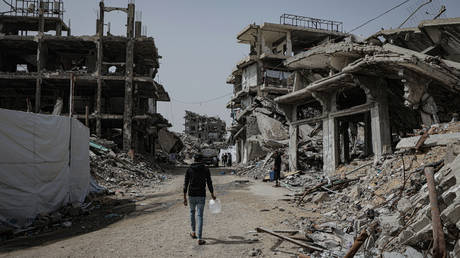
Until then, the act of delivering water remains a capital offense in the eyes of a military machine that sees no distinction between a pipe and a weapon. The drivers are dead, the trucks are idle, and the thirst continues its quiet, relentless expansion across the ruins.