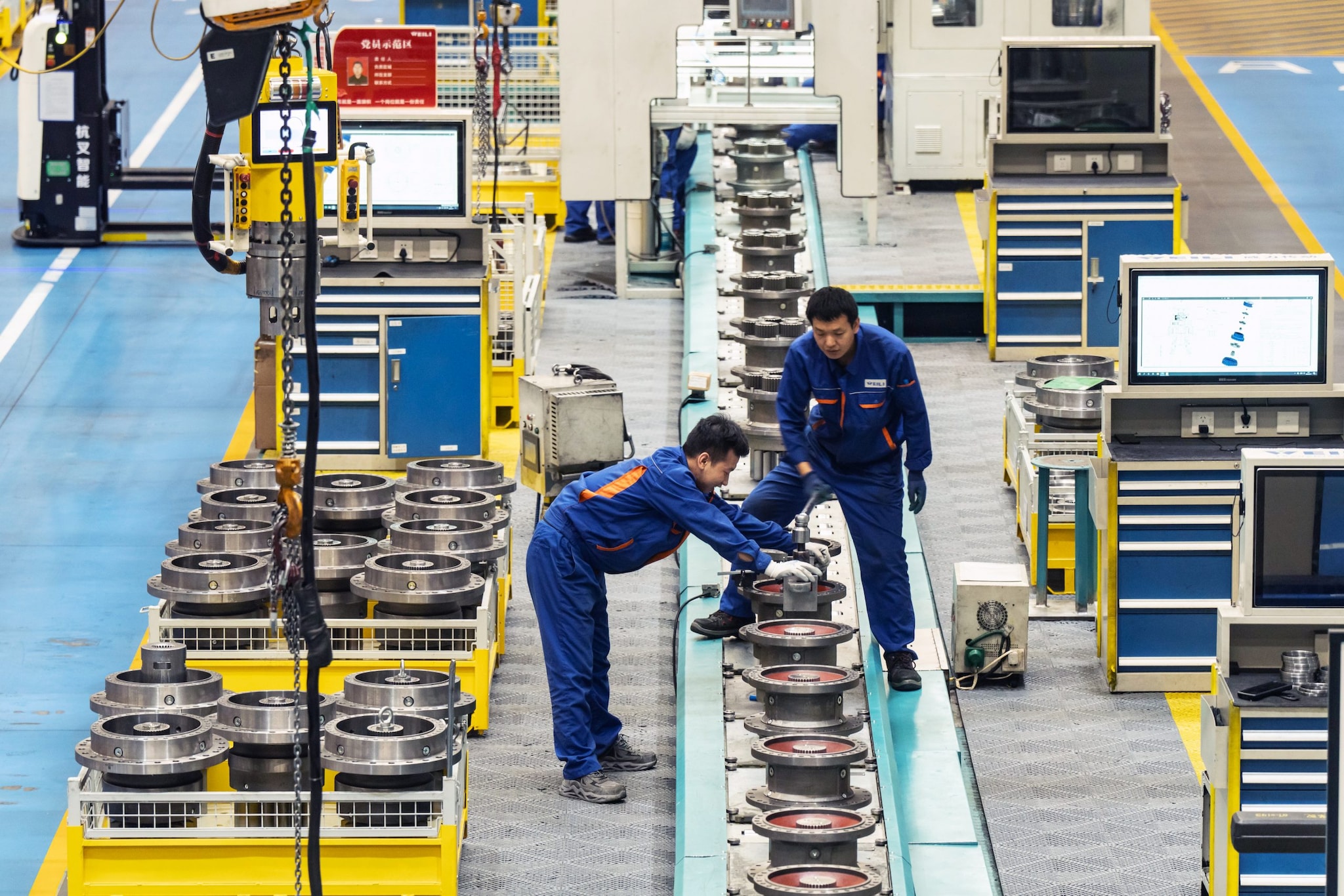
The air inside a lithium-ion battery plant is unnervingly still. It is a sterile, dry environment where humidity is the enemy and the slightest speck of dust can ruin a million-dollar batch of cells. For a worker in Erfurt, Germany, or a manager in a sprawling industrial park in Ningde, China, the stakes of their daily grind have suddenly shifted. They are no longer just making batteries for electric hatchbacks. They are the new infantry in a trade war that has moved past rhetoric and into the very guts of the global supply chain.
For decades, the deal was simple. The West designed the future, and the East built it. We shared the spoils of a globalized economy that prioritized efficiency over everything else. We wanted cheap electronics and affordable green energy; China provided the muscle and the massive scale to make it happen. But that old handshake is crumbling.
The Wall of Subsidies
Brussels has decided that "Made in Europe" is no longer just a proud label—it is a survival strategy. The European Union is currently moving to insulate its industries from what it perceives as an onslaught of artificially cheap Chinese goods. By introducing local content requirements and dangling fat subsidies for companies that build their factories on European soil, the EU is trying to claw back a manufacturing base that it let slip away decades ago.
China views this as a betrayal of the free-market principles the West spent a century preaching. Beijing has issued a sharp warning: if the EU persists with these protectionist walls, there will be countermeasures. This isn't just a spat between bureaucrats in gray suits. It is a fundamental disagreement about who gets to own the middle class of the 21st century.
Consider a hypothetical engineer named Elena. She works for a mid-sized automotive supplier in Turin. For years, her company has been squeezed by Chinese competitors who can produce the same components for 30% less. She watches the news about EU tariffs and "Made in Europe" mandates with a mix of hope and dread. If the plan works, her factory stays open. If China retaliates, the raw materials she needs—graphite, lithium, rare earth metals—might suddenly triple in price or vanish from the market entirely.
China holds the cards when it comes to the periodic table. They don’t just assemble the batteries; they control the mines and the refineries. If Europe builds a wall, China can simply turn off the tap.
A Dance of Dependence
The irony of this standoff is that both sides are desperately, perhaps hopelessly, intertwined. You cannot simply "uncouple" two economies that have spent thirty years growing into one another like the roots of two ancient trees.
When the EU speaks of "strategic autonomy," they are talking about building a fortress. They want to ensure that if a global crisis hits, they aren't waiting for a container ship from Shanghai to keep their lights on. It’s a noble goal. It’s also incredibly expensive. Building a battery ecosystem from scratch in Europe requires billions in taxpayer money and years of environmental permitting that China simply ignores.
Beijing's perspective is equally pragmatic, if more aggressive. They have invested trillions into becoming the world’s factory. To them, the EU’s new rules look like moving the goalposts just as China started winning the game. Their vowed countermeasures aren't just threats; they are an assertion of dominance. They are reminding the world that while Europe has the consumers, China has the means of production.
We often talk about trade in terms of percentages and GDP points. But look closer. It’s about the cost of a family car. It’s about whether a solar installation on a roof in Lyon is affordable for a schoolteacher. If the EU forces "Made in Europe" through heavy-handed mandates, the price of the green transition goes up. High prices lead to political resentment. Resentment leads to the very instability these policies are meant to prevent.
The Invisible Stakes of the Local Content Rule
The "Made in Europe" plan hinges on something called local content requirements. This means that to get a government check, a certain percentage of your product—say, the battery cells or the magnets in the motor—must be sourced from within the EU.
It sounds sensible. Why should European taxes subsidize Chinese jobs?
But the reality on the ground is messy. If a German carmaker is forced to buy European batteries that are 40% more expensive than the ones they were getting from Ningde, they have two choices. They can eat the cost and see their profits vanish, or they can pass it on to the buyer. Suddenly, that "affordable" EV costs $50,000 instead of $35,000.
Meanwhile, China is not sitting still. They are already bypassing these rules by building their own factories inside Europe. In Hungary, massive Chinese-owned plants are rising from the earth. They are technically "Made in Europe," but the profits, the intellectual property, and the high-level supply chains still lead back to Beijing. It is a masterful piece of industrial jujitsu. They are using Europe’s own rules to cement their presence on the continent.
The Retaliation Game
What does a "countermeasure" actually look like? It rarely starts with a bang. It starts with "technical delays" at customs. It starts with new environmental audits for European companies operating in Shanghai. It starts with a sudden, unexplained shortage of the specific grade of processed lithium required for high-performance cells.
China has perfected the art of the subtle squeeze. They know that Europe’s luxury brands—the Porsches, the Louis Vuittons, the Mercedes-Benzes—rely on the Chinese upper class for a huge portion of their growth. If Beijing decides to make life difficult for European luxury goods in retaliation for battery tariffs, the pain will be felt in boardrooms from Stuttgart to Paris.
It is a game of chicken played with the livelihoods of millions.
The Human Cost of Industrial Pride
We tend to forget that behind every "vowed countermeasure" is a person whose life depends on the flow of goods. There is a dockworker in Piraeus who sees fewer ships arriving. There is a salesperson in Beijing who can no longer move German SUVs because of a new "consumption tax" aimed at European imports.
The dream of a frictionless global economy is dead. In its place is a jagged, fragmented world where every purchase is a political statement. We are moving toward a "splinternet" of hardware. You will have the Chinese ecosystem and the Western ecosystem, and never the twain shall meet.
This isn't just about trade. It’s about the anxiety of a West that realized it traded its industrial soul for cheap consumer goods, and an East that is no longer content being the world’s workshop. Both are now trapped in a room together, shouting through a door they both helped lock.
The tragedy of the "Made in Europe" plan isn't that it’s wrong—it’s that it might be twenty years too late. You cannot legislate your way back to industrial dominance when your rival owns the minerals, the machines, and the momentum.
As the sun sets over the industrial heartlands of the Ruhr and the Yangtze, the machines keep humming. For now. But the workers on both sides are looking at the exits, wondering if the next shift will be their last, caught in the crossfire of two giants who forgot how to talk and only know how to warn.
The ghost on the factory floor isn't a machine. It's the memory of a time when a battery was just a battery, and not a weapon of statecraft.