The headlines are predictable. They are also dangerously naive. When a passenger dies mid-flight, the trial by social media begins before the plane even touches the tarmac. We point fingers at flight attendants, we grill the airline's emergency protocols, and we demand to know why a pressurized metal tube screaming through the stratosphere at 500 miles per hour isn't a fully-functioning Level 1 Trauma Center.
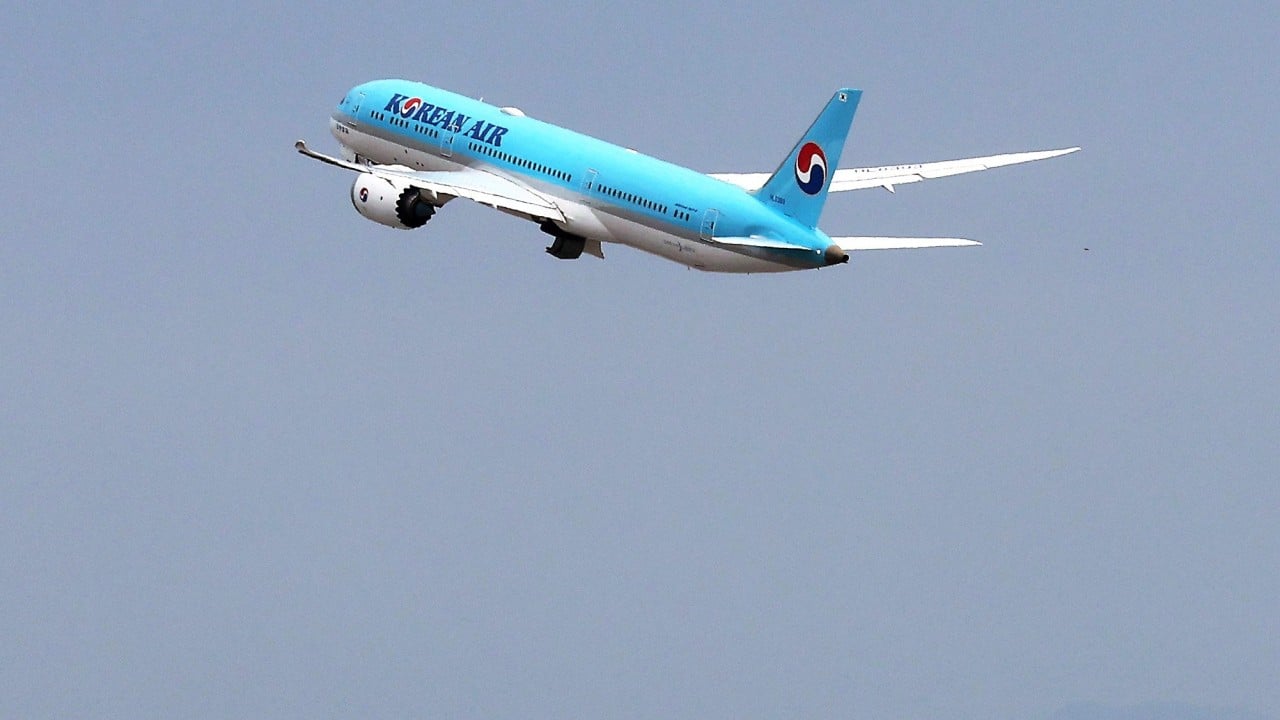
Korean Air is currently the target of this misplaced rage following the tragic death of a passenger who reportedly couldn't breathe. The lawsuit claims negligence. The public claims outrage. I claim we are collectively delusional about the reality of aviation medicine.
We have bought into the myth of the "omni-capable" airline. We expect a cabin crew—whose primary safety training involves fire suppression and door evacuation—to perform like ER residents in a space no larger than a walk-in closet. It is time to dismantle the theater of in-flight medical safety and look at the brutal physics of the situation.
The CPR Theater and the Physics of Failure
Let’s start with a hard truth that makes people squirm: CPR at 35,000 feet is almost always an exercise in optics, not an act of life-saving medicine.
In a clinical setting, the survival rate for out-of-hospital cardiac arrest is already abysmal, often cited below 10%. Now, move that scenario to a cramped aisle between 26B and 26C. You have no space for proper body mechanics. You have a floor that isn't stable. Most importantly, you are in a "closed system" with limited oxygen.
Airlines carry Automated External Defibrillators (AEDs). They carry Emergency Medical Kits (EMKs). But these tools are designed for stabilization, not resuscitation. If a passenger’s heart stops or their lungs fail due to a massive pulmonary embolism or a severe cardiac event, they are effectively beyond the reach of modern medicine until that plane hits the ground.
Critics argue that "more training" is the answer. This is the lazy consensus. I’ve seen airlines throw millions at "enhanced medical training" for crews. It doesn't change the fact that a flight attendant is not a paramedic. Expecting them to diagnose a complex respiratory failure amidst the chaos of a panicked cabin is not just unrealistic; it’s a liability trap for the employee and a false sense of security for the passenger.
The "Doctor on Board" Gamble
The industry relies on a wing and a prayer—specifically, the prayer that a doctor happens to be sitting in Business Class. This is the ultimate "Good Samaritan" gamble.
When that call goes out over the PA system, the airline is essentially outsourcing its emergency response to a stranger. If you’re lucky, you get a cardiologist. If you’re unlucky, you get a dermatologist who hasn't touched a stethoscope in fifteen years.
Furthermore, the legal protections for these volunteers vary wildly across borders. While the U.S. Aviation Medical Assistance Act (AMAA) protects doctors from liability unless they are "grossly negligent," international flights operate in a gray zone. This creates a hesitation gap. A doctor might hesitate to act, or an airline might hesitate to divert, because the financial and legal ramifications of landing a wide-body jet in a third-party country are staggering.
A single unscheduled diversion can cost an airline anywhere from $50,000 to $600,000. That’s fuel dumping, landing fees, passenger rebooking, and crew timing out. We like to think "human life is priceless," but in the boardrooms of major carriers, every medical emergency is a cold, hard math problem.
The Respiratory Fallacy
In the Korean Air case, the focus is on the "inability to breathe." In the thin air of a pressurized cabin, the partial pressure of oxygen is significantly lower than at sea level. For a healthy person, the body adjusts. For someone with an underlying condition, the cabin environment is a stress test they never agreed to take.
We call it "cabin altitude." Even though the plane is at 38,000 feet, the interior is pressurized to feel like 6,000 to 8,000 feet.
Consider the Alveolar Gas Equation:
$$P_A O_2 = F_i O_2 (P_{atm} - P_{H_2 O}) - \frac{P_a CO_2}{R}$$
This formula determines how much oxygen actually reaches your blood. When $P_{atm}$ (atmospheric pressure) drops because you’re in a pressurized tube, the $P_A O_2$ (alveolar oxygen) drops with it. If a passenger is already compromised, they are walking into a physiological trap. No amount of "attentive service" from a flight attendant can rewrite the laws of gas exchange.
Stop Blaming the Crew, Start Blaming the System
The lawsuit against Korean Air likely hinges on the "failure to divert." This is where the industry’s "status quo" logic is most flawed. The decision to divert is not made by the flight attendant. It’s a tripartite negotiation between the pilot, the airline’s dispatch center, and a ground-based medical advisory service like MedAire or STAT-MD.
These ground-based services are the hidden hand of aviation. They are doctors in a call center looking at a data sheet. They are often the ones who tell the pilot "keep flying" because, based on the checklist, the situation doesn't look critical yet.
By the time it looks critical, the passenger is often dead.
We need to stop pretending that airlines are mobile clinics. If we want to actually solve this, we have to admit that some people simply should not fly. But the industry won't do that. Why? Because "Fit to Fly" certifications are a logistical nightmare and a revenue killer.
The Brutal Advice No One Wants to Give
If you have a chronic condition, stop trusting the airline’s "Medical Kit." It is a box of basic supplies, not a miracle chest.
- Self-Reliance is the Only Safety: If you need oxygen, bring your own FAA-approved concentrator. Do not rely on the airline’s "emergency" canisters, which are often limited in number and flow rate.
- The "Wait and See" Trap: If you feel slightly short of breath during boarding, get off the plane. The "it’ll get better once we’re at cruise" mentality is a death sentence. It will get worse. The pressure will drop, and your lungs will struggle.
- Demand the Data: Instead of suing after the fact, passengers should demand to see the diversion stats and medical capabilities of carriers before they book. Why do we care about legroom more than the response time of the airline’s medical advisory partner?
Airlines are transport companies. They move weight from Point A to Point B. They are not healthcare providers, and the legal fiction that they should be is exactly why these tragedies continue to happen. We keep holding them to a standard of care they are physically and logistically incapable of providing.
The Korean Air lawsuit isn't about one death. It's an indictment of a system that sells the illusion of safety while operating on the margins of physiological catastrophe. If you go into cardiac arrest over the Pacific, you aren't in the hands of "well-trained professionals." You are in a pressurized box, miles from help, surrounded by people who are mostly hoping you don't die on their shift because of the paperwork.
Stop looking for someone to sue and start looking at the altimeter. At thirty thousand feet, you are on your own.
Accept it, or stay on the ground.