The mainstream media is feeding you a narrative of fear. They want you to believe that Hongkongers are flocking to mainland China this Easter because they are terrified of regional instability in the Middle East. It is a clean, easy explanation. It is also completely wrong.
The "safety pivot" is a PR smokescreen designed to hide a much more uncomfortable reality: the Hong Kong middle class is facing a structural wealth contraction, and the mainland is the only place left that offers a dignified illusion of luxury. People aren't running away from missiles; they are running away from a $120 HKD bowl of mediocre wonton noodles and a local retail sector that has lost its soul.
The Geopolitical Red Herring
Blaming the Middle East for a surge in Shenzhen day trips is peak intellectual laziness. If travelers were truly motivated by a sudden onset of "safety first" morality or risk aversion, they wouldn't be heading across the border into some of the most densely crowded urban environments on earth during a peak holiday rush.
Let’s look at the math of the "fear factor." Historically, the demographic that frequents high-end tours to Jordan, Israel, or Turkey is not the same demographic currently queuing for three hours to buy a cheese tart in Sam’s Club. These are two different economies. One is a niche luxury market currently on ice; the other is a mass-market exodus driven by a desperate need for value.
By framing this as a choice made out of geopolitical concern, analysts are giving the Hong Kong economy a "get out of jail free" card. They are suggesting that once the Levant quiets down, the status quo will return. It won't.
The Value Gap is a Chasm Not a Crack
Hong Kong’s service industry is currently trapped in a death spiral of high rents and low talent retention. I have watched restaurant groups in Central hike prices by 20% while cutting staff by 30%, then wonder why their regular clientele is suddenly "obsessed" with Futian.
It isn't an obsession. It’s a rational arbitrage.
In the mainland, the Price-to-Quality Ratio is currently unbeatable for anyone holding Hong Kong Dollars. You are looking at a $1.00 HKD to $0.92 RMB exchange rate that, while not at historic highs, pairs with a domestic Chinese deflationary trend in the service sector.
- Accommodation: A five-star hotel in Chengdu or Changsha costs less than a windowless "boutique" room in Sheung Wan.
- Dining: The level of "omotenashi" or service culture in high-end mainland malls now laps Hong Kong’s tired, "take it or leave it" attitude.
- Infrastructure: The High-Speed Rail isn't just a convenience; it’s a psychological bridge that has made the border invisible.
When the competitor article says people "opt" for China, it implies a secondary choice. For the average family of four, it’s the only choice that doesn't involve financial self-flagellation.
The Death of the Aspirational Traveler
For decades, the Hong Kong traveler was defined by a specific type of snobbery. To go "North" was seen as a budget move for the elderly. The "real" middle class went to Tokyo, London, or the Mediterranean.
That social hierarchy has collapsed.
I’ve spent fifteen years watching travel trends in East Asia, and I have never seen a shift this violent. The prestige has moved. It is now "cool" to find the most obscure, high-tech hotpot spot in Shenzhen. It is "savvy" to use mainland apps to navigate. This is a total rebranding of the mainland as a playground rather than a pantry.
The Middle East war is a convenient excuse for those who can no longer afford the $80,000 HKD family trip to Europe. It allows them to save face. "Oh, we'd love to go to Cairo, but you know... the situation." No. You’re going to Guangzhou because your mortgage interest rate hit 4.125% and your stock portfolio is bleeding.
The Illusion of the Easter Surge
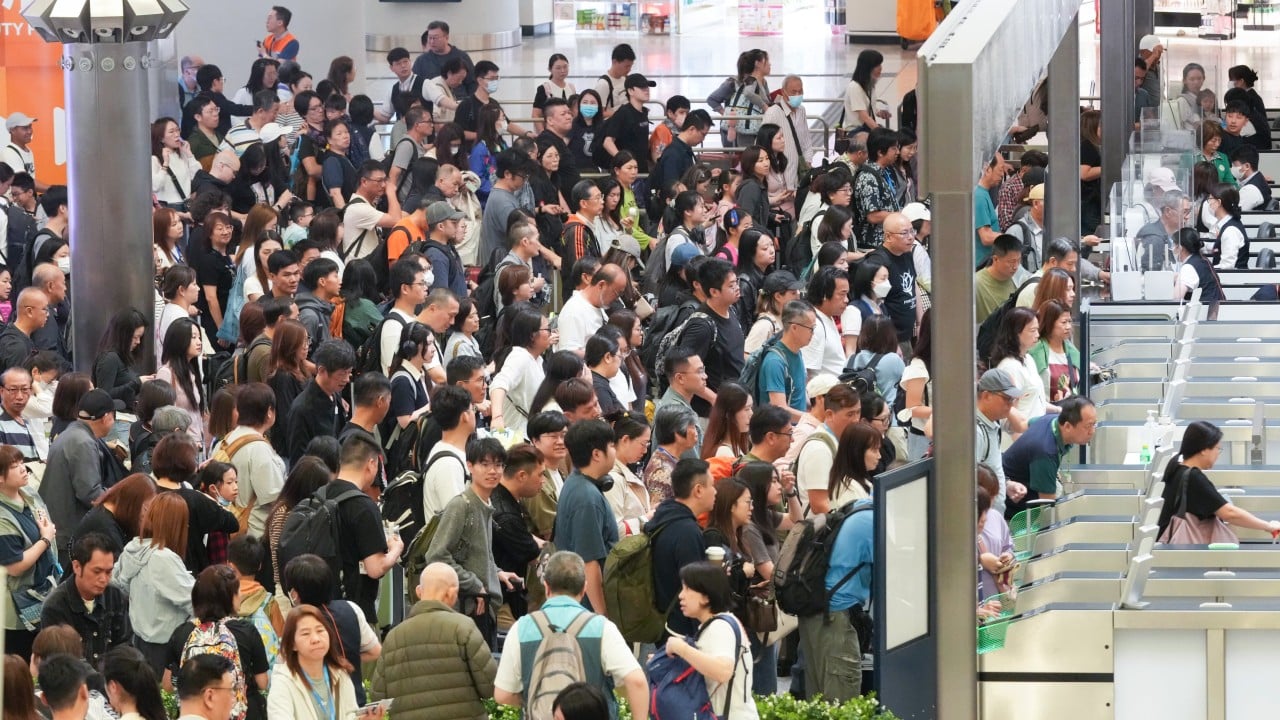
The media loves to cite the "record-breaking numbers" at the border checkpoints. They use these numbers to prove that the travel market is "rebounding."
This is a fundamental misunderstanding of volume versus value.
100,000 people crossing into Shenzhen for a day trip to buy discounted laundry detergent does not equal the economic impact of 5,000 people flying to Milan for ten days. The travel industry is mistaking movement for prosperity.
What we are witnessing is the hollowing out of the high-end travel agent. If your business model relies on booking group tours to "exotic" locations, you aren't just losing customers to war zones; you are losing them to the fact that your customers have realized they can curate a better, cheaper experience via Xiaohongshu with zero markup.
Why You Should Ignore the Safety Narrative
If you are a business owner or an investor listening to the "safety" argument, you are going to misallocate capital. You will wait for "peace" to bring back the big spenders. You will be waiting forever.
The real shift is structural:
- Supply Chain Dominance: China’s "retail-tainment" complexes are ten years ahead of anything in the West or Hong Kong.
- Digital Integration: The friction of travel in the mainland has been reduced to zero for anyone with a smartphone.
- The Ego Shift: The "Global Citizen" identity of Hongkongers is being replaced by a "Greater Bay Area Resident" pragmatism.
Imagine a scenario where the Middle East conflict ends tomorrow. Do the crowds at the Lo Wu border disappear? Do they suddenly decide that paying $60 HKD for a lukewarm milk tea in Causeway Bay is a good idea again? Absolutely not.
The Brutal Truth for Hong Kong Tourism
The "Mainland Tour" trend isn't a temporary pivot. It is a permanent migration of consumption.
The local Hong Kong tourism board and travel agencies are rearranged deck chairs on the Titanic. They talk about "bringing in mega events" to keep people in the city, but they are fighting against the gravity of physics. You cannot compete with a neighbor that has more space, newer facilities, better service, and lower prices—all accessible for $80 HKD on a train.
Stop pretending this is about geopolitics. Stop pretending this is about "supporting the motherland."
This is about the fact that Hong Kong has become too expensive for its own citizens to enjoy. The war in the Middle East is just a footnote in the story of a city that priced itself out of its own life.
The border isn't a gate anymore. It's a pressure valve. And the air is whistling out.