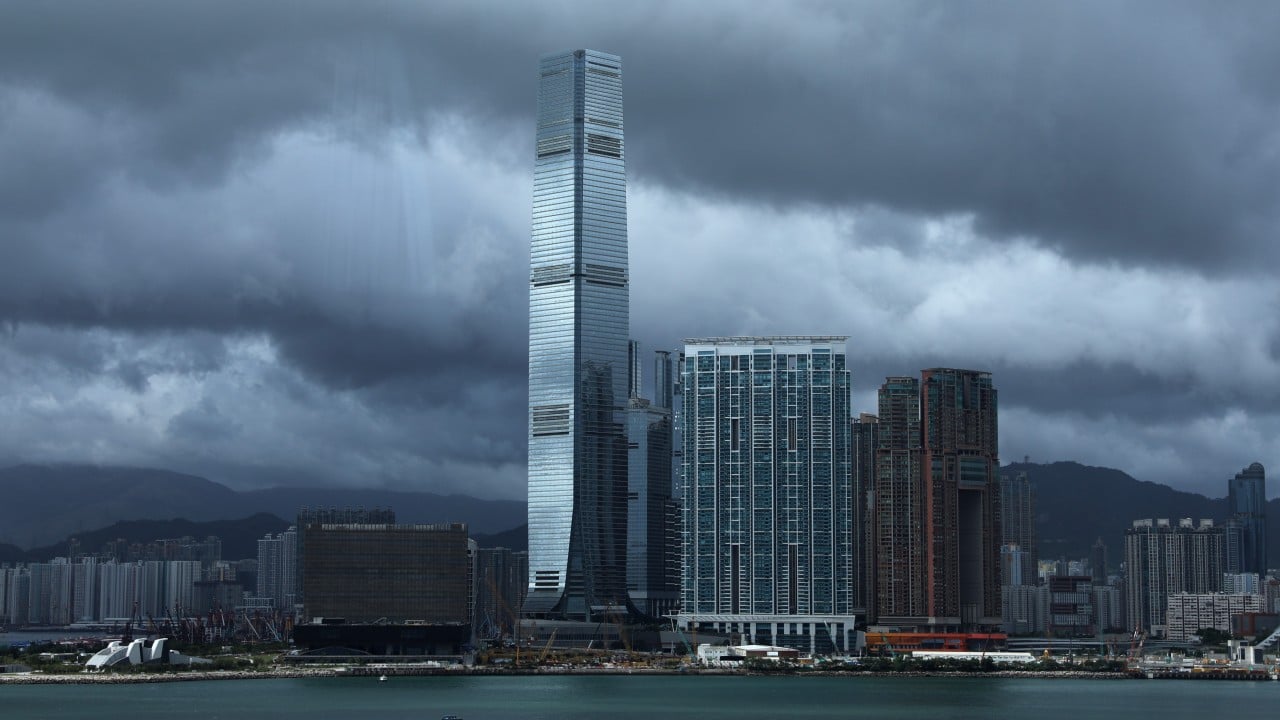
The opening of the Ritz-Carlton Hong Kong in 2011 was marketed as a triumph of engineering and a new pinnacle of luxury. Located at the top of the International Commerce Centre (ICC), it claimed the title of the world’s highest hotel. The press swooned over the clouds. They obsessed over the elevator speeds. They bought into the narrative that being closer to the stratosphere somehow equated to a superior guest experience.
They were wrong.
Elevation is a gimmick. It is the architectural equivalent of a loud supercar—impressive for exactly twelve seconds until you realize the suspension is stiff and there is nowhere to put your luggage. Most "record-breaking" hospitality projects suffer from a fundamental misunderstanding of human psychology: the belief that detachment from the ground is a feature, rather than a bug.
The Vertical Prison Effect
When you check into a hotel on the 100th floor, you aren't entering a sanctuary. You are entering a highly pressurized, gold-plated containment unit.
The industry calls it "exclusivity." I call it logistics-induced claustrophobia. I have consulted for ultra-high-net-worth individuals who spent $2,000 a night to sit above the smog of West Kowloon, only to realize they were effectively trapped. If you want a coffee from a local street stall or a quick walk through a neighborhood market, you are three separate elevator banks and a fifteen-minute transit away from touching actual pavement.
True luxury is about autonomy. It is the ability to move between environments without friction.
By prioritizing verticality, developers sacrifice the "porosity" of a hotel. A ground-level luxury property allows you to step from your suite into the world. A sky-high hotel forces you to wait for a high-speed lift that pops your ears and separates you from the very city you supposedly came to visit. You aren't in Hong Kong; you're in a climate-controlled bubble that happens to be hovering over it.
The Cloud Problem: Paying for a White Wall
Here is the dirty secret the brochures never mention: weather exists.
At 484 meters, the view isn't a constant panorama of Victoria Harbour. For a significant portion of the year, the "world’s best view" is a flat, featureless wall of grey fog. When the humidity hits or the low-hanging clouds roll in, you are paying a 40% premium to stare at a misty window.
In a lower-altitude luxury property—think the Peninsula or the Rosewood—the view is contextual. You see the movement of the ferries, the lights of the street, the rhythm of the city. At the Ritz-Carlton’s height, the city is reduced to a Lego set. You lose the texture. You lose the soul. You are so far removed that the human element vanishes, leaving only a cold, geometric abstraction.
The Fallacy of High-Speed Service
The SCMP archive piece marveled at the speed of the elevators. It’s a classic engineering trap.
Efficiency is not the same as hospitality. Just because you can move a body 400 meters vertically in 50 seconds doesn't mean that body feels welcomed. The "high-altitude" model forces a specific, rigid service flow. Everything—from room service to laundry—must navigate a vertical bottleneck.
I’ve seen hotels spend millions on "smart" elevator dispatch systems while their actual service quality cratered because the staff spent half their shift waiting for transport. In a sprawling resort or a boutique low-rise, service is lateral and immediate. In a skyscraper, service is a logistical nightmare disguised by marble cladding.
If your "luxury" experience depends on a mechanical cable not being busy, you aren't staying in a hotel. You're staying in a vertical warehouse for people.
The Cost of Bragging Rights
Why do developers do it? Ego.
The "World's Highest" title is a depreciating asset. There is always a taller tower in Dubai, a higher lounge in Shanghai, or a new spire in Jeddah. When you build a brand on a superlative metric like height, you are finished the moment someone else pours more concrete.
Investors pour capital into these projects because "highest" is an easy sell for a pitch deck. It requires zero creativity. It’s a brute-force approach to prestige.
Contrast this with the Aman Tokyo. It’s high, yes, but it doesn't lead with "we are the tallest." It leads with the volume of the space, the basalt rock, and the internal garden. It uses the height as a canvas, not a trophy. The Ritz-Carlton in West Kowloon, by contrast, felt like a desperate grab for a record that was always destined to be broken.
The Physics of Discomfort
Let’s talk about the biological reality of living in the sky.
High-rise buildings sway. It’s a necessity of engineering. Even with tuned mass dampers—giant steel balls hanging in the upper floors to counteract wind—there is a subtle, nearly imperceptible motion. For many guests, this triggers a "sick building syndrome" or a low-level anxiety that they can’t quite place.
Then there is the air. To maintain a "comfortable" environment at those heights, the HVAC systems have to work overtime. The air is often bone-dry, recycled, and stripped of any natural ions. You wake up with a parched throat and a headache, not because you overindulged at the ozone-level bar (Ozone, the highest bar in the world, also located here), but because your body wasn't designed to thrive in a pressurized tube.
$$P = P_0 \cdot e^{-\frac{Mgh}{RT}}$$
The barometric formula doesn't care about your Five-Star rating. As altitude ($h$) increases, pressure ($P$) drops. While the interior is pressurized, the delta creates constant stress on the building’s seal and the guest’s physiology.
Why You Should Stop Chasing the Peak
If you want to actually experience a city, stay on the 5th floor, not the 100th.
Stay where you can hear the faint hum of life. Stay where you can see the faces of the people on the street. High-altitude hotels are for people who want to look down on a city, not people who want to be in it.
The industry needs to move away from the "bigger is better" and "higher is holier" mindset. We are seeing a shift toward "grounded luxury"—properties that integrate with their environment rather than hovering above it like an alien mothership.
The Ritz-Carlton Hong Kong was a feat of 2011-era excess. It was the peak of a "look at me" philosophy that prioritizes the Instagram shot over the actual human experience. But as any experienced traveler will tell you, the best view isn't the one from the top looking down; it's the one that makes you feel like you belong in the place you're standing.
Stop paying for the privilege of being a captive in a glass box. The street is where the magic happens. Everything else is just expensive air.
Check out of the cloud and get back to earth.